Commercial comparison for animal-fat moisturizers
9 min read
Bison Tallow vs Beef Tallow for Skin
Bison tallow and beef tallow are close enough that the skin-care decision should not be treated like a dramatic ingredient showdown. The useful question is more practical: which one is easier to source consistently, easier to test on your skin, and available in a finished texture you will actually use without over-applying?
Compare bison tallow vs beef tallow for skin care, including texture, sourcing, availability, face and body fit, and when a simpler beef tallow moisturizer is the more practical choice.
Quick summary
- Bison tallow and beef tallow are close enough that the skin-care decision should not be treated like a dramatic ingredient showdown. The useful question is more practical: which one is easier to source consistently, easier to test on your skin, and available in a finished texture you will actually use without over-applying?
- Quick answer: is bison tallow better than beef tallow for skin?: There is not enough practical skin-care reason to call bison tallow automatically better than beef tallow. Both are rendered animal fats used by some people as rich moisture-sealing ingredients. In day-to-day use, the bigger differences usually come from the finished product: whether it is whipped or balmy, whether it is fragrance-free, how cleanly it melts, how much you apply, and whether the brand gives clear sourcing and handling details. If you are choosing for dry skin, those factors usually matter more than the animal source alone.
- Why people compare bison tallow and beef tallow: Most searches for bison tallow vs beef tallow start from curiosity about purity, sourcing, and whether a less common animal fat might be more special for skin. That question is understandable, but it can also distract from the routine problem that actually determines success. Dry skin usually needs a product that spreads evenly, stays comfortable, and can be repeated after washing, showering, cold weather, or friction. A rare ingredient does not help much if the texture is gritty, too greasy, scented in a way your skin dislikes, or difficult to replace when you run out.
Why people choose this approach
- There is not enough practical skin-care reason to call bison tallow automatically better than beef tallow. Both are rendered animal fats used by some people as rich moisture-sealing ingredients. In day-to-day use, the bigger differences usually come from the finished product: whether it is whipped or balmy, whether it is fragrance-free, how cleanly it melts, how much you apply, and whether the brand gives clear sourcing and handling details. If you are choosing for dry skin, those factors usually matter more than the animal source alone.
- Most searches for bison tallow vs beef tallow start from curiosity about purity, sourcing, and whether a less common animal fat might be more special for skin. That question is understandable, but it can also distract from the routine problem that actually determines success. Dry skin usually needs a product that spreads evenly, stays comfortable, and can be repeated after washing, showering, cold weather, or friction. A rare ingredient does not help much if the texture is gritty, too greasy, scented in a way your skin dislikes, or difficult to replace when you run out.
Keep in mind
- Patch test first and increase use gradually based on comfort.
- Skincare supports moisture and comfort but is not a cure for medical conditions.
- If symptoms persist, worsen, or become painful, consult a licensed clinician.
Quick comparison
| Feature | Beef tallow | Bison tallow |
|---|---|---|
| Core skin-care role | A rich animal-fat moisturizer base that can support dry-feeling skin when used in thin layers. | A similar rich animal-fat option, often harder to find in finished skin-care products and less familiar to shoppers. |
| Best fit | Daily dry-skin routines where product format, scent control, and repeatable texture matter. | Niche shoppers who specifically want bison-sourced tallow and can verify sourcing and product quality. |
| Practical downside | Can still feel too heavy if used like a mask, especially on oily or congestion-prone facial areas. | May be less available, less standardized, and harder to compare across brands or homemade batches. |
Quick answer: is bison tallow better than beef tallow for skin?
There is not enough practical skin-care reason to call bison tallow automatically better than beef tallow. Both are rendered animal fats used by some people as rich moisture-sealing ingredients. In day-to-day use, the bigger differences usually come from the finished product: whether it is whipped or balmy, whether it is fragrance-free, how cleanly it melts, how much you apply, and whether the brand gives clear sourcing and handling details. If you are choosing for dry skin, those factors usually matter more than the animal source alone.
Why people compare bison tallow and beef tallow
Most searches for bison tallow vs beef tallow start from curiosity about purity, sourcing, and whether a less common animal fat might be more special for skin. That question is understandable, but it can also distract from the routine problem that actually determines success. Dry skin usually needs a product that spreads evenly, stays comfortable, and can be repeated after washing, showering, cold weather, or friction. A rare ingredient does not help much if the texture is gritty, too greasy, scented in a way your skin dislikes, or difficult to replace when you run out.
Texture matters more than the animal source
A well-made whipped beef tallow cream can feel easier for broad areas like hands, arms, legs, cheeks, or dry patches because it is designed to spread in a thin layer. A dense balm, whether made from beef or bison tallow, usually fits smaller rough zones better: knuckles, cuticles, heel edges, lip corners, and wind-chapped spots. That means two beef tallow products can feel more different from each other than a beef tallow and bison tallow product made in the same format. Judge the product by how it wears on skin, not by the label alone.
Sourcing and consistency: the biggest practical difference
Beef tallow skin-care products are usually easier to find, easier to compare, and more likely to come in finished formats built for skin rather than kitchen use. Bison tallow can be appealing if you care about that specific source, but it is often more niche. That can make batch consistency, scent, texture, and replacement harder to evaluate. If you are testing a moisturizer for sensitive or dry skin, boring consistency is a feature. You want to know that the product you used last week will behave the same way when you buy it again.
Face use: keep both options conservative
For facial use, treat both bison tallow and beef tallow as richer moisturizers that deserve a slow test. Start with a rice-grain amount on one dry cheek edge, around the mouth, or another non-oily zone instead of applying either one as a full-face mask. Avoid immediate use on areas that clog easily, especially the forehead, nose, and chin if you are prone to closed comedones. If warmth, bumps, extra oiliness, or a waxy coated feel shows up after several uses, the issue is usually product weight and amount, not whether the source was beef or bison.
Body use: where either tallow can make sense
Body dryness is usually the easier place to test a tallow moisturizer because arms, legs, elbows, hands, and heels often tolerate richer textures better than the face. Use a whipped cream format for broader dry areas and save balm for small rough spots that need more staying power. If the comparison is bison tallow vs beef tallow for cracked hands, dry feet, or winter patches, the most useful test is simple: apply the same amount to matched areas for a week and judge spread, residue, softness by morning, and whether you actually want to keep using it.
When beef tallow is the more practical choice
Beef tallow is usually the more practical choice when you want a repeatable skin-care routine rather than a rare-ingredient experiment. It is easier to find in whipped creams and balms, easier to pair with product guidance, and easier to route into specific use cases like dry hands, cracked heels, lip edges, post-shave dryness, and winter wind exposure. That does not make bison tallow bad. It just means the common option often wins on availability, format, and consistency, which are the things that make a moisturizer useful past the first curious test.
How to compare them without overcomplicating your routine
If you already own both, run a small side-by-side test instead of switching your whole routine. Put one product on the left hand and the other on the right hand after the same wash cycles, or test matched dry patches on arms or legs. Keep cleanser, shower temperature, and timing the same. After 7 to 10 days, compare five signals: which spreads with less drag, which leaves less annoying residue, which area feels comfortable longer, whether either side gets bumps or irritation, and which one you naturally reach for. The better product is the one that solves the dry-skin problem with the least friction.
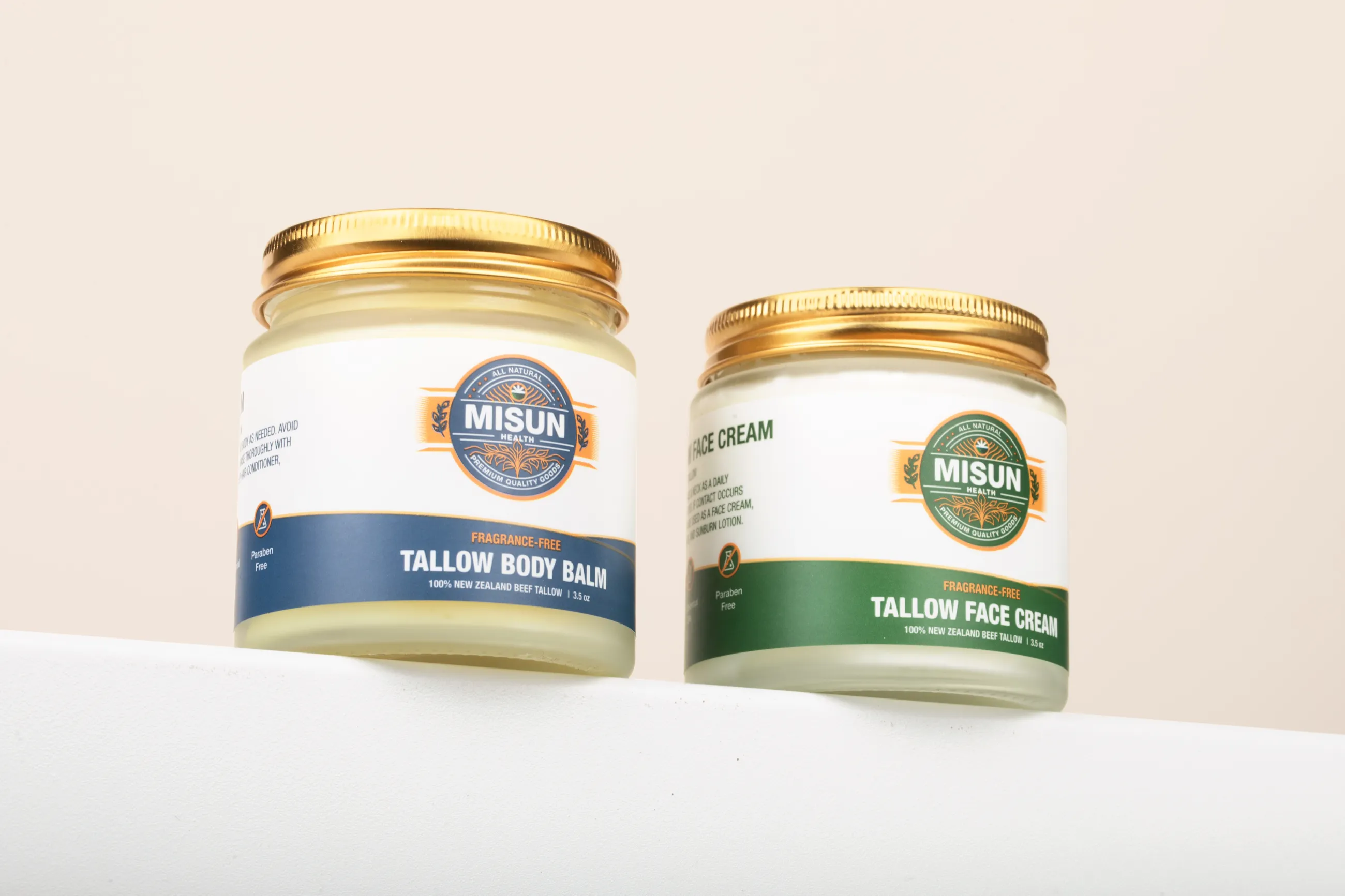 Misun Health
Common Questions
Is bison tallow better than beef tallow for skin?
Not automatically. For skin care, texture, sourcing quality, fragrance-free formulation, and how lightly you apply the product usually matter more than whether the tallow came from bison or beef.
Can I use bison tallow on my face?
You can test it cautiously if the product is made for skin, but start with a tiny amount on one dry area first. Treat it like any rich occlusive moisturizer and avoid full-face use if you clog easily.
Why is beef tallow usually easier to choose?
Beef tallow is more widely available in finished skin-care formats like whipped cream and balm. That makes it easier to compare texture, replace consistently, and match to specific dry-skin routines.
Does bison tallow have special skin benefits beef tallow does not?
There is not a clear practical reason to assume that. A well-made product, conservative patch testing, and consistent routine usually matter more than claiming special benefits from the animal source alone.
Which should I use for dry hands or cracked heels?
Use the product with the better finished texture for the job. A whipped tallow cream is usually easier for broad dry hands or body areas, while a denser balm is better for heel edges, fingertip cracks, cuticles, and stubborn rough patches.
Can I use cooking tallow as skin moisturizer?
It is better to choose a product made for skin. Kitchen tallow may not have the texture, scent control, packaging, or handling standards you want for repeated face or body use.
Build your routine
 Buy on Amazon
 Buy on Amazon
Related guides
More commercial pages
Explore similar commercial concerns or jump to the closest concern hub.
- Can You Bring Beef Tallow on a Plane? Carry-On Packing and Travel Dryness Routine
- Can You Put Beef Tallow on Your Lips? Dry Lips, Chapped Lips, and Lip-Line Flaking
- Unscented Moisturizer for Sensitive Skin: How to Choose a Fragrance-Free Routine That Actually Feels Comfortable
- Beef Tallow vs Lotion for Dry Skin
Related concern pages
Educational content only. This page is not medical advice and is not intended to diagnose, treat, cure, or prevent disease. If symptoms persist or worsen, consult a licensed clinician.