Commercial comparison intent
8 min read
Beef Tallow vs Amlactin for Dry, Rough Skin
These products solve different problems. Amlactin usually pushes rough texture with lactic acid, while beef tallow usually helps when the bigger issue is comfort, sealing, and day-to-day dryness tolerance.
Compare beef tallow vs Amlactin for dry, rough skin with practical guidance on texture, exfoliation tradeoffs, body-zone fit, and when to use one, the other, or both.
Quick summary
- These products solve different problems. Amlactin usually pushes rough texture with lactic acid, while beef tallow usually helps when the bigger issue is comfort, sealing, and day-to-day dryness tolerance.
- Quick answer: which one makes more sense for dry, rough skin?: If your skin mostly feels rough, bumpy, or dull on areas like upper arms, thighs, elbows, or lower legs, Amlactin often makes more sense because lactic acid helps loosen rough buildup while adding moisture. If your bigger issue is tightness, wind-chapped dryness, over-cleansed skin, or needing a richer finish that feels more protective, beef tallow often feels easier to live with. In real routines, Amlactin is usually the active texture step, while tallow is usually the comfort-and-seal step.
- Exfoliation vs sealing power: what problem are you actually trying to solve?: Amlactin is not just a moisturizer. Its lactic-acid angle means it can do more for rough texture, flaky buildup, and body areas that feel sandpapery rather than simply dry. Beef tallow usually does not try to exfoliate at all. It works more like a rich moisture-support layer that can reduce tightness and friction when skin feels overworked. That difference matters because people often call all rough skin dry skin, then wonder why one product stings and the other does not smooth texture fast enough. The better choice depends on whether your skin needs turnover help, barrier comfort, or both in different steps.
Why people choose this approach
- If your skin mostly feels rough, bumpy, or dull on areas like upper arms, thighs, elbows, or lower legs, Amlactin often makes more sense because lactic acid helps loosen rough buildup while adding moisture. If your bigger issue is tightness, wind-chapped dryness, over-cleansed skin, or needing a richer finish that feels more protective, beef tallow often feels easier to live with. In real routines, Amlactin is usually the active texture step, while tallow is usually the comfort-and-seal step.
- Amlactin is not just a moisturizer. Its lactic-acid angle means it can do more for rough texture, flaky buildup, and body areas that feel sandpapery rather than simply dry. Beef tallow usually does not try to exfoliate at all. It works more like a rich moisture-support layer that can reduce tightness and friction when skin feels overworked. That difference matters because people often call all rough skin dry skin, then wonder why one product stings and the other does not smooth texture fast enough. The better choice depends on whether your skin needs turnover help, barrier comfort, or both in different steps.
Keep in mind
- Patch test first and increase use gradually based on comfort.
- Skincare supports moisture and comfort but is not a cure for medical conditions.
- If symptoms persist, worsen, or become painful, consult a licensed clinician.
Quick comparison
| Feature | Whipped Tallow Cream | Beef Tallow Balm |
|---|---|---|
| Best use case | Daily face/body moisture with lighter spread | Targeted dry patches and high-friction zones |
| Typical routine timing | Morning + daytime maintenance | Night routine + targeted application |
| Texture feel | Lighter and easier to spread | Dense and more sealing |
Routine steps
How to use both without turning the routine into a mess
A practical split is Amlactin on rough body zones at night and beef tallow on the spots that mainly need comfort or extra sealing. Some people also use Amlactin on arms or legs, then save whipped tallow cream or balm for hands, elbows, lip corners, or any patch that still feels tight after the active lotion sinks in. If Amlactin stings after shaving, on freshly scrubbed skin, or on areas that are already irritated, pause it there and use the gentler moisture step instead. You do not need to force one winner across every body zone.
A fair 10-day test for rough skin that keeps the result honest
Pick one matched area on each side of the body, like left arm versus right arm or left shin versus right shin. Keep cleanser, shower length, and any scrub or retinoid use the same. Use Amlactin on one side and tallow on the other, or compare an Amlactin-only side with an Amlactin-plus-tallow side if the real question is whether adding a richer sealing step improves comfort. Track four useful signals: roughness reduction, sting level, how long skin stays comfortable, and whether you actually keep using the product. The winner is usually the one that improves texture without making you dread the routine.
Quick answer: which one makes more sense for dry, rough skin?
If your skin mostly feels rough, bumpy, or dull on areas like upper arms, thighs, elbows, or lower legs, Amlactin often makes more sense because lactic acid helps loosen rough buildup while adding moisture. If your bigger issue is tightness, wind-chapped dryness, over-cleansed skin, or needing a richer finish that feels more protective, beef tallow often feels easier to live with. In real routines, Amlactin is usually the active texture step, while tallow is usually the comfort-and-seal step.
Exfoliation vs sealing power: what problem are you actually trying to solve?
Amlactin is not just a moisturizer. Its lactic-acid angle means it can do more for rough texture, flaky buildup, and body areas that feel sandpapery rather than simply dry. Beef tallow usually does not try to exfoliate at all. It works more like a rich moisture-support layer that can reduce tightness and friction when skin feels overworked. That difference matters because people often call all rough skin dry skin, then wonder why one product stings and the other does not smooth texture fast enough. The better choice depends on whether your skin needs turnover help, barrier comfort, or both in different steps.
Where each option tends to fit best: arms, legs, hands, and sensitive zones
Amlactin often fits better on body zones with rough texture, especially upper arms, thighs, calves, knees, and elbows, where people can tolerate a stronger active lotion. Beef tallow often fits better on hands, lip edges, dry facial patches, post-shower tightness, and other areas where a gentler richer finish feels more realistic. For cracked knuckles, fingertip edges, or weather-beaten spots, tallow or balm is often easier to tolerate than an exfoliating lotion. For broad rough body texture, Amlactin often has the stronger argument.
How to use both without turning the routine into a mess
A practical split is Amlactin on rough body zones at night and beef tallow on the spots that mainly need comfort or extra sealing. Some people also use Amlactin on arms or legs, then save whipped tallow cream or balm for hands, elbows, lip corners, or any patch that still feels tight after the active lotion sinks in. If Amlactin stings after shaving, on freshly scrubbed skin, or on areas that are already irritated, pause it there and use the gentler moisture step instead. You do not need to force one winner across every body zone.
A fair 10-day test for rough skin that keeps the result honest
Pick one matched area on each side of the body, like left arm versus right arm or left shin versus right shin. Keep cleanser, shower length, and any scrub or retinoid use the same. Use Amlactin on one side and tallow on the other, or compare an Amlactin-only side with an Amlactin-plus-tallow side if the real question is whether adding a richer sealing step improves comfort. Track four useful signals: roughness reduction, sting level, how long skin stays comfortable, and whether you actually keep using the product. The winner is usually the one that improves texture without making you dread the routine.
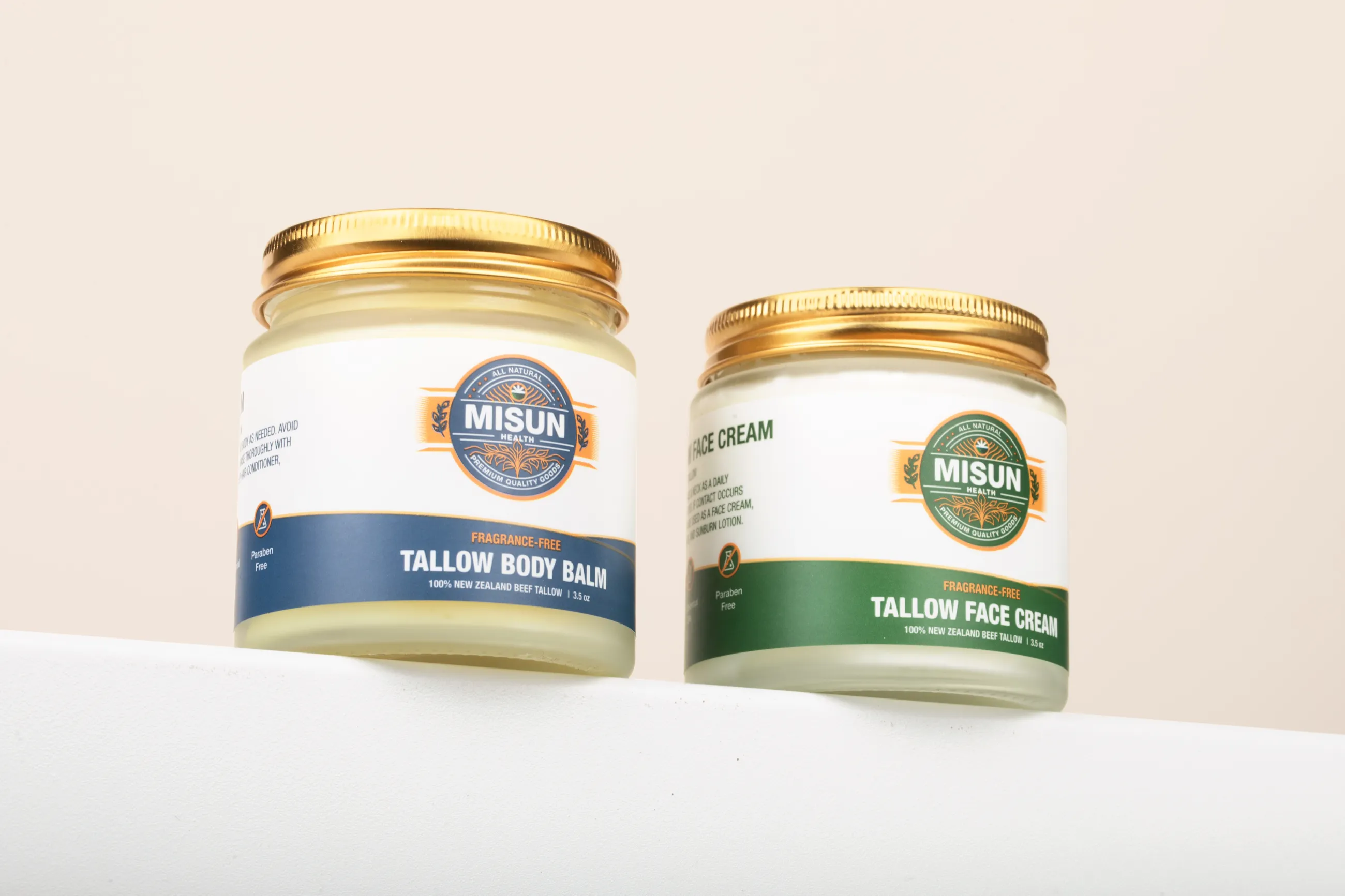 Misun Health
Common Questions
Is Amlactin better than beef tallow for rough skin?
Usually for rough texture, yes. Amlactin often does more because lactic acid helps loosen buildup. Beef tallow usually wins when the bigger issue is comfort, dryness, or needing a richer finish on sensitive spots.
Can I use Amlactin and beef tallow in the same routine?
Yes. Many people use Amlactin on rough body zones, then use beef tallow only where skin still feels tight or needs more sealing, such as hands, elbows, or stubborn dry patches.
Why does Amlactin sting when beef tallow does not?
Because Amlactin includes lactic acid, which can sting on freshly shaved, over-exfoliated, cracked, or more reactive skin. Beef tallow is usually a gentler moisture-support step because it is not trying to exfoliate.
Which one is better for hands or cracked knuckles?
Beef tallow is often the easier choice there because hands and knuckles usually need comfort and sealing more than exfoliation, especially if the skin is already irritated or split-prone.
Build your routine
 Buy on Amazon
 Buy on Amazon
Related guides
More commercial pages
Explore similar commercial concerns or jump to the closest concern hub.
- Can You Bring Beef Tallow on a Plane? Carry-On Packing and Travel Dryness Routine
- Can You Put Beef Tallow on Your Lips? Dry Lips, Chapped Lips, and Lip-Line Flaking
- Unscented Moisturizer for Sensitive Skin: How to Choose a Fragrance-Free Routine That Actually Feels Comfortable
- Beef Tallow vs Lotion for Dry Skin
Related concern pages
Educational content only. This page is not medical advice and is not intended to diagnose, treat, cure, or prevent disease. If symptoms persist or worsen, consult a licensed clinician.