Broad dry skin routine + commercial evaluation
10 min read
Beef Tallow for Dry Skin
If your skin feels tight, flaky, or rough, beef tallow can be a useful moisture-support step, but not every dry patch needs the same amount or texture. The routine works better when you match whipped cream vs balm, day vs night timing, and broad dryness vs stubborn friction zones instead of treating the whole body like one surface.
Learn how to use beef tallow for dry skin with better day-vs-night timing, zone-by-zone guidance, layering choices, and clear signs that you need something lighter, stronger, or more targeted.
Quick summary
- If your skin feels tight, flaky, or rough, beef tallow can be a useful moisture-support step, but not every dry patch needs the same amount or texture. The routine works better when you match whipped cream vs balm, day vs night timing, and broad dryness vs stubborn friction zones instead of treating the whole body like one surface.
- Why broad dry skin routines fail even when the product seems rich enough: Dry skin usually gets worse because the routine is mismatched, not just because the product is too light. Indoor heat, low humidity, hot showers, frequent washing, shaving, sweat-salt buildup, and friction from clothing or bedding can all change how skin loses moisture through the day. That is why one rich product can feel perfect on shins at night, too heavy on cheeks in the morning, and still not be enough for heel edges or cracked knuckles. A better dry-skin routine starts by separating broad all-over dryness from the smaller zones that need extra sealing, then choosing texture and timing around that difference.
- How to use beef tallow by skin zone without feeling greasy everywhere: For face dryness, keep the layer thin and use whipped tallow cream on slightly damp skin so it spreads before it sits. For arms, legs, or torso, apply after bathing while skin still has a little water left, then stop before the surface feels coated. For hands, elbows, ankles, and heel rims, a richer balm usually makes more sense because those are the places where washing, friction, and contact wear product off fastest. The practical goal is not maximum shine. It is getting enough product onto the zones that dry out first while keeping the rest of the routine wearable enough to repeat every day.
Why people choose this approach
- Dry skin usually gets worse because the routine is mismatched, not just because the product is too light. Indoor heat, low humidity, hot showers, frequent washing, shaving, sweat-salt buildup, and friction from clothing or bedding can all change how skin loses moisture through the day. That is why one rich product can feel perfect on shins at night, too heavy on cheeks in the morning, and still not be enough for heel edges or cracked knuckles. A better dry-skin routine starts by separating broad all-over dryness from the smaller zones that need extra sealing, then choosing texture and timing around that difference.
- For face dryness, keep the layer thin and use whipped tallow cream on slightly damp skin so it spreads before it sits. For arms, legs, or torso, apply after bathing while skin still has a little water left, then stop before the surface feels coated. For hands, elbows, ankles, and heel rims, a richer balm usually makes more sense because those are the places where washing, friction, and contact wear product off fastest. The practical goal is not maximum shine. It is getting enough product onto the zones that dry out first while keeping the rest of the routine wearable enough to repeat every day.
Keep in mind
- Patch test first and increase use gradually based on comfort.
- Skincare supports moisture and comfort but is not a cure for medical conditions.
- If symptoms persist, worsen, or become painful, consult a licensed clinician.
Routine steps
Why broad dry skin routines fail even when the product seems rich enough
Dry skin usually gets worse because the routine is mismatched, not just because the product is too light. Indoor heat, low humidity, hot showers, frequent washing, shaving, sweat-salt buildup, and friction from clothing or bedding can all change how skin loses moisture through the day. That is why one rich product can feel perfect on shins at night, too heavy on cheeks in the morning, and still not be enough for heel edges or cracked knuckles. A better dry-skin routine starts by separating broad all-over dryness from the smaller zones that need extra sealing, then choosing texture and timing around that difference.
How to use beef tallow by skin zone without feeling greasy everywhere
For face dryness, keep the layer thin and use whipped tallow cream on slightly damp skin so it spreads before it sits. For arms, legs, or torso, apply after bathing while skin still has a little water left, then stop before the surface feels coated. For hands, elbows, ankles, and heel rims, a richer balm usually makes more sense because those are the places where washing, friction, and contact wear product off fastest. The practical goal is not maximum shine. It is getting enough product onto the zones that dry out first while keeping the rest of the routine wearable enough to repeat every day.
Daytime comfort vs nighttime repair: the split that usually works best
During the day, lighter wear feel matters because dry skin often sits under clothing, sunscreen, makeup, or repeated handwashing. That usually favors whipped cream in a thin layer and spot-only balm where skin catches or splits. At night, comfort window matters more than finish. This is when a slightly richer layer on shins, forearms, hand edges, or dry facial patches can stay in place long enough to actually help. If you keep quitting a dry-skin routine because it feels too heavy in the morning, that usually does not mean tallow is wrong. It means more of the heavy lifting should move to the nighttime slot.
A simple 7-day reset for stubborn dry skin
Keep the routine boring for one week so you can tell what is actually helping. After bathing, apply whipped tallow cream to the broad dry zones that feel tight most often. At night, add balm only to the stubborn spots like knuckles, heel edges, lip corners, elbows, or any patch that still feels rough after the cream sinks in. Try to keep shower heat, exfoliation, and cleanser swaps stable while you test. Track four things: how quickly tightness rebounds, whether flakes catch less on clothing, whether rough patches feel softer by morning, and whether you keep wanting to use the routine. If the answer is no because the finish feels too heavy, adjust the amount or reserve the richer layer for night instead of abandoning the whole category.
Why broad dry skin routines fail even when the product seems rich enough
Dry skin usually gets worse because the routine is mismatched, not just because the product is too light. Indoor heat, low humidity, hot showers, frequent washing, shaving, sweat-salt buildup, and friction from clothing or bedding can all change how skin loses moisture through the day. That is why one rich product can feel perfect on shins at night, too heavy on cheeks in the morning, and still not be enough for heel edges or cracked knuckles. A better dry-skin routine starts by separating broad all-over dryness from the smaller zones that need extra sealing, then choosing texture and timing around that difference.
How to use beef tallow by skin zone without feeling greasy everywhere
For face dryness, keep the layer thin and use whipped tallow cream on slightly damp skin so it spreads before it sits. For arms, legs, or torso, apply after bathing while skin still has a little water left, then stop before the surface feels coated. For hands, elbows, ankles, and heel rims, a richer balm usually makes more sense because those are the places where washing, friction, and contact wear product off fastest. The practical goal is not maximum shine. It is getting enough product onto the zones that dry out first while keeping the rest of the routine wearable enough to repeat every day.
Daytime comfort vs nighttime repair: the split that usually works best
During the day, lighter wear feel matters because dry skin often sits under clothing, sunscreen, makeup, or repeated handwashing. That usually favors whipped cream in a thin layer and spot-only balm where skin catches or splits. At night, comfort window matters more than finish. This is when a slightly richer layer on shins, forearms, hand edges, or dry facial patches can stay in place long enough to actually help. If you keep quitting a dry-skin routine because it feels too heavy in the morning, that usually does not mean tallow is wrong. It means more of the heavy lifting should move to the nighttime slot.
When beef tallow makes sense, and when lotion, urea, or petrolatum may fit better
Beef tallow often makes the most sense when skin feels tight, overwashed, wind-exposed, or generally depleted and you want richer comfort without a treatment-style sting. A lighter lotion may fit better when you need quick daytime spread across large body areas and know you will skip the routine if it feels heavy. Urea-style creams can make more sense when the bigger problem is rough buildup, scaling, or thick texture on feet, knees, elbows, or lower legs rather than simple tightness. Petrolatum-heavy products usually make more sense when you need maximum overnight sealing on a very small number of cracks. Many good dry-skin routines use more than one lane: lighter all-over moisture, tallow for richer comfort, and an even denser topcoat only on the worst spots.
A simple 7-day reset for stubborn dry skin
Keep the routine boring for one week so you can tell what is actually helping. After bathing, apply whipped tallow cream to the broad dry zones that feel tight most often. At night, add balm only to the stubborn spots like knuckles, heel edges, lip corners, elbows, or any patch that still feels rough after the cream sinks in. Try to keep shower heat, exfoliation, and cleanser swaps stable while you test. Track four things: how quickly tightness rebounds, whether flakes catch less on clothing, whether rough patches feel softer by morning, and whether you keep wanting to use the routine. If the answer is no because the finish feels too heavy, adjust the amount or reserve the richer layer for night instead of abandoning the whole category.
When dry skin needs more than a richer moisturizer
If skin is cracking, bleeding, burning, or staying inflamed despite consistent gentle care, it may need a different product type or clinician guidance rather than just more occlusion. The same is true if the real issue is recurrent rash, worsening redness, or dry patches that keep returning in one area no matter what you apply. Tallow can support comfort and moisture retention, but persistent or worsening symptoms deserve a more specific evaluation than a general dry-skin routine can provide.
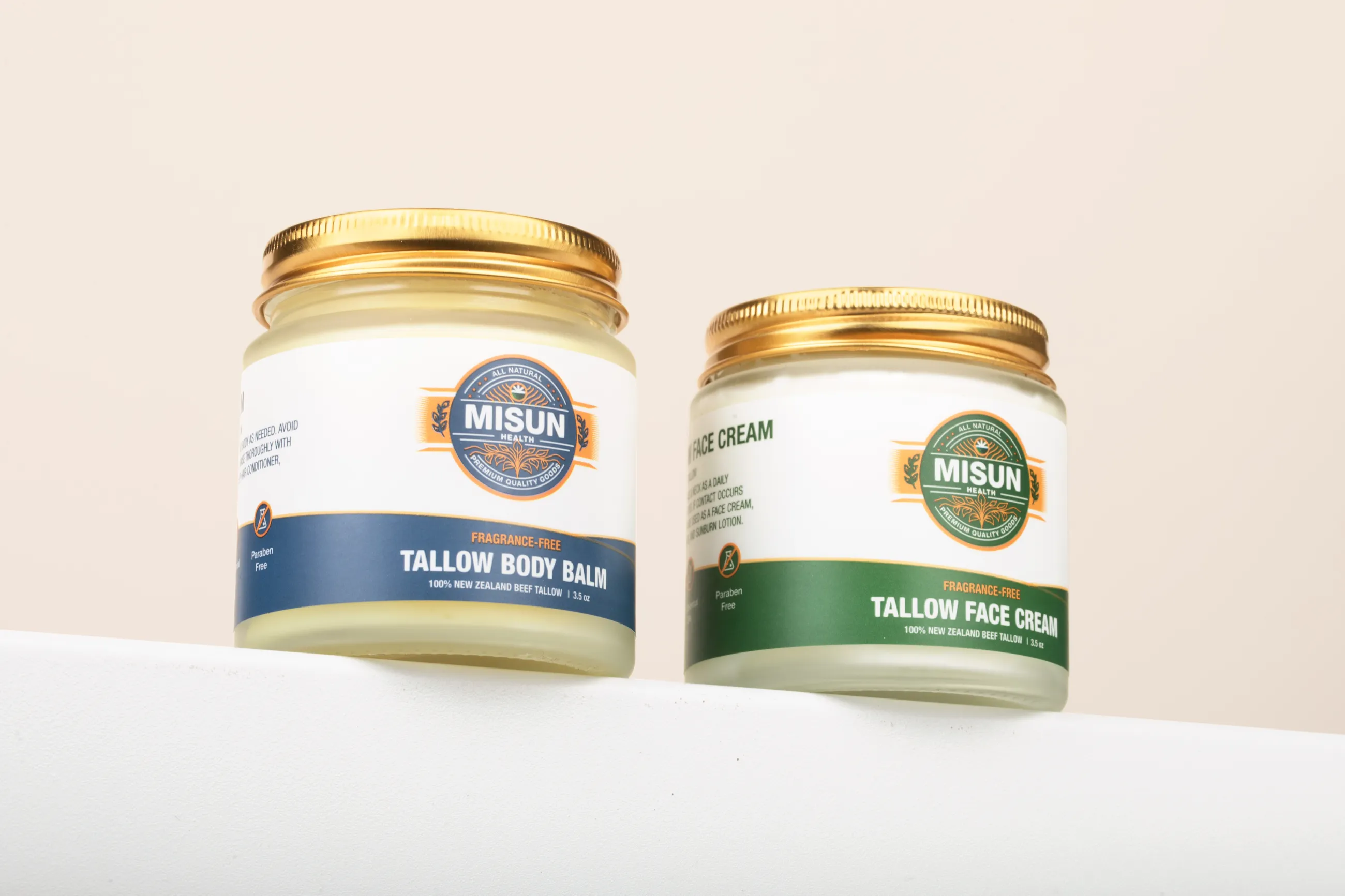 Misun Health
Common Questions
Is beef tallow good for dry skin everywhere on the body?
It can be useful on many dry areas, but the best amount and format change by zone. Whipped cream is usually easier for broader dryness on arms, legs, torso, or cheeks, while balm usually fits better on concentrated rough patches like knuckles, heel rims, elbows, or lip edges.
Should I use beef tallow in the morning or only at night for dry skin?
Many people do best with both, but not in the same amount. A thin morning layer can help broad dryness feel comfortable under the rest of the routine, while a richer nighttime layer usually works better for the spots that dry out fastest or feel rough again by bedtime.
Is beef tallow good for dry hands and other high-friction areas?
Yes, especially when dryness gets worse from washing, sanitizer, shoes, or clothing friction. Those zones often need more than the amount you would use on cheeks or forearms, which is why balm or a thicker nighttime layer usually makes more sense on hands, heels, elbows, and knuckle lines.
Beef tallow vs Vaseline for dry skin: which is better?
Vaseline usually wins on maximum sealing power, especially for a few very stubborn cracks. Beef tallow often wins when you want a richer feel than lotion but something more wearable than straight petrolatum across broader dry zones. The better choice depends on whether the problem is all-over tightness, rough texture, or tiny spots that need a heavier overnight topcoat.
Beef tallow vs shea butter for dry skin?
Shea butter often feels softer and more cushiony right away, while tallow often feels a little denser and longer-wearing. If one texture makes you avoid the routine, the other may be a better daily fit. The best answer is usually the product you actually keep applying to the dry zones that need it most.
Can I use beef tallow after shaving or on razor-dry skin?
You can use a very thin layer after shaving only if skin feels calm and intact. If the area is stinging, inflamed, or nicked, keep the routine gentle first and wait until the skin settles before using a richer occlusive step.
What if beef tallow feels too heavy for my dry skin?
That usually means the amount, timing, or texture needs adjusting, not that the product category is automatically wrong for you. Use less, apply on slightly damp skin, reserve the richer layer for night, or switch broad daytime areas to a lighter lotion while keeping tallow for the most stubborn dry patches.
Build your routine
 Buy on Amazon
 Buy on Amazon
Related guides
More commercial pages
Explore similar commercial concerns or jump to the closest concern hub.
- Can You Bring Beef Tallow on a Plane? Carry-On Packing and Travel Dryness Routine
- Can You Put Beef Tallow on Your Lips? Dry Lips, Chapped Lips, and Lip-Line Flaking
- Unscented Moisturizer for Sensitive Skin: How to Choose a Fragrance-Free Routine That Actually Feels Comfortable
- Beef Tallow vs Lotion for Dry Skin
Related concern pages
Educational content only. This page is not medical advice and is not intended to diagnose, treat, cure, or prevent disease. If symptoms persist or worsen, consult a licensed clinician.