Commercial product comparison
11 min read
Beef Tallow vs CeraVe Moisturizer for Dry, Sensitive Skin
CeraVe-style moisturizers usually make more sense when you want a lighter barrier-cream base that spreads predictably, while beef tallow usually fits when dry skin needs a richer comfort layer or more overnight staying power. The best answer is often not replacing one with the other. It is choosing the right texture for the skin zone, time of day, and how reactive your sensitive skin feels.
Compare beef tallow vs CeraVe moisturizer for dry sensitive skin, including barrier-cream hydration, richer tallow sealing, face/body fit, and when layering both makes sense.
Quick summary
- CeraVe-style moisturizers usually make more sense when you want a lighter barrier-cream base that spreads predictably, while beef tallow usually fits when dry skin needs a richer comfort layer or more overnight staying power. The best answer is often not replacing one with the other. It is choosing the right texture for the skin zone, time of day, and how reactive your sensitive skin feels.
- Quick answer: CeraVe moisturizer base vs richer tallow comfort layer: If your skin mainly needs a dependable daily moisturizer that spreads easily across the face, arms, legs, or torso, a CeraVe moisturizer often fits better as the base step. If your skin feels tight again quickly, looks flaky around the mouth, gets rough on knuckles, or needs more cushion at night, beef tallow can make more sense as the richer comfort layer. The comparison is less useful when it tries to crown one universal winner. Dry sensitive skin usually does better when the lighter product handles broad coverage and the richer product handles the places that keep rebounding.
- Barrier hydration vs occlusive comfort: what searchers are really comparing: People searching for beef tallow vs CeraVe moisturizer are usually deciding between two routine roles. CeraVe-style moisturizers are often chosen because they feel familiar, spread evenly, and fit a simple morning or evening barrier routine. Beef tallow is usually considered when that lighter routine is not enough on stubborn dry patches, wind-exposed cheeks, chapped hand edges, or rough body zones. That does not mean tallow replaces barrier hydration for everyone. It means tallow can be the richer finishing or spot-comfort step when plain moisturizer is not staying comfortable long enough.
Why people choose this approach
- If your skin mainly needs a dependable daily moisturizer that spreads easily across the face, arms, legs, or torso, a CeraVe moisturizer often fits better as the base step. If your skin feels tight again quickly, looks flaky around the mouth, gets rough on knuckles, or needs more cushion at night, beef tallow can make more sense as the richer comfort layer. The comparison is less useful when it tries to crown one universal winner. Dry sensitive skin usually does better when the lighter product handles broad coverage and the richer product handles the places that keep rebounding.
- People searching for beef tallow vs CeraVe moisturizer are usually deciding between two routine roles. CeraVe-style moisturizers are often chosen because they feel familiar, spread evenly, and fit a simple morning or evening barrier routine. Beef tallow is usually considered when that lighter routine is not enough on stubborn dry patches, wind-exposed cheeks, chapped hand edges, or rough body zones. That does not mean tallow replaces barrier hydration for everyone. It means tallow can be the richer finishing or spot-comfort step when plain moisturizer is not staying comfortable long enough.
Keep in mind
- Patch test first and increase use gradually based on comfort.
- Skincare supports moisture and comfort but is not a cure for medical conditions.
- If symptoms persist, worsen, or become painful, consult a licensed clinician.
Quick comparison
| Feature | Beef tallow | CeraVe moisturizer |
|---|---|---|
| Best fit | Richer comfort, dry patches, nighttime sealing, and small high-friction zones that keep feeling tight | Lighter daily barrier-cream hydration, broad face/body use, and routines that need predictable spread |
| Texture | Creamy or balm-like, more cushiony, and easier to overapply if you use too much | Usually lighter lotion or cream feel with faster all-over spread |
| Sensitive skin tradeoff | Simple fragrance-free richness can feel comforting, but reactive or congestion-prone skin should test slowly | Familiar barrier-support format, but still not automatically tolerated by every sensitive-skin routine |
| Layering role | Usually works best after a lighter moisturizer or on top of damp skin where extra sealing is needed | Usually works best as the base moisturizer before any richer spot layer |
Routine steps
Quick answer: CeraVe moisturizer base vs richer tallow comfort layer
If your skin mainly needs a dependable daily moisturizer that spreads easily across the face, arms, legs, or torso, a CeraVe moisturizer often fits better as the base step. If your skin feels tight again quickly, looks flaky around the mouth, gets rough on knuckles, or needs more cushion at night, beef tallow can make more sense as the richer comfort layer. The comparison is less useful when it tries to crown one universal winner. Dry sensitive skin usually does better when the lighter product handles broad coverage and the richer product handles the places that keep rebounding.
When layering both makes more sense than switching
A practical routine is to apply the lighter moisturizer first, let it settle, and then add a thin tallow layer only where dryness breaks through. That order keeps the routine from becoming greasy while still giving the driest zones more staying power. For example, use your CeraVe-style moisturizer across the face or body, then add tallow to cheek flakes, knuckle lines, lip edges, elbows, or heel rims. If you reverse the order and put a rich layer everywhere first, the lighter cream may not spread as cleanly and the routine can feel heavier than it needs to.
Sensitive-skin testing rules before you commit
Sensitive skin needs boring tests, not dramatic switches. Keep cleanser, sunscreen, actives, shaving habits, and shower temperature stable. Test one small area for several nights before expanding, especially if your skin is acne-prone, rosacea-prone, or easily congested under rich textures. Track tightness, redness, warmth, bumps, flaking, and whether you want to keep using the texture. If tallow improves comfort on dry patches but feels too rich for the whole face, that is not a failure. It is a sign that it belongs in a targeted role rather than as an all-over replacement.
A fair 10 to 14 day comparison method
Compare matched areas instead of changing everything at once. Try CeraVe moisturizer on one hand and a thin tallow layer on the other, or use moisturizer across both cheeks and add tallow only to one repeat-dry patch. Keep the amount consistent and judge practical signals: how fast tightness returns, whether flakes catch less by morning, whether the finish works under clothing or sunscreen, and whether the routine is easy enough to repeat. The winner is not always the product that feels richest on day one. For dry sensitive skin, the winner is the routine you can keep using without irritation or residue fatigue.
Quick answer: CeraVe moisturizer base vs richer tallow comfort layer
If your skin mainly needs a dependable daily moisturizer that spreads easily across the face, arms, legs, or torso, a CeraVe moisturizer often fits better as the base step. If your skin feels tight again quickly, looks flaky around the mouth, gets rough on knuckles, or needs more cushion at night, beef tallow can make more sense as the richer comfort layer. The comparison is less useful when it tries to crown one universal winner. Dry sensitive skin usually does better when the lighter product handles broad coverage and the richer product handles the places that keep rebounding.
Barrier hydration vs occlusive comfort: what searchers are really comparing
People searching for beef tallow vs CeraVe moisturizer are usually deciding between two routine roles. CeraVe-style moisturizers are often chosen because they feel familiar, spread evenly, and fit a simple morning or evening barrier routine. Beef tallow is usually considered when that lighter routine is not enough on stubborn dry patches, wind-exposed cheeks, chapped hand edges, or rough body zones. That does not mean tallow replaces barrier hydration for everyone. It means tallow can be the richer finishing or spot-comfort step when plain moisturizer is not staying comfortable long enough.
Face, hands, and body: where each option usually fits better
On the face, start conservatively. A CeraVe moisturizer may be easier for full-face daytime use under sunscreen, while a rice-grain amount of whipped tallow cream may fit better on dry cheek patches, mouth corners, or wind-stressed areas at night. On hands, tallow often feels useful on knuckles, cuticles, and hand edges that dry out after washing, while a lighter moisturizer may be more practical between tasks. On the body, CeraVe-style creams can cover broad areas quickly, but tallow can be more satisfying on elbows, knees, shins, heel rims, or any patch that still feels tight after a normal cream layer.
When layering both makes more sense than switching
A practical routine is to apply the lighter moisturizer first, let it settle, and then add a thin tallow layer only where dryness breaks through. That order keeps the routine from becoming greasy while still giving the driest zones more staying power. For example, use your CeraVe-style moisturizer across the face or body, then add tallow to cheek flakes, knuckle lines, lip edges, elbows, or heel rims. If you reverse the order and put a rich layer everywhere first, the lighter cream may not spread as cleanly and the routine can feel heavier than it needs to.
Sensitive-skin testing rules before you commit
Sensitive skin needs boring tests, not dramatic switches. Keep cleanser, sunscreen, actives, shaving habits, and shower temperature stable. Test one small area for several nights before expanding, especially if your skin is acne-prone, rosacea-prone, or easily congested under rich textures. Track tightness, redness, warmth, bumps, flaking, and whether you want to keep using the texture. If tallow improves comfort on dry patches but feels too rich for the whole face, that is not a failure. It is a sign that it belongs in a targeted role rather than as an all-over replacement.
A fair 10 to 14 day comparison method
Compare matched areas instead of changing everything at once. Try CeraVe moisturizer on one hand and a thin tallow layer on the other, or use moisturizer across both cheeks and add tallow only to one repeat-dry patch. Keep the amount consistent and judge practical signals: how fast tightness returns, whether flakes catch less by morning, whether the finish works under clothing or sunscreen, and whether the routine is easy enough to repeat. The winner is not always the product that feels richest on day one. For dry sensitive skin, the winner is the routine you can keep using without irritation or residue fatigue.
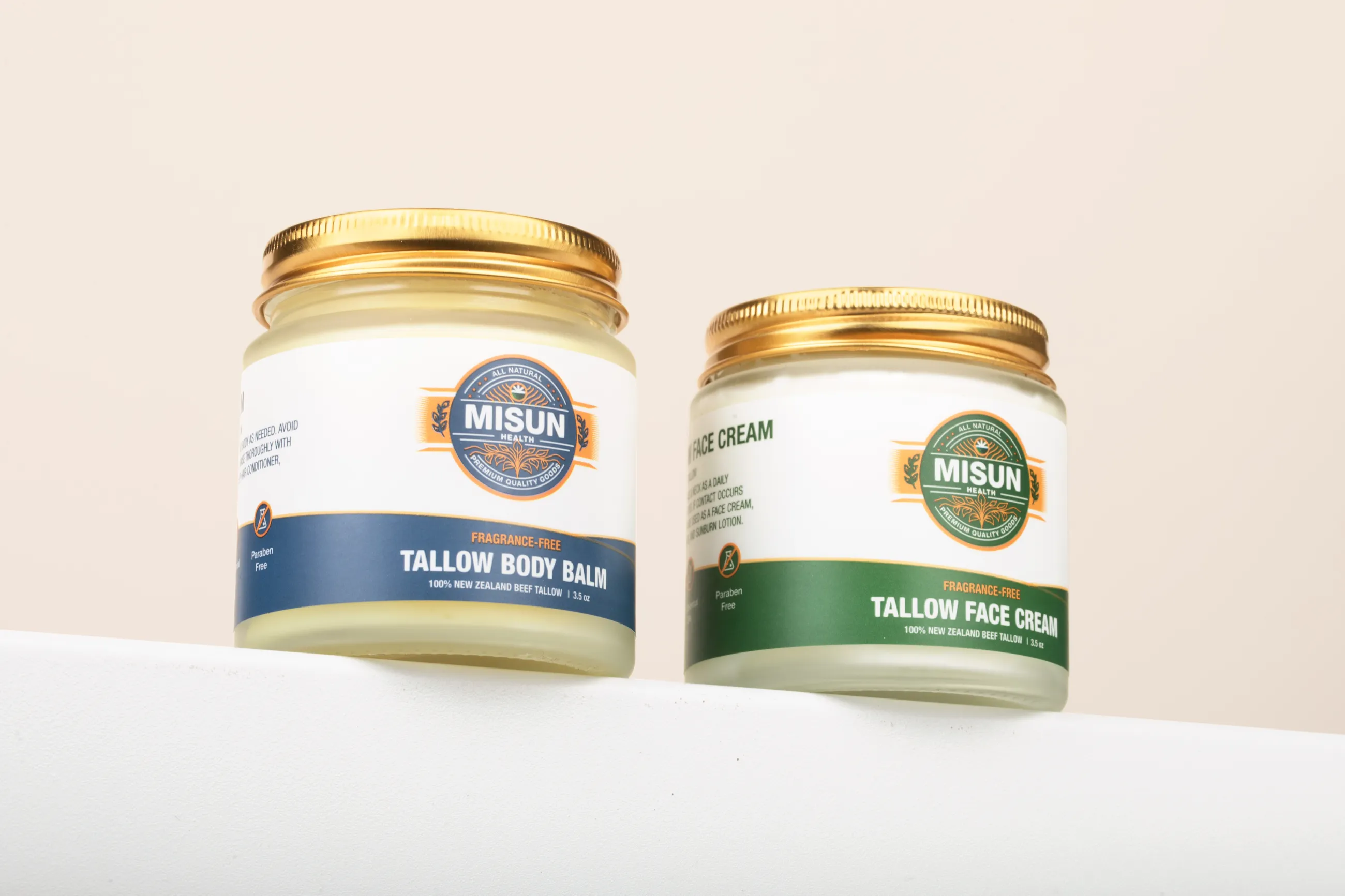 Misun Health
Common Questions
Is beef tallow better than CeraVe moisturizer for dry sensitive skin?
Not automatically. Beef tallow is often richer and more comforting on stubborn dry patches, while CeraVe-style moisturizers are often easier as a lighter daily base. Many dry sensitive routines use moisturizer first and tallow only where extra comfort or sealing is needed.
Can I use CeraVe moisturizer and beef tallow together?
Yes. Use the lighter moisturizer first, then add a very small amount of tallow on the areas that still feel tight, flaky, or rough. This usually works better than covering every area with a rich layer.
Which one is better for the face?
For full-face daytime use, a lighter CeraVe moisturizer may be easier under sunscreen. Beef tallow often fits better as a tiny night layer on dry patches, mouth corners, or wind-stressed areas if your skin tolerates richer textures.
Which one is better for hands and body?
CeraVe-style moisturizers are often easier for broad body coverage. Beef tallow can be more useful on knuckles, cuticles, elbows, heel rims, and other spots where dryness keeps rebounding after a normal cream layer.
Should sensitive or acne-prone skin avoid beef tallow?
Not every sensitive or acne-prone person has to avoid it, but the test should be slow and small. If rich textures make you feel warmer, bumpier, or more congested, keep tallow off broad facial areas and use a lighter moisturizer as the baseline.
Build your routine
 Buy on Amazon
 Buy on Amazon
Related guides
More commercial pages
Explore similar commercial concerns or jump to the closest concern hub.
- Can You Bring Beef Tallow on a Plane? Carry-On Packing and Travel Dryness Routine
- Can You Put Beef Tallow on Your Lips? Dry Lips, Chapped Lips, and Lip-Line Flaking
- Unscented Moisturizer for Sensitive Skin: How to Choose a Fragrance-Free Routine That Actually Feels Comfortable
- Beef Tallow vs Lotion for Dry Skin
Related concern pages
Educational content only. This page is not medical advice and is not intended to diagnose, treat, cure, or prevent disease. If symptoms persist or worsen, consult a licensed clinician.