High-intent lip dryness routine
11 min read
Can You Put Beef Tallow on Your Lips? Dry Lips, Chapped Lips, and Lip-Line Flaking
Yes, you can put plain, fragrance-free beef tallow on dry lips if your skin tolerates it, but the best version is usually a tiny, repeatable comfort layer, not a heavy all-day coating. Use the richest layer at night, keep daytime applications small enough that you do not lick them off, and treat mouth corners or flaky lip borders as exact spots rather than smearing balm far past the problem area.
A practical beef tallow lip routine for dry lips, chapped lips, and lip-line flaking, including when it is okay to put tallow on lips, how much to use, mouth-corner split care, and when balm works better than a lighter cream.
Quick summary
- Yes, you can put plain, fragrance-free beef tallow on dry lips if your skin tolerates it, but the best version is usually a tiny, repeatable comfort layer, not a heavy all-day coating. Use the richest layer at night, keep daytime applications small enough that you do not lick them off, and treat mouth corners or flaky lip borders as exact spots rather than smearing balm far past the problem area.
- Why dry lips, chapped lips, and lip-line flaking behave differently: Lips lose moisture quickly because the skin there is thinner, gets less natural oil support, and takes constant friction from talking, eating, wiping, weather, and lip licking. But the center of the lips, the lip border, and the mouth corners do not always need the same thing. Someone can have classic chapped lips from wind and indoor air, while the outer lip line is reacting more to toothpaste residue, retinoid drift, tissues, or frequent face washing. Mouth corners may crack because they keep reopening with talking, smiling, and eating. That is why one broad, greasy layer does not always solve the real problem, and why lips often do better when you treat the exact dry zone instead of coating the whole area the same way.
- Can you put beef tallow on your lips, and who usually likes it most?: Yes, many people use plain, fragrance-free beef tallow on lips when they want a simple comfort layer for tightness, wind-chapping, or flaky lip edges. It tends to make the most sense for people who want a moisture-sealing step rather than a glossy cosmetic lip product. The key is amount and ingredient simplicity. A rice-grain or smaller amount pressed on usually feels better than a thick coat that immediately turns greasy, slides off, or gets wiped away. If your lips only feel mildly dry, start tiny. If they are cracked, papery, or repeatedly splitting by bedtime, that is when a richer balm-style layer usually makes more sense than treating the area like the rest of your face.
Why people choose this approach
- Lips lose moisture quickly because the skin there is thinner, gets less natural oil support, and takes constant friction from talking, eating, wiping, weather, and lip licking. But the center of the lips, the lip border, and the mouth corners do not always need the same thing. Someone can have classic chapped lips from wind and indoor air, while the outer lip line is reacting more to toothpaste residue, retinoid drift, tissues, or frequent face washing. Mouth corners may crack because they keep reopening with talking, smiling, and eating. That is why one broad, greasy layer does not always solve the real problem, and why lips often do better when you treat the exact dry zone instead of coating the whole area the same way.
- Yes, many people use plain, fragrance-free beef tallow on lips when they want a simple comfort layer for tightness, wind-chapping, or flaky lip edges. It tends to make the most sense for people who want a moisture-sealing step rather than a glossy cosmetic lip product. The key is amount and ingredient simplicity. A rice-grain or smaller amount pressed on usually feels better than a thick coat that immediately turns greasy, slides off, or gets wiped away. If your lips only feel mildly dry, start tiny. If they are cracked, papery, or repeatedly splitting by bedtime, that is when a richer balm-style layer usually makes more sense than treating the area like the rest of your face.
Keep in mind
- Patch test first and increase use gradually based on comfort.
- Skincare supports moisture and comfort but is not a cure for medical conditions.
- If symptoms persist, worsen, or become painful, consult a licensed clinician.
Routine steps
How much tallow to use on lips without making them feel greasy
Start smaller than you think. Warm a tiny dot between clean fingertips, press it into the center of the lips, then tap any leftover product along the lip border or corners. If you can visibly see a thick white or shiny layer, you probably used more than you need for daytime. For a lip balm replacement, the goal is a flexible comfort film that lets you talk, drink, and work without constantly noticing the product. Save the visibly richer layer for bedtime, cold wind exposure, or a short recovery phase when lips are already papery and tight.
The best daytime routine if your lips keep drying back out
During the day, the winning routine is the one that stays wearable. Use a very small amount after washing your face, after brushing your teeth if your lips feel stripped, and again only when they start to feel tight instead of waiting until they are already peeling. If wind, cold air, long conversations, or a matte lipstick formula dry you out fast, keep reapplication tiny and frequent rather than trying to survive on one thick morning layer. Many people do better when they press product onto the center of the lips first, then add only a pinpoint amount to the outer border or mouth corners that actually feel rough. That keeps the lips protected without making the area feel slick, messy, or more likely to be licked off.
How to use beef tallow for mouth-corner cracks and flaky lip edges
Lip-line dryness often acts more like irritated facial skin than classic chapped lips. If the skin just outside the lip border keeps flaking, or the corners split every time you smile or eat, heavier all-over application is usually less important than exact seam coverage. Use a thin layer on the full lip surface only if lips feel generally dry, then add a slightly richer dot to the corners or peeling border that keep reopening. Reapply after meals if those seams feel stripped again. If toothpaste foam, spicy foods, drooling during sleep, retinoid migration, or frequent tissue wiping seem to make the corners worse, reducing those triggers is often as important as the moisturizer itself. If the corners become very red, painful, crusty, or keep splitting despite gentle care, stop experimenting and get professional guidance.
Night routine: when a richer balm layer works better than a lighter cream
Night is usually the best time for the heavier repair step because you are not eating, drinking, talking, or wiping the product off constantly. If lips feel only mildly tight, a thin layer may be enough. If they feel papery, rough, or catch when you smile, use a denser balm layer before bed and let it sit undisturbed. This is also the better time to spot-treat mouth corners and the skin just outside the lip line, because transfer matters less. A simple split works well for many people: barely-there daytime application so the routine stays practical, then a more deliberate balm layer at night when staying power matters more than elegance.
Why dry lips, chapped lips, and lip-line flaking behave differently
Lips lose moisture quickly because the skin there is thinner, gets less natural oil support, and takes constant friction from talking, eating, wiping, weather, and lip licking. But the center of the lips, the lip border, and the mouth corners do not always need the same thing. Someone can have classic chapped lips from wind and indoor air, while the outer lip line is reacting more to toothpaste residue, retinoid drift, tissues, or frequent face washing. Mouth corners may crack because they keep reopening with talking, smiling, and eating. That is why one broad, greasy layer does not always solve the real problem, and why lips often do better when you treat the exact dry zone instead of coating the whole area the same way.
Can you put beef tallow on your lips, and who usually likes it most?
Yes, many people use plain, fragrance-free beef tallow on lips when they want a simple comfort layer for tightness, wind-chapping, or flaky lip edges. It tends to make the most sense for people who want a moisture-sealing step rather than a glossy cosmetic lip product. The key is amount and ingredient simplicity. A rice-grain or smaller amount pressed on usually feels better than a thick coat that immediately turns greasy, slides off, or gets wiped away. If your lips only feel mildly dry, start tiny. If they are cracked, papery, or repeatedly splitting by bedtime, that is when a richer balm-style layer usually makes more sense than treating the area like the rest of your face.
Is beef tallow good for dry lips, chapped lips, or lip balm replacement?
Beef tallow can be good for dry lips when the main problem is moisture loss, wind exposure, or the feeling that lighter lip balms disappear too quickly. It is not automatically better than every lip balm, and it is not the right fit for everyone. A good use case is a fragrance-free balm texture that stays comfortable and reduces the need to keep rubbing at flaky edges. A weaker use case is applying a thick layer over irritated, burning, rashy, or crusted corners and hoping it fixes the cause. For everyday chapped lips, judge it by practical signals: less tightness after brushing, fewer flakes at the lip line, less sock-like snagging when you smile, and less need to reapply every few minutes.
How much tallow to use on lips without making them feel greasy
Start smaller than you think. Warm a tiny dot between clean fingertips, press it into the center of the lips, then tap any leftover product along the lip border or corners. If you can visibly see a thick white or shiny layer, you probably used more than you need for daytime. For a lip balm replacement, the goal is a flexible comfort film that lets you talk, drink, and work without constantly noticing the product. Save the visibly richer layer for bedtime, cold wind exposure, or a short recovery phase when lips are already papery and tight.
The best daytime routine if your lips keep drying back out
During the day, the winning routine is the one that stays wearable. Use a very small amount after washing your face, after brushing your teeth if your lips feel stripped, and again only when they start to feel tight instead of waiting until they are already peeling. If wind, cold air, long conversations, or a matte lipstick formula dry you out fast, keep reapplication tiny and frequent rather than trying to survive on one thick morning layer. Many people do better when they press product onto the center of the lips first, then add only a pinpoint amount to the outer border or mouth corners that actually feel rough. That keeps the lips protected without making the area feel slick, messy, or more likely to be licked off.
How to use beef tallow for mouth-corner cracks and flaky lip edges
Lip-line dryness often acts more like irritated facial skin than classic chapped lips. If the skin just outside the lip border keeps flaking, or the corners split every time you smile or eat, heavier all-over application is usually less important than exact seam coverage. Use a thin layer on the full lip surface only if lips feel generally dry, then add a slightly richer dot to the corners or peeling border that keep reopening. Reapply after meals if those seams feel stripped again. If toothpaste foam, spicy foods, drooling during sleep, retinoid migration, or frequent tissue wiping seem to make the corners worse, reducing those triggers is often as important as the moisturizer itself. If the corners become very red, painful, crusty, or keep splitting despite gentle care, stop experimenting and get professional guidance.
Night routine: when a richer balm layer works better than a lighter cream
Night is usually the best time for the heavier repair step because you are not eating, drinking, talking, or wiping the product off constantly. If lips feel only mildly tight, a thin layer may be enough. If they feel papery, rough, or catch when you smile, use a denser balm layer before bed and let it sit undisturbed. This is also the better time to spot-treat mouth corners and the skin just outside the lip line, because transfer matters less. A simple split works well for many people: barely-there daytime application so the routine stays practical, then a more deliberate balm layer at night when staying power matters more than elegance.
Small habits that stop the crack-and-peel cycle from restarting
Supportive lip care works better when the rest of the routine stops creating rebound dryness. Wipe toothpaste residue fully from the corners of the mouth, go easy on exfoliating acids and retinoids near the lip border when it is already flaky, and be careful with heavily fragranced or minty lip products during recovery. If you keep licking your lips because they feel tight, that is usually a sign the routine needs smaller repeat applications, not one heavier coat once a day. The goal is fewer flakes, fewer moments where the lips sting after eating or brushing, and fewer times the corners split back open right after they seemed to heal.
When beef tallow is not the right lip fix
Do not treat every lip problem as dryness. If the lips are swollen, intensely burning, crusting, bleeding, or reacting soon after a new toothpaste, lip product, retinoid, or food exposure, pause the experiment and simplify the routine. If mouth-corner cracks keep coming back, there may be irritation, saliva, yeast, or another issue that needs different care. Tallow is best framed as a plain comfort-and-sealing step for dry or chapped lips, not as a cure for every rash, infection, allergy, or persistent split.
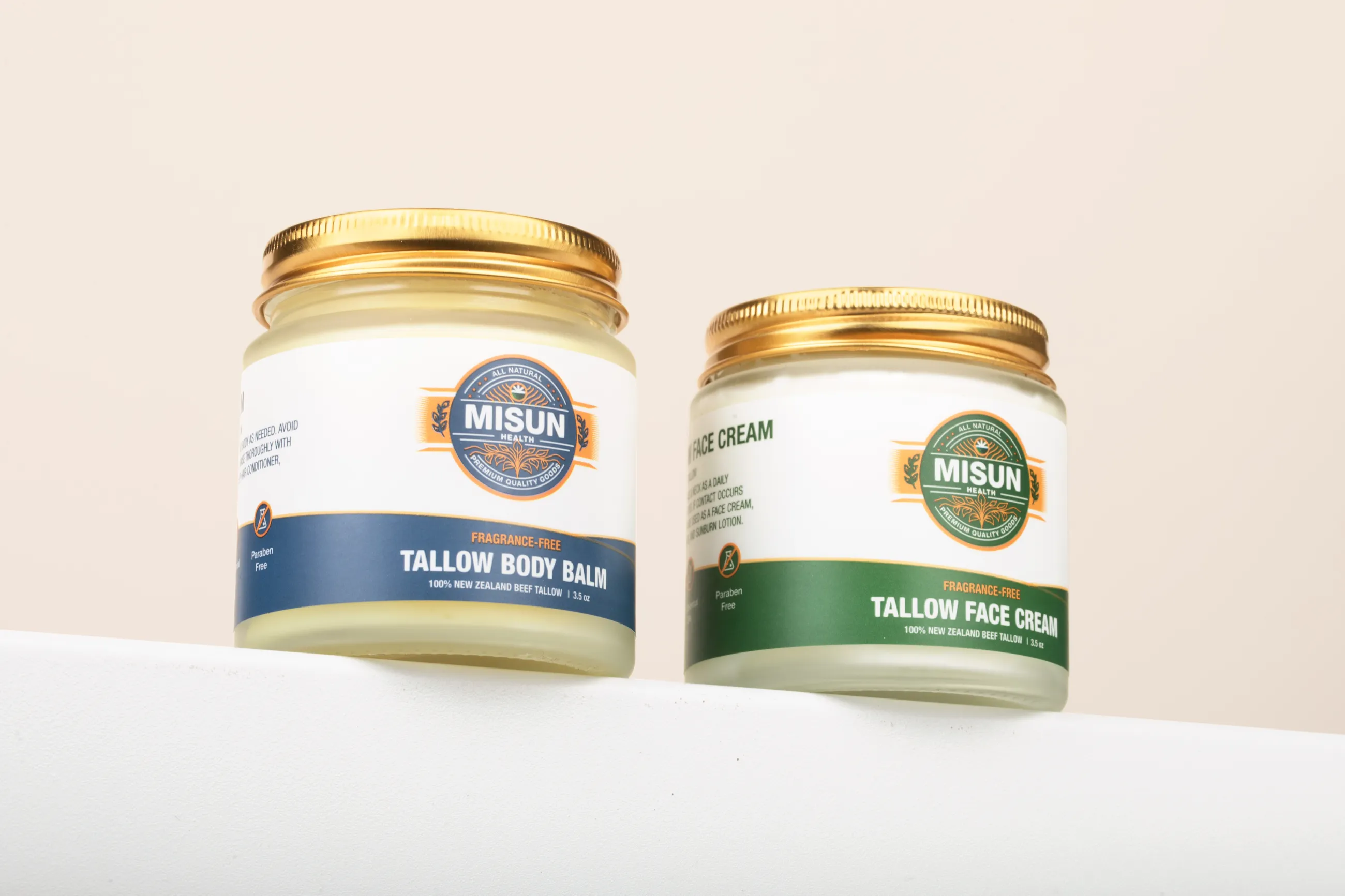 Misun Health
Common Questions
Can I put beef tallow directly on my lips?
Yes, if it is plain, fragrance-free, and your skin tolerates it. Start with a tiny amount and press it on instead of using a thick coat. Most people like it better as a small repeatable comfort layer than as a heavy all-day application.
Is beef tallow good for dry lips or chapped lips?
It can be, especially when lips feel tight, wind-chapped, flaky, or dry around the edges. The biggest win is usually comfort, staying power, and consistency, not using a huge amount at once.
Can I use beef tallow as lip balm?
Usually yes, as long as the formula is simple and comfortable for you. Use a tiny daytime layer like a balm, then a richer bedtime layer only when lips are very dry, papery, or prone to splitting.
Can beef tallow help dry mouth corners?
It can help support moisture comfort there, but placement matters. Put a slightly richer dot on the exact seams that split instead of smearing a thick layer far beyond the problem area.
Why do my lips still feel dry after putting tallow on them?
Common reasons include using too much at once and licking it off, applying only after lips are already peeling, leaving toothpaste or retinoid residue near the lip line, or needing a more consistent nighttime layer. If the issue is rashy, crusted, or painful, it may not be simple dryness.
How often should I reapply tallow to dry lips?
Use tiny layers whenever lips start to feel tight again, especially after brushing, eating, or wind exposure. Then use a richer layer before sleep if your lips keep feeling papery or cracked.
Is whipped tallow cream or balm better for lips?
For most people, balm is more practical because it stays put better on lips and mouth corners. A lighter cream can still work around the lip line if you want a thinner daytime feel.
When should I stop trying to treat dry lips at home?
If lips or mouth corners stay painful, repeatedly split, become very red or crusty, or keep worsening despite a gentle routine, it is time to get clinician guidance instead of pushing DIY care further.
Build your routine
 Buy on Amazon
 Buy on Amazon
Related guides
More commercial pages
Explore similar commercial concerns or jump to the closest concern hub.
- Can You Bring Beef Tallow on a Plane? Carry-On Packing and Travel Dryness Routine
- Unscented Moisturizer for Sensitive Skin: How to Choose a Fragrance-Free Routine That Actually Feels Comfortable
- Beef Tallow vs Lotion for Dry Skin
- Beef Tallow for Dry Skin
Related concern pages
Educational content only. This page is not medical advice and is not intended to diagnose, treat, cure, or prevent disease. If symptoms persist or worsen, consult a licensed clinician.