High-intent unscented + fragrance-free sensitive skin moisturizer
9 min read
Unscented Moisturizer for Sensitive Skin: How to Choose a Fragrance-Free Routine That Actually Feels Comfortable
Sensitive skin usually does better when you lower the number of variables, not when you keep switching products. A useful unscented moisturizer routine answers the real questions behind the search: whether fragrance-free matters, when a lighter cream makes more sense than a richer balm, how to test slowly, and how to keep the routine comfortable enough that you will actually stick with it.
Looking for an unscented moisturizer for sensitive skin? Use this practical guide to compare lighter cream versus richer balm, keep a fragrance-free routine low-variable, and test beef tallow without turning your whole face into a heavy experiment.
Quick summary
- Sensitive skin usually does better when you lower the number of variables, not when you keep switching products. A useful unscented moisturizer routine answers the real questions behind the search: whether fragrance-free matters, when a lighter cream makes more sense than a richer balm, how to test slowly, and how to keep the routine comfortable enough that you will actually stick with it.
- Quick answer: what kind of unscented moisturizer usually makes the most sense?: For most sensitive skin, the best starting point is a truly fragrance-free moisturizer that spreads easily in a thin layer and does not force you into a heavy all-over routine. Whipped tallow cream usually makes more sense when your skin feels dry, tight, or flaky but still dislikes greasy buildup, while a richer balm is usually better saved for smaller stubborn patches that keep catching, peeling, or staying rough after the lighter layer disappears. The goal is not choosing the richest possible product. It is choosing the texture you can tolerate consistently without turning a simple moisture step into another irritation variable.
- Why unscented and fragrance-free both matter for reactive skin: A lot of people searching for an unscented moisturizer are really trying to avoid the sting, warmth, or low-grade flare they keep getting from fragranced skincare. Sensitive skin can react not only to obvious perfume but also to essential oils, masking fragrance, and crowded formulas that make it harder to tell what actually triggered the problem. Using a fragrance-free moisturizer removes one of the most common avoidable variables so you can judge whether your skin simply needs steadier moisture, a lighter texture, fewer routine changes, or a different product entirely. That is why ingredient simplicity matters almost as much as the word unscented on the front label.
Why people choose this approach
- For most sensitive skin, the best starting point is a truly fragrance-free moisturizer that spreads easily in a thin layer and does not force you into a heavy all-over routine. Whipped tallow cream usually makes more sense when your skin feels dry, tight, or flaky but still dislikes greasy buildup, while a richer balm is usually better saved for smaller stubborn patches that keep catching, peeling, or staying rough after the lighter layer disappears. The goal is not choosing the richest possible product. It is choosing the texture you can tolerate consistently without turning a simple moisture step into another irritation variable.
- A lot of people searching for an unscented moisturizer are really trying to avoid the sting, warmth, or low-grade flare they keep getting from fragranced skincare. Sensitive skin can react not only to obvious perfume but also to essential oils, masking fragrance, and crowded formulas that make it harder to tell what actually triggered the problem. Using a fragrance-free moisturizer removes one of the most common avoidable variables so you can judge whether your skin simply needs steadier moisture, a lighter texture, fewer routine changes, or a different product entirely. That is why ingredient simplicity matters almost as much as the word unscented on the front label.
Keep in mind
- Patch test first and increase use gradually based on comfort.
- Skincare supports moisture and comfort but is not a cure for medical conditions.
- If symptoms persist, worsen, or become painful, consult a licensed clinician.
Routine steps
How to choose between lighter cream and richer balm
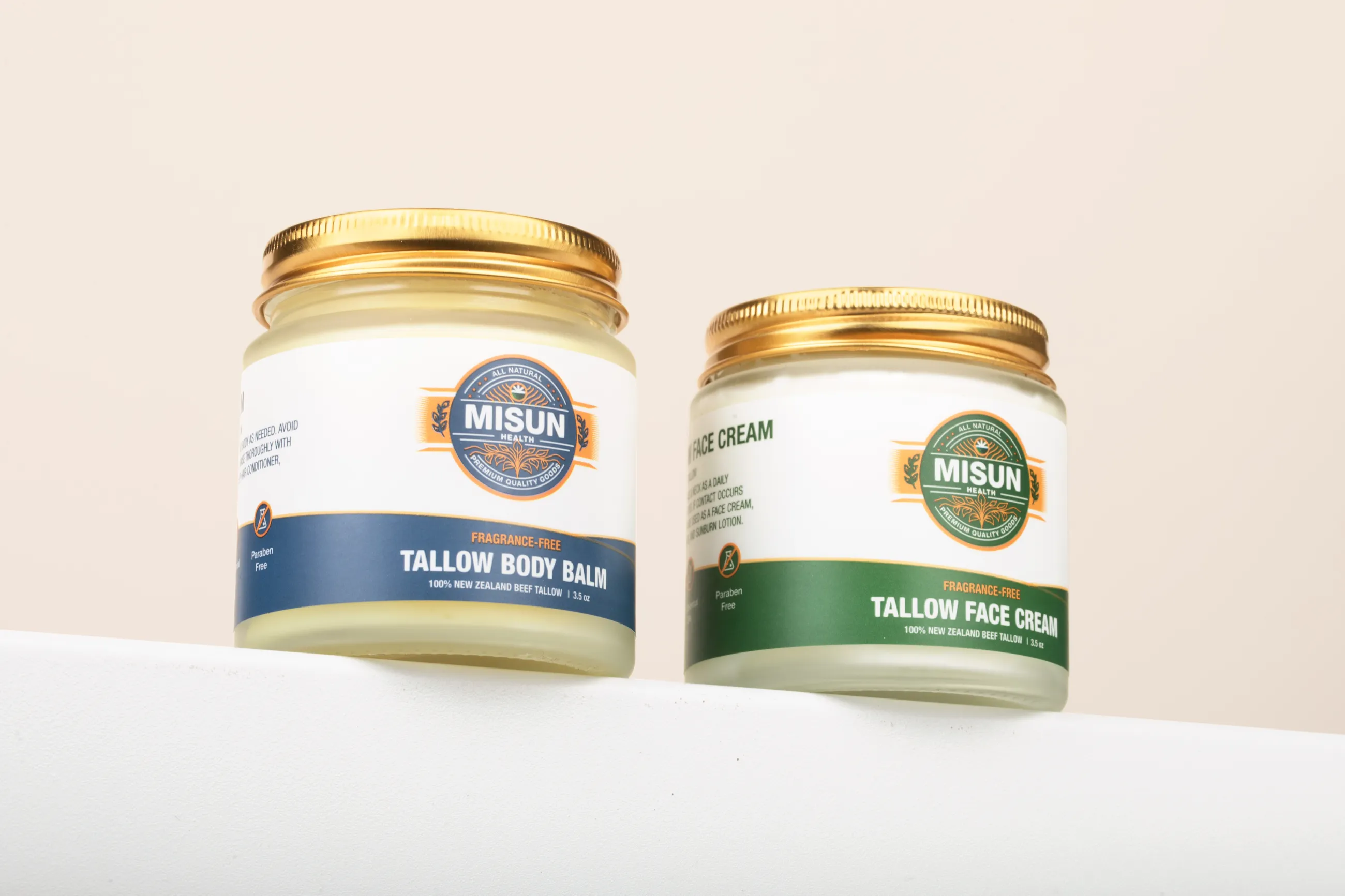
Texture matters more than people expect. If your whole face feels tight after washing but gets shiny, warm, or uncomfortable under heavy products, start with whipped tallow cream in a thin layer because it usually feels easier to spread and easier to stop early if it is not the right fit. If the broader skin feels okay but a few places such as mouth corners, under-eye-adjacent dry patches, nostril edges, or flaky cheek spots keep staying rough, balm is usually more useful as a tiny spot-treatment step instead of a full-face coating. Sensitive skin often does best when you split the job this way rather than forcing one rich texture onto every zone.
A low-variable 7-day test for sensitive skin
Keep cleanser, actives, exfoliants, and makeup changes as stable as possible for one week. After washing, let the skin settle, then apply a small amount of unscented moisturizer only where dryness reliably returns. During the day, thinner is usually safer because it lets you judge comfort without trapping too much residue or heat. At night, you can repeat the same light layer or add a pinpoint amount of balm on the driest spots if they still feel papery by evening. Watch for practical signals: less tightness, less flaky drag, fewer moments when skin suddenly feels stripped again, and no sense that the product is making you warmer, itchier, or bumpier. A good routine feels boring in the best way.
Quick answer: what kind of unscented moisturizer usually makes the most sense?
For most sensitive skin, the best starting point is a truly fragrance-free moisturizer that spreads easily in a thin layer and does not force you into a heavy all-over routine. Whipped tallow cream usually makes more sense when your skin feels dry, tight, or flaky but still dislikes greasy buildup, while a richer balm is usually better saved for smaller stubborn patches that keep catching, peeling, or staying rough after the lighter layer disappears. The goal is not choosing the richest possible product. It is choosing the texture you can tolerate consistently without turning a simple moisture step into another irritation variable.
Why unscented and fragrance-free both matter for reactive skin
A lot of people searching for an unscented moisturizer are really trying to avoid the sting, warmth, or low-grade flare they keep getting from fragranced skincare. Sensitive skin can react not only to obvious perfume but also to essential oils, masking fragrance, and crowded formulas that make it harder to tell what actually triggered the problem. Using a fragrance-free moisturizer removes one of the most common avoidable variables so you can judge whether your skin simply needs steadier moisture, a lighter texture, fewer routine changes, or a different product entirely. That is why ingredient simplicity matters almost as much as the word unscented on the front label.
How to choose between lighter cream and richer balm
Texture matters more than people expect. If your whole face feels tight after washing but gets shiny, warm, or uncomfortable under heavy products, start with whipped tallow cream in a thin layer because it usually feels easier to spread and easier to stop early if it is not the right fit. If the broader skin feels okay but a few places such as mouth corners, under-eye-adjacent dry patches, nostril edges, or flaky cheek spots keep staying rough, balm is usually more useful as a tiny spot-treatment step instead of a full-face coating. Sensitive skin often does best when you split the job this way rather than forcing one rich texture onto every zone.
A low-variable 7-day test for sensitive skin
Keep cleanser, actives, exfoliants, and makeup changes as stable as possible for one week. After washing, let the skin settle, then apply a small amount of unscented moisturizer only where dryness reliably returns. During the day, thinner is usually safer because it lets you judge comfort without trapping too much residue or heat. At night, you can repeat the same light layer or add a pinpoint amount of balm on the driest spots if they still feel papery by evening. Watch for practical signals: less tightness, less flaky drag, fewer moments when skin suddenly feels stripped again, and no sense that the product is making you warmer, itchier, or bumpier. A good routine feels boring in the best way.
When an unscented moisturizer is not enough by itself
If sensitive skin is getting progressively redder, stingier, more swollen, or more breakout-prone, the problem may not be simple dryness anymore. Over-cleansing, retinoids, acids, rough washcloth use, hot water, shaving, weather swings, and underlying skin conditions can all make a moisturizer seem like it is failing when the real issue is that the skin keeps getting retriggered. A fragrance-free moisturizer can still support comfort, but it should not become a reason to ignore the pattern when the skin clearly needs fewer triggers or a clinician-guided plan.
 Misun Health
Common Questions
Is unscented the same as fragrance-free?
Not always. Some products smell neutral but still contain fragrance ingredients or masking agents. For sensitive skin, fragrance-free labeling plus a simple ingredient list is usually a safer starting point than assuming unscented means nothing potentially irritating was added.
What is the best unscented moisturizer for sensitive skin if heavy creams bother me?
A lighter fragrance-free cream usually makes more sense as the baseline when heavy products leave you shiny, warm, or uncomfortable. In this routine, whipped tallow cream is usually the better first test, while richer balm is better kept for tiny flaky zones instead of full-face use.
Can sensitive skin use beef tallow daily?
Many people can use it daily in thin, targeted layers, but sensitive skin usually does best when you start slowly and keep the rest of the routine stable. The right pace is the one that improves comfort without adding new redness, stinging, or congestion.
Should I use an unscented moisturizer in the morning or at night?
Usually both can work, but with different weight. A thinner daytime layer is often easier under normal life and makeup, while nighttime is the better moment for a second light application or a tiny spot-treatment of richer balm on stubborn patches.
Build your routine
 Buy on Amazon
 Buy on Amazon
Related guides
More commercial pages
Explore similar commercial concerns or jump to the closest concern hub.
- Can You Bring Beef Tallow on a Plane? Carry-On Packing and Travel Dryness Routine
- Can You Put Beef Tallow on Your Lips? Dry Lips, Chapped Lips, and Lip-Line Flaking
- Beef Tallow vs Lotion for Dry Skin
- Beef Tallow for Dry Skin
Related concern pages
Educational content only. This page is not medical advice and is not intended to diagnose, treat, cure, or prevent disease. If symptoms persist or worsen, consult a licensed clinician.