High-intent travel dryness routine
9 min read
Can You Bring Beef Tallow on a Plane? Carry-On Packing and Travel Dryness Routine
Yes, you can usually bring beef tallow on a plane when you pack it like a travel-size cream or balm instead of a full bathroom jar. The practical win is not just getting it through security. It is bringing a small, sealed amount that handles cabin air, airport hand washing, hotel HVAC, and climate shifts without turning your carry-on or your skin routine into a mess.
A carry-on friendly beef tallow routine for travel dryness, including TSA-style cream and balm packing, small-container planning, and when to use whipped cream vs balm from airport to hotel.
Quick summary
- Yes, you can usually bring beef tallow on a plane when you pack it like a travel-size cream or balm instead of a full bathroom jar. The practical win is not just getting it through security. It is bringing a small, sealed amount that handles cabin air, airport hand washing, hotel HVAC, and climate shifts without turning your carry-on or your skin routine into a mess.
- Why travel dries skin out so quickly: Travel combines several dryness triggers at once: low-humidity plane cabins, more face touching and hand cleansing, unfamiliar water, hotel heating or air conditioning, and sudden jumps from humid to dry or cold climates. That mix can leave exposed areas like cheeks, around the mouth, lips, and hands feeling tight even when your skin is usually manageable at home. The reason travel routines fail is usually not lack of product. It is using an at-home amount in a setting where you need lighter texture, faster reapplication, and less mess.
- Can you bring beef tallow on a plane?: Usually yes, but pack it like a cream, paste, or balm because that is how airport screening will usually treat a spreadable skincare product. For a carry-on, use a travel-size container, keep it with your other small liquids and creams, and avoid bringing the original full-size jar through the checkpoint. The current TSA liquids rule covers liquids, aerosols, gels, creams, and pastes in carry-on bags, so the safest assumption is that a soft or spreadable tallow product should follow that small-container rule. If you are checking a bag, you have more room, but the container still needs to be sealed well because warmth and pressure changes can soften the texture. The goal is a practical dry-skin routine you can actually travel with, not proving that your whole jar can make the trip.
Why people choose this approach
- Travel combines several dryness triggers at once: low-humidity plane cabins, more face touching and hand cleansing, unfamiliar water, hotel heating or air conditioning, and sudden jumps from humid to dry or cold climates. That mix can leave exposed areas like cheeks, around the mouth, lips, and hands feeling tight even when your skin is usually manageable at home. The reason travel routines fail is usually not lack of product. It is using an at-home amount in a setting where you need lighter texture, faster reapplication, and less mess.
- Usually yes, but pack it like a cream, paste, or balm because that is how airport screening will usually treat a spreadable skincare product. For a carry-on, use a travel-size container, keep it with your other small liquids and creams, and avoid bringing the original full-size jar through the checkpoint. The current TSA liquids rule covers liquids, aerosols, gels, creams, and pastes in carry-on bags, so the safest assumption is that a soft or spreadable tallow product should follow that small-container rule. If you are checking a bag, you have more room, but the container still needs to be sealed well because warmth and pressure changes can soften the texture. The goal is a practical dry-skin routine you can actually travel with, not proving that your whole jar can make the trip.
Keep in mind
- Patch test first and increase use gradually based on comfort.
- Skincare supports moisture and comfort but is not a cure for medical conditions.
- If symptoms persist, worsen, or become painful, consult a licensed clinician.
Routine steps
How to pack beef tallow for a carry-on without making a mess
A small travel pot usually works better than the original jar. Fill it with a few days' worth of product, tighten the lid fully, and place it inside a simple pouch so leaks stay contained if the container warms up. Whipped cream is often the easier daytime choice because it spreads faster in tiny amounts, while balm makes sense when you only need spot treatment for lips, knuckles, nostril corners, or a dry patch that keeps catching. If you run hot, are flying somewhere warm, or do not want to guess how the texture will hold up, pack less and rely on one flexible product rather than multiple bulky backups. When in doubt, keep the carry-on portion small and put any backup amount in checked luggage.
Carry-on routine before you leave for the airport
Before heading out, apply a light layer of whipped tallow cream on slightly damp skin so your base layer feels comfortable without getting heavy. Use balm only on predictable trouble spots such as lip edges, knuckles, nostril corners, or small wind-burned patches. This gives you a flexible daytime layer before security, airport dryness, and a long stretch of recycled air. If your main question is whether tallow is worth bringing at all, this is the proof point: a small pre-airport layer plus one travel container is usually enough for most trips.
What to use on the plane vs after landing
During the flight, keep reapplication tiny and zone-specific. Whipped cream usually works better for cheeks, around the mouth, or the backs of hands when you want comfort without a coated feel. Balm is the better pick for concentrated dry spots like lip corners, cuticles, or cracked knuckles. After landing, reassess instead of automatically layering more. If skin feels tight all over, use a small cream layer first. If only a few areas are rough from friction, air, or wiping, spot-treat with balm. That is usually more comfortable than doing one heavy in-flight application and spending the rest of the day trying to blot it down.
How to avoid greasy, heavy-feeling layers while traveling
Travel routines work better when they stay small. Start with less than you think you need, press product into the driest zones first, and skip unnecessary layering on oily or comfortable areas. Whipped cream is usually the daytime and all-over choice, while balm is the repair tool for stubborn patches. That split keeps the routine practical in airport bathrooms, hotel rooms, and climate transitions without making skin feel overloaded. If you are deciding whether beef tallow is good for plane travel, this is the real test: use enough to stay comfortable, but not so much that you notice it more than the dryness.
Why travel dries skin out so quickly
Travel combines several dryness triggers at once: low-humidity plane cabins, more face touching and hand cleansing, unfamiliar water, hotel heating or air conditioning, and sudden jumps from humid to dry or cold climates. That mix can leave exposed areas like cheeks, around the mouth, lips, and hands feeling tight even when your skin is usually manageable at home. The reason travel routines fail is usually not lack of product. It is using an at-home amount in a setting where you need lighter texture, faster reapplication, and less mess.
Can you bring beef tallow on a plane?
Usually yes, but pack it like a cream, paste, or balm because that is how airport screening will usually treat a spreadable skincare product. For a carry-on, use a travel-size container, keep it with your other small liquids and creams, and avoid bringing the original full-size jar through the checkpoint. The current TSA liquids rule covers liquids, aerosols, gels, creams, and pastes in carry-on bags, so the safest assumption is that a soft or spreadable tallow product should follow that small-container rule. If you are checking a bag, you have more room, but the container still needs to be sealed well because warmth and pressure changes can soften the texture. The goal is a practical dry-skin routine you can actually travel with, not proving that your whole jar can make the trip.
Carry-on checklist for tallow cream, balm, or a soft jar
Decant only what you need into a leak-resistant travel pot, label it clearly, close the lid tightly, and place it in a small pouch before it goes into your toiletries bag. If the texture is closer to whipped cream, assume it may soften in a warm airport or overhead bin and leave extra space inside the container. If the texture is a firmer balm, it is still smarter to pack a small amount because screeners care about the container and the product category, not whether you call it moisturizer, balm, or tallow. For short trips, a few days of product is usually enough: one tiny daytime layer for hands and face, plus a richer dot for lips, knuckles, nostril corners, or heel edges at night.
How to pack beef tallow for a carry-on without making a mess
A small travel pot usually works better than the original jar. Fill it with a few days' worth of product, tighten the lid fully, and place it inside a simple pouch so leaks stay contained if the container warms up. Whipped cream is often the easier daytime choice because it spreads faster in tiny amounts, while balm makes sense when you only need spot treatment for lips, knuckles, nostril corners, or a dry patch that keeps catching. If you run hot, are flying somewhere warm, or do not want to guess how the texture will hold up, pack less and rely on one flexible product rather than multiple bulky backups. When in doubt, keep the carry-on portion small and put any backup amount in checked luggage.
Carry-on routine before you leave for the airport
Before heading out, apply a light layer of whipped tallow cream on slightly damp skin so your base layer feels comfortable without getting heavy. Use balm only on predictable trouble spots such as lip edges, knuckles, nostril corners, or small wind-burned patches. This gives you a flexible daytime layer before security, airport dryness, and a long stretch of recycled air. If your main question is whether tallow is worth bringing at all, this is the proof point: a small pre-airport layer plus one travel container is usually enough for most trips.
What to use on the plane vs after landing
During the flight, keep reapplication tiny and zone-specific. Whipped cream usually works better for cheeks, around the mouth, or the backs of hands when you want comfort without a coated feel. Balm is the better pick for concentrated dry spots like lip corners, cuticles, or cracked knuckles. After landing, reassess instead of automatically layering more. If skin feels tight all over, use a small cream layer first. If only a few areas are rough from friction, air, or wiping, spot-treat with balm. That is usually more comfortable than doing one heavy in-flight application and spending the rest of the day trying to blot it down.
Hotel-room and climate-shift recovery
Hotels often create a second round of dryness after the flight because room air can stay very dry overnight. After cleansing, apply whipped cream to the broader dry zones, then reserve balm for the places that usually worsen by morning, such as lip edges, under the nose, knuckles, elbows, or heel cracks. If you moved from a humid climate into desert air, mountains, or heavy indoor heat, expect to use slightly more product at night than you did in transit, but still build in thin layers so skin feels protected rather than smothered. If you landed feeling fine but wake up tight, the hotel air is often the real trigger, not the flight alone.
How to avoid greasy, heavy-feeling layers while traveling
Travel routines work better when they stay small. Start with less than you think you need, press product into the driest zones first, and skip unnecessary layering on oily or comfortable areas. Whipped cream is usually the daytime and all-over choice, while balm is the repair tool for stubborn patches. That split keeps the routine practical in airport bathrooms, hotel rooms, and climate transitions without making skin feel overloaded. If you are deciding whether beef tallow is good for plane travel, this is the real test: use enough to stay comfortable, but not so much that you notice it more than the dryness.
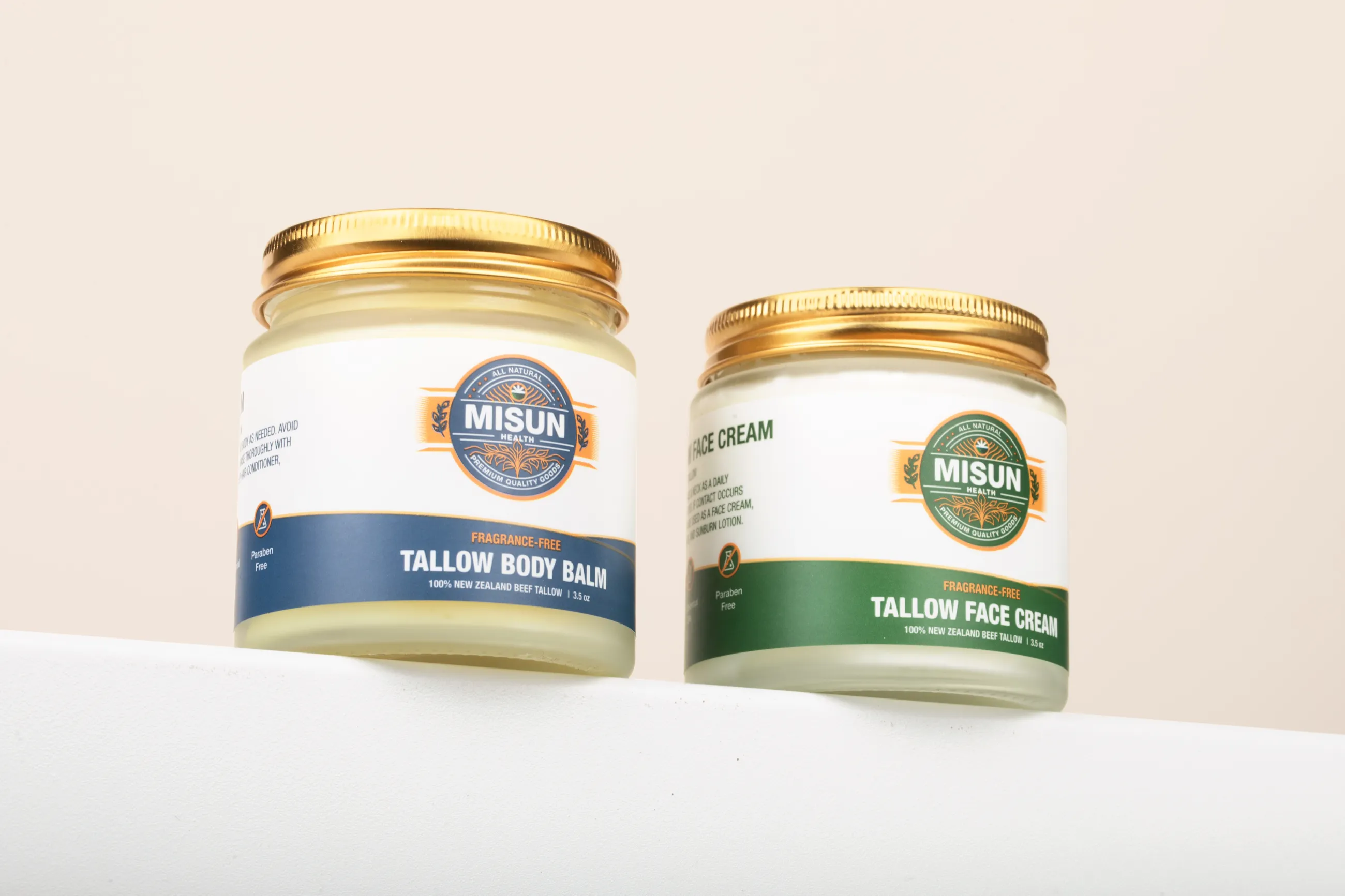 Misun Health
Common Questions
Can I take beef tallow on a plane in my carry-on?
Usually yes. Treat soft or spreadable beef tallow like a travel-size cream or balm, pack it in a small sealed container, and keep it with your other carry-on liquids and creams so it is easier to manage at screening.
Can you bring beef tallow on a plane if it gets soft or melty?
You usually still can, but softness makes careful packing more important. Use a smaller amount, leave a little room in the container, close it tightly, and keep it inside a pouch so warmth does not turn a helpful moisturizer into a carry-on mess.
Does beef tallow count as a liquid for TSA screening?
A soft tallow cream, paste, or balm is safest to treat like the other creams and pastes in your toiletries bag. Use a travel-size container for carry-on packing and check current airport guidance before a trip if you are bringing anything larger.
Will tallow feel too greasy during a flight?
It can if you overapply. Use whipped cream in very thin layers for broader dry areas and save balm for small high-need spots like lip edges or knuckles.
Should I use whipped cream or balm in a hotel after landing?
Use whipped cream when dryness feels more general across cheeks, hands, or other larger areas. Use balm when the issue is concentrated and rough, such as cracked knuckles, lip corners, or friction-prone patches.
How is this different from a long-haul flight routine?
This routine is broader than a long-haul cabin plan. It covers airport-to-hotel dryness, carry-on packing, and climate-shift recovery, not just what to do during many hours in the air.
Build your routine
 Buy on Amazon
 Buy on Amazon
Related guides
More commercial pages
Explore similar commercial concerns or jump to the closest concern hub.
- Can You Put Beef Tallow on Your Lips? Dry Lips, Chapped Lips, and Lip-Line Flaking
- Unscented Moisturizer for Sensitive Skin: How to Choose a Fragrance-Free Routine That Actually Feels Comfortable
- Beef Tallow vs Lotion for Dry Skin
- Beef Tallow for Dry Skin
Related concern pages
Educational content only. This page is not medical advice and is not intended to diagnose, treat, cure, or prevent disease. If symptoms persist or worsen, consult a licensed clinician.