High-intent product comparison
10 min read
Beef Tallow vs Shea Butter for Dry Skin
Both beef tallow and shea butter can support a dry-skin routine, but they solve slightly different problems in daily use. Beef tallow usually wins on melt and easy spread, while shea butter often wins on dense staying power for rougher spots, so the better pick depends on where you are using it, what the weather is doing, and whether you need daytime comfort or overnight cushioning.
Compare beef tallow vs shea butter for dry skin with a practical look at texture, spreadability, face and body fit, seasonal use, and how to test each one side by side.
Quick summary
- Both beef tallow and shea butter can support a dry-skin routine, but they solve slightly different problems in daily use. Beef tallow usually wins on melt and easy spread, while shea butter often wins on dense staying power for rougher spots, so the better pick depends on where you are using it, what the weather is doing, and whether you need daytime comfort or overnight cushioning.
- Quick answer: which one feels better for dry skin?: If your main goal is easier application across cheeks, arms, legs, or other broader dry zones, beef tallow often feels more user-friendly because it melts faster between the hands and spreads with less drag. If your main goal is staying power on heels, knuckles, elbows, or wind-chapped patches, shea butter often feels more substantial. In other words, tallow usually behaves more like an easier-spread rich moisturizer, while shea butter behaves more like a denser body butter or spot-treatment base.
- Texture and spreadability: the biggest real-world difference: Searchers comparing shea butter vs beef tallow are usually really asking how each one wears. Tallow, especially in a whipped cream format, tends to soften quickly and distribute more evenly in a thin layer. Shea butter can feel thicker, slower to melt, and a little more resistant when you try to cover a larger area fast. That denser feel is not automatically bad. It can be exactly what some people want for high-friction spots, but it is also the reason others abandon shea on the face or on large body areas after a few uses.
Why people choose this approach
- If your main goal is easier application across cheeks, arms, legs, or other broader dry zones, beef tallow often feels more user-friendly because it melts faster between the hands and spreads with less drag. If your main goal is staying power on heels, knuckles, elbows, or wind-chapped patches, shea butter often feels more substantial. In other words, tallow usually behaves more like an easier-spread rich moisturizer, while shea butter behaves more like a denser body butter or spot-treatment base.
- Searchers comparing shea butter vs beef tallow are usually really asking how each one wears. Tallow, especially in a whipped cream format, tends to soften quickly and distribute more evenly in a thin layer. Shea butter can feel thicker, slower to melt, and a little more resistant when you try to cover a larger area fast. That denser feel is not automatically bad. It can be exactly what some people want for high-friction spots, but it is also the reason others abandon shea on the face or on large body areas after a few uses.
Keep in mind
- Patch test first and increase use gradually based on comfort.
- Skincare supports moisture and comfort but is not a cure for medical conditions.
- If symptoms persist, worsen, or become painful, consult a licensed clinician.
Quick comparison
| Feature | Whipped Tallow Cream | Beef Tallow Balm |
|---|---|---|
| Best use case | Daily face/body moisture with lighter spread | Targeted dry patches and high-friction zones |
| Typical routine timing | Morning + daytime maintenance | Night routine + targeted application |
| Texture feel | Lighter and easier to spread | Dense and more sealing |
Routine steps
Daytime vs overnight use
For daytime, the winner is usually the product you will actually apply in a thin, even layer and not regret under sunscreen, makeup, or clothes. That often makes whipped tallow cream the easier daytime option, especially for the face, neck, hands, and larger dry body zones. Overnight is where shea butter can catch up or even win on select areas because shine, rub-in time, and residue matter less when you are heading to bed. A practical split is tallow for daytime comfort and shea for overnight spot sealing, not choosing one single winner for every hour of the day.
How to run a fair side-by-side test at home
Use matched dry areas for 7 to 14 days, such as left cheek versus right cheek, or left hand versus right hand. Keep cleanser, shower length, room humidity, and every other moisturizer the same. Apply the same amount each time: for the face, try a rice-grain to pea-sized amount per side; for hands or elbows, use the same fingertip scoop on each side. Judge each option on five useful signals: how easily it spreads, how long skin stays comfortable before reapplying, whether it pills or feels greasy in the day, whether rough texture softens by morning, and which side you naturally want to keep using. That last point matters because the best dry-skin product is often the one that feels good enough to use consistently.
Quick answer: which one feels better for dry skin?
If your main goal is easier application across cheeks, arms, legs, or other broader dry zones, beef tallow often feels more user-friendly because it melts faster between the hands and spreads with less drag. If your main goal is staying power on heels, knuckles, elbows, or wind-chapped patches, shea butter often feels more substantial. In other words, tallow usually behaves more like an easier-spread rich moisturizer, while shea butter behaves more like a denser body butter or spot-treatment base.
Texture and spreadability: the biggest real-world difference
Searchers comparing shea butter vs beef tallow are usually really asking how each one wears. Tallow, especially in a whipped cream format, tends to soften quickly and distribute more evenly in a thin layer. Shea butter can feel thicker, slower to melt, and a little more resistant when you try to cover a larger area fast. That denser feel is not automatically bad. It can be exactly what some people want for high-friction spots, but it is also the reason others abandon shea on the face or on large body areas after a few uses.
Face vs body fit: where beef tallow often has an edge
For facial dryness, people often prefer the option that can be used in a very thin layer without feeling stiff or overworked during application. That is where beef tallow can fit more naturally, especially if you want a simple evening moisturizer or a thin layer on dry cheeks, around the mouth, or on flaky areas from weather and over-cleansing. Shea butter can still work on the face for some people, but its denser feel usually makes it more of a selective choice than a default full-face pick. If you are easily congested, keep both options away from immediate full-face use and start with tiny test areas first.
Where shea butter often makes more sense on the body
Shea butter usually shines when the area is small, very dry, or exposed to rubbing from socks, shoes, waistbands, or frequent handwashing. Think heels, cuticles, elbows, knees, and rough hand edges rather than fast all-over body use. On those zones, the thicker feel can be a feature rather than a drawback because you may want a product that stays noticeable longer instead of disappearing quickly. If you like body butters and do not mind a slower rub-in, shea butter can feel satisfying in exactly those high-dryness spots.
Weather and season: when each option tends to feel more useful
In dry winter air, cold wind, or heavy indoor heating, some people like shea butter at night because the denser finish can feel more protective on exposed patches. In milder weather, warmer rooms, or transitional seasons, beef tallow may feel easier to live with because it gives rich comfort without always feeling as heavy. Another practical pattern is seasonal mixing: tallow as the everyday base during most of the year, then a more targeted shea or balm layer only when the weather gets harsher or the skin starts catching on clothing and towels.
Daytime vs overnight use
For daytime, the winner is usually the product you will actually apply in a thin, even layer and not regret under sunscreen, makeup, or clothes. That often makes whipped tallow cream the easier daytime option, especially for the face, neck, hands, and larger dry body zones. Overnight is where shea butter can catch up or even win on select areas because shine, rub-in time, and residue matter less when you are heading to bed. A practical split is tallow for daytime comfort and shea for overnight spot sealing, not choosing one single winner for every hour of the day.
How to run a fair side-by-side test at home
Use matched dry areas for 7 to 14 days, such as left cheek versus right cheek, or left hand versus right hand. Keep cleanser, shower length, room humidity, and every other moisturizer the same. Apply the same amount each time: for the face, try a rice-grain to pea-sized amount per side; for hands or elbows, use the same fingertip scoop on each side. Judge each option on five useful signals: how easily it spreads, how long skin stays comfortable before reapplying, whether it pills or feels greasy in the day, whether rough texture softens by morning, and which side you naturally want to keep using. That last point matters because the best dry-skin product is often the one that feels good enough to use consistently.
Best practical takeaway for shoppers
Choose beef tallow if you want a richer moisturizer that still feels easier to spread across the face or larger body areas, or if you want one jar that can cover daytime and overnight use with thinner and thicker layers. Choose shea butter if your dryness is concentrated on rough, stubborn, high-friction zones and you prefer a denser body-butter feel. If your routine needs both convenience and extra sealing, the most practical setup is often a whipped tallow cream for daily all-purpose use plus a heavier balm or butter only where dryness keeps coming back.
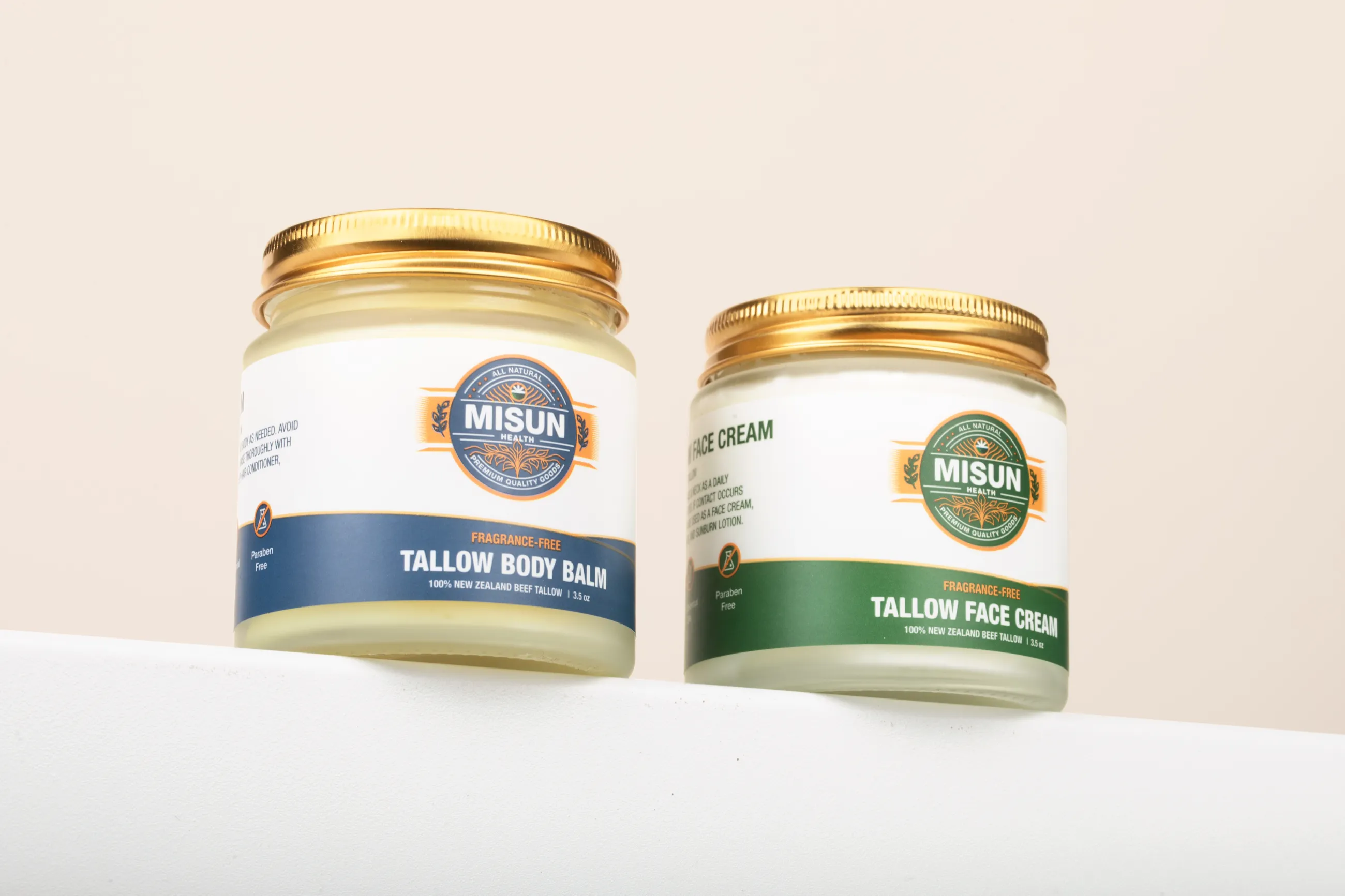 Misun Health
Common Questions
Is beef tallow better than shea butter for dry skin?
Not across every use case. Beef tallow often feels better for thin, easy-spread application on the face or larger body areas, while shea butter often works better as a thicker spot treatment for heels, elbows, cuticles, and other stubborn rough patches.
Can I use beef tallow and shea butter in the same routine?
Yes. A practical approach is to use whipped tallow cream as the easier-spread base layer, then reserve shea butter or a denser balm only for the spots that still feel rough, tight, or exposed to more friction.
Is shea butter or beef tallow better for the face?
For many people, beef tallow is the easier facial option because it usually melts and spreads more readily in thin layers. Shea butter may still suit small dry facial patches, but it more often feels like a targeted choice than an all-over face moisturizer.
Which one is better for winter dryness?
Winter routines often benefit from both textures used differently. Beef tallow can be the more flexible everyday option, while shea butter can be reserved for overnight use on wind-exposed or high-friction spots that need a denser finish.
Which one spreads better on arms and legs?
Beef tallow usually spreads more easily across larger areas, especially in whipped form. Shea butter can work on arms and legs too, but many people find it slower to rub in and better suited to smaller rough patches.
How long should I test beef tallow vs shea butter before deciding?
Give the comparison at least 7 days and ideally up to 14 days with the rest of your routine held steady. That gives you enough time to notice differences in comfort, flaking, reapplication needs, and whether one option starts to feel too heavy for regular use.
Build your routine
 Buy on Amazon
 Buy on Amazon
Related guides
More commercial pages
Explore similar commercial concerns or jump to the closest concern hub.
- Can You Bring Beef Tallow on a Plane? Carry-On Packing and Travel Dryness Routine
- Can You Put Beef Tallow on Your Lips? Dry Lips, Chapped Lips, and Lip-Line Flaking
- Unscented Moisturizer for Sensitive Skin: How to Choose a Fragrance-Free Routine That Actually Feels Comfortable
- Beef Tallow vs Lotion for Dry Skin
Related concern pages
Educational content only. This page is not medical advice and is not intended to diagnose, treat, cure, or prevent disease. If symptoms persist or worsen, consult a licensed clinician.