High-intent product comparison
8 min read
Beef Tallow vs Aquaphor for Dry Skin: Better for Everyday Comfort or Heavy Sealing?
Beef tallow and Aquaphor can both help dry skin, but they usually win in different jobs. Tallow is often easier to spread across broader dry zones, while Aquaphor usually makes more sense when a few stubborn spots need a denser final seal.
Compare beef tallow vs Aquaphor for dry skin with practical guidance on everyday wear, sealing power, face-vs-body fit, and when it makes sense to use both.
Quick summary
- Beef tallow and Aquaphor can both help dry skin, but they usually win in different jobs. Tallow is often easier to spread across broader dry zones, while Aquaphor usually makes more sense when a few stubborn spots need a denser final seal.
- Quick answer: which one is better for dry skin?: If your main problem is broad everyday dryness on cheeks, around the mouth, forearms, or the backs of hands, beef tallow is often easier to use consistently because it spreads more comfortably in a thin layer. If your real issue is a few tiny areas that keep cracking back open, such as lip corners, knuckles, fingertip splits, or a flaky patch that needs stronger overnight protection, Aquaphor often has the edge. In practice, this is less about declaring one universal winner and more about matching texture and staying power to the zone you are treating.
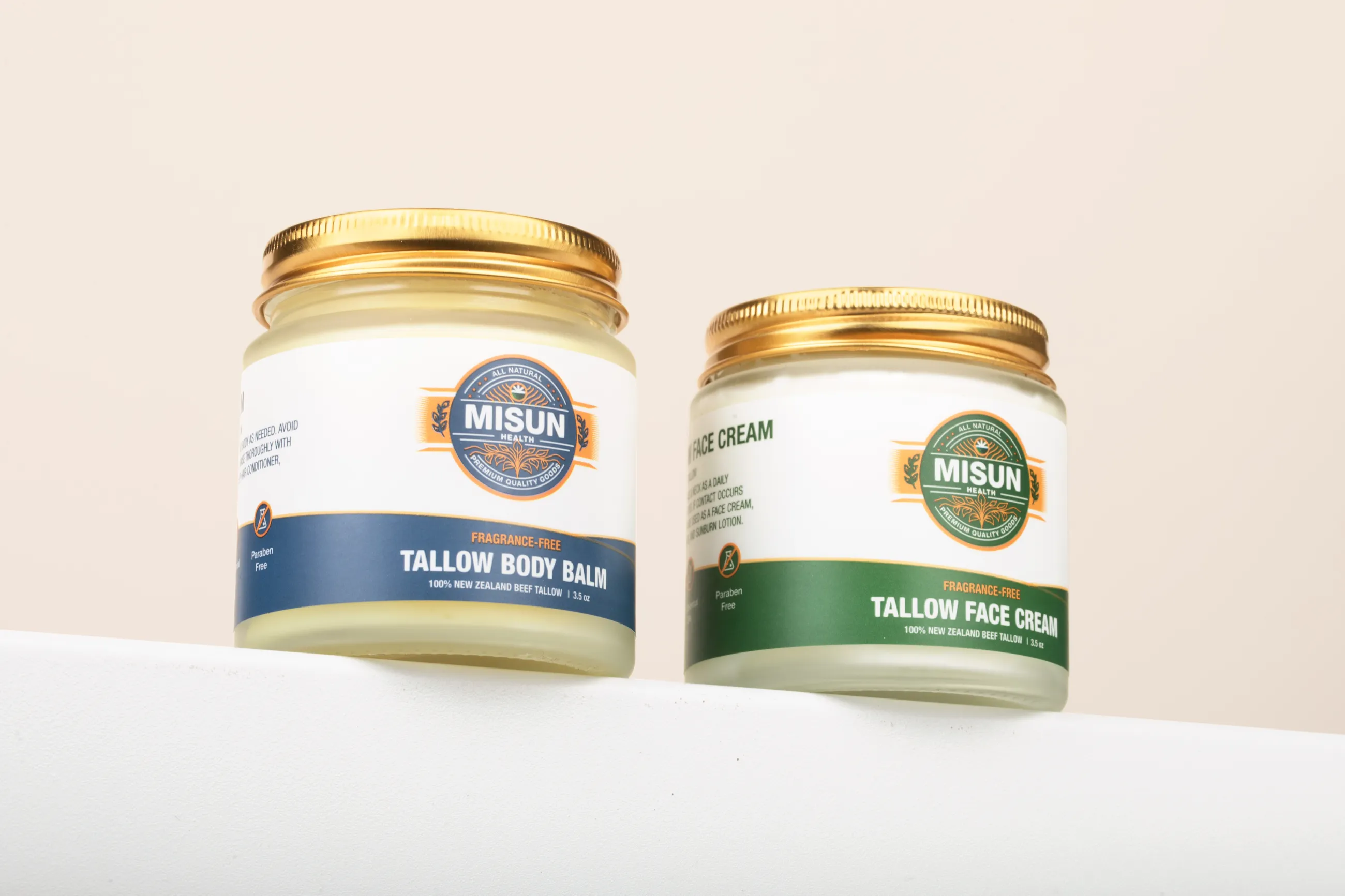
- How beef tallow and Aquaphor behave differently on the skin: Aquaphor is usually chosen for heavy sealing. It leaves a more obvious ointment finish, holds up longer on small high-friction spots, and often feels better as a deliberate last step than as an all-over moisturizer. Beef tallow, especially in a whipped cream format, usually feels easier to spread across larger dry areas without the same sticky finish. That difference matters because the product you can comfortably use on the right areas, at the right time, usually wins over the one that technically seals harder but feels too annoying to apply consistently.
Why people choose this approach
- If your main problem is broad everyday dryness on cheeks, around the mouth, forearms, or the backs of hands, beef tallow is often easier to use consistently because it spreads more comfortably in a thin layer. If your real issue is a few tiny areas that keep cracking back open, such as lip corners, knuckles, fingertip splits, or a flaky patch that needs stronger overnight protection, Aquaphor often has the edge. In practice, this is less about declaring one universal winner and more about matching texture and staying power to the zone you are treating.
- Aquaphor is usually chosen for heavy sealing. It leaves a more obvious ointment finish, holds up longer on small high-friction spots, and often feels better as a deliberate last step than as an all-over moisturizer. Beef tallow, especially in a whipped cream format, usually feels easier to spread across larger dry areas without the same sticky finish. That difference matters because the product you can comfortably use on the right areas, at the right time, usually wins over the one that technically seals harder but feels too annoying to apply consistently.
Keep in mind
- Patch test first and increase use gradually based on comfort.
- Skincare supports moisture and comfort but is not a cure for medical conditions.
- If symptoms persist, worsen, or become painful, consult a licensed clinician.
Quick comparison
| Feature | Whipped Tallow Cream | Beef Tallow Balm |
|---|---|---|
| Best use case | Daily face/body moisture with lighter spread | Targeted dry patches and high-friction zones |
| Typical routine timing | Morning + daytime maintenance | Night routine + targeted application |
| Texture feel | Lighter and easier to spread | Dense and more sealing |
Routine steps
How beef tallow and Aquaphor behave differently on the skin
Aquaphor is usually chosen for heavy sealing. It leaves a more obvious ointment finish, holds up longer on small high-friction spots, and often feels better as a deliberate last step than as an all-over moisturizer. Beef tallow, especially in a whipped cream format, usually feels easier to spread across larger dry areas without the same sticky finish. That difference matters because the product you can comfortably use on the right areas, at the right time, usually wins over the one that technically seals harder but feels too annoying to apply consistently.
Daytime comfort vs overnight sealing power
During the day, wear feel matters. If a product makes your hands slippery, leaves clothing drag, or feels too glossy on the face, you are less likely to keep using it. That is why tallow often wins as the easier daytime option for dry skin. At night, the decision changes because heavier texture matters less. Aquaphor becomes more useful there, especially on the spots that still feel tight or split-prone after a regular moisturizer. A practical split routine is tallow for daytime comfort and Aquaphor only as a small overnight top layer where dryness keeps rebounding.
How to test beef tallow vs Aquaphor fairly for one to two weeks
Test them on matched dry zones instead of switching randomly. Use the same cleanser, shower habits, and climate exposure, then compare left hand versus right hand, one cheek versus the other, or one elbow versus the other for 7 to 14 days. Track five useful signals: how easily each spreads, how long comfort lasts before reapplying, whether the finish feels annoying during the day, whether roughness looks calmer by the next morning, and which side you naturally want to keep using. The better option is often the one that solves the problem while still fitting real life.
Quick answer: which one is better for dry skin?
If your main problem is broad everyday dryness on cheeks, around the mouth, forearms, or the backs of hands, beef tallow is often easier to use consistently because it spreads more comfortably in a thin layer. If your real issue is a few tiny areas that keep cracking back open, such as lip corners, knuckles, fingertip splits, or a flaky patch that needs stronger overnight protection, Aquaphor often has the edge. In practice, this is less about declaring one universal winner and more about matching texture and staying power to the zone you are treating.
How beef tallow and Aquaphor behave differently on the skin
Aquaphor is usually chosen for heavy sealing. It leaves a more obvious ointment finish, holds up longer on small high-friction spots, and often feels better as a deliberate last step than as an all-over moisturizer. Beef tallow, especially in a whipped cream format, usually feels easier to spread across larger dry areas without the same sticky finish. That difference matters because the product you can comfortably use on the right areas, at the right time, usually wins over the one that technically seals harder but feels too annoying to apply consistently.
Face, hands, and body: where each option usually fits best
On the face, many people prefer beef tallow because a very small amount can be worked over cheeks, temples, or around-the-mouth dryness without feeling as trapped under sunscreen or makeup. Aquaphor can still be useful there, but usually as a tiny layer on flaky corners or over an already-moisturized spot at night. On hands, tallow often feels better for daytime use on the backs of hands and larger dry areas, while Aquaphor is often better reserved for knuckles, cuticles, and fingertip cracks that need stronger protection. On the body, tallow is usually the more practical option for broader dry zones like shins, arms, and shoulders, while Aquaphor makes more sense when the dryness is concentrated in a smaller rough patch.
Daytime comfort vs overnight sealing power
During the day, wear feel matters. If a product makes your hands slippery, leaves clothing drag, or feels too glossy on the face, you are less likely to keep using it. That is why tallow often wins as the easier daytime option for dry skin. At night, the decision changes because heavier texture matters less. Aquaphor becomes more useful there, especially on the spots that still feel tight or split-prone after a regular moisturizer. A practical split routine is tallow for daytime comfort and Aquaphor only as a small overnight top layer where dryness keeps rebounding.
When it makes sense to use both instead of forcing one winner
A lot of people do better when they stop asking one product to handle every job. A simple pattern is to use whipped tallow cream first on the larger dry area, then add a rice-grain amount of Aquaphor only on the tiny spots that still need extra protection, such as lip corners, knuckles, or a flaky patch near the nose. That gives you easier spread where you need coverage and stronger sealing only where you actually need staying power. It also tends to feel more realistic than coating an entire face or body zone with ointment.
How to test beef tallow vs Aquaphor fairly for one to two weeks
Test them on matched dry zones instead of switching randomly. Use the same cleanser, shower habits, and climate exposure, then compare left hand versus right hand, one cheek versus the other, or one elbow versus the other for 7 to 14 days. Track five useful signals: how easily each spreads, how long comfort lasts before reapplying, whether the finish feels annoying during the day, whether roughness looks calmer by the next morning, and which side you naturally want to keep using. The better option is often the one that solves the problem while still fitting real life.
 Misun Health
Common Questions
Is beef tallow always better than Aquaphor for dry skin?
No. Beef tallow often feels better for broader everyday dryness because it spreads more easily, while Aquaphor often works better as a stronger seal on small stubborn spots that keep drying back out.
Can I layer tallow and Aquaphor in one routine?
Yes. A practical method is tallow first on the larger dry area, then a very small amount of Aquaphor only on the spots that still need extra overnight protection, such as knuckles, lip corners, or flaky patches.
Which one is usually better for the face?
Many people find beef tallow easier to use on the face because a thin layer feels more workable on cheeks or around-the-mouth dryness. Aquaphor can still help on tiny flaky areas, but it is usually better as a targeted night step than a full-face daytime layer.
Which one is better for cracked hands or knuckles?
For daytime hand use, tallow is often easier because it spreads with less drag and less residue. For cracked knuckles, cuticles, or fingertip splits that need stronger overnight sealing, Aquaphor often has the stronger argument.
How long should I test beef tallow vs Aquaphor before deciding?
Give each option a fair 7 to 14 day test on matched dry areas while keeping the rest of your routine stable. That is usually long enough to judge comfort, wear feel, and whether the skin stays calmer between applications.
Build your routine
 Buy on Amazon
 Buy on Amazon
Related guides
More commercial pages
Explore similar commercial concerns or jump to the closest concern hub.
- Can You Bring Beef Tallow on a Plane? Carry-On Packing and Travel Dryness Routine
- Can You Put Beef Tallow on Your Lips? Dry Lips, Chapped Lips, and Lip-Line Flaking
- Unscented Moisturizer for Sensitive Skin: How to Choose a Fragrance-Free Routine That Actually Feels Comfortable
- Beef Tallow vs Lotion for Dry Skin
Related concern pages
Educational content only. This page is not medical advice and is not intended to diagnose, treat, cure, or prevent disease. If symptoms persist or worsen, consult a licensed clinician.