Informational + ingredient research · 13 min read
Tallow Soap for Dry Skin: What Is Left of the Tallow After Saponification
Tallow soap is true soap: lye turns most of the tallow into sodium tallowate, and the lather runs at roughly pH 9 to 10. Tallow still makes one of the milder soaps, but for dry skin the tallow that matters most is the layer you leave on after the shower.
Last updated November 13, 2026
The short answer
Tallow soap is one of the milder kinds of true soap, but it is still soap. By the time a bar is finished, lye has turned most of its tallow into a cleanser called sodium tallowate, and the lather it makes is alkaline, at roughly pH 9 to 10. That can be fine for dry skin when the lather stays on briefly and a moisturizer goes on afterward, while the skin is still damp. What a soap cannot do is leave a layer of tallow on your skin the way a leave-on cream or balm does. Most of the fat in the bar is no longer fat, and most of the fat that remains rinses away with the lather.
What lye does to tallow
Beef tallow is made mostly of triglycerides: three fatty acids attached to a backbone of glycerol. Soap making uses sodium hydroxide, sold as lye, to break those attachments. Each fatty acid pairs with sodium and becomes a soap molecule, and the backbone is released as glycerin. The reaction is called saponification, and the soap it makes from tallow appears on cosmetic labels as sodium tallowate. Some makers list their starting materials instead, such as tallow, water and sodium hydroxide, which describes the same bar from the other end of the reaction. When a recipe uses less lye than the fat can consume, the lye is the limiting ingredient and gets used up, so a finished bar holds soap, glycerin, some unreacted fat and water. A 2022 review of skin cleansers in the journal Molecules names tallow among the traditional fats for soap and lists sodium tallowate among the common soap types.
A worked example: 100 grams of tallow in a 5 percent superfat bar
Superfat is the share of fat a soap maker leaves unreacted on purpose by using less lye than the fat could consume. The Codex Alimentarius food standard for animal fats puts the saponification value of edible tallow at 190 to 202 milligrams of potassium hydroxide per gram, which converts to about 13.5 to 14.4 grams of sodium hydroxide to saponify 100 grams of tallow completely. Cut the lye by 5 percent and about 5 grams of the tallow stays unreacted. The other 95 grams becomes roughly 98 grams of sodium tallowate, and about 10 grams of glycerin forms alongside it, because each triglyceride releases one glycerol molecule as its three fatty acids turn into soap. Leaving out the water still held in the bar, that is about 87 percent soap, 9 percent glycerin and 4 percent tallow. These figures are our arithmetic from the Codex range and the fixed ratios of the reaction, not a lab analysis of any product, but they set the scale: a 5 percent superfat bar carries about 5 grams of actual tallow for every 100 grams of tallow that went into the pot. In a bar that blends tallow with other oils, the leftover fat is drawn from the whole blend, not reserved for the tallow.
Glycerin is the part of the reaction worth keeping
Glycerin is a humectant, an ingredient that attracts and holds water, and the American Academy of Dermatology lists it among the ingredients to look for in a moisturizer for dry skin. A soap keeps its glycerin only if nothing takes it out. Industrial soap making is built to separate it: the EPA's description of the modern continuous process, which splits fats into fatty acids and glycerin before the soap is made, lists easy recovery of glycerin, a byproduct, among its advantages. A cold-process bar, the method many small-batch tallow soap makers use, has no separation step, so the glycerin formed in the reaction stays in the bar. That is a real difference between a handmade tallow bar and a mass-market soap, and it is why glycerin bars have long been sold as the less drying kind of soap. A 2011 review of cleansers in the Indian Journal of Dermatology describes them as containing glycerin to counter the drying effects of soap.
Why tallow makes one of the milder true soaps
Not every soap is equally harsh, and the fat it is made from is part of the reason. In a 1988 forearm wash study in the Journal of the Society of Cosmetic Chemists, Lukacovic and colleagues built a test sensitive enough to tell bars apart by their ratio of tallow to coconut soap, and reported that bar soap mildness increases with increasing levels of tallow soap and decreases with high levels of coconut soap. Their explanation turns on one fatty acid. Sodium laurate, the soap made from 12-carbon lauric acid, is the most irritating of the common fatty acid soaps, and coconut soap is close to half sodium laurate. One published analysis puts coconut oil at 49 percent lauric acid. Beef tallow is built from longer chains: the Codex ranges for bovine fat put palmitic acid at 20 to 30 percent, stearic acid at 15 to 30 percent and oleic acid at 30 to 45 percent. Cosmetic ingredient lists run in descending order of predominance under 21 CFR 701.3, so the first fat on a soap label tells you a lot. A bar that leads with tallow or sodium tallowate sits at the milder end of true soaps. One that leads with coconut oil or sodium cocoate is a different product, even if tallow is on the front of the box.
It is still soap: what the pH does on your skin
The fat changes how mild a soap is. It does not change the fact that a true soap is alkaline. The 2011 Indian Journal of Dermatology review puts soap at pH 9 to 10, and when researchers measured 64 soaps bought in India for a 2014 study, 53 of them fell between pH 9.01 and 10. Skin sits far lower. In a 2006 study of 330 people, Lambers and colleagues estimated natural skin surface pH at about 4.7, and found that even plain tap water at around pH 8 raised skin pH for up to six hours. Washing habits move that number. In a four-week crossover trial published in 1987, ten healthy volunteers who washed their forehead and forearm twice a day had a mean skin pH 0.3 units higher while using soap than while using a synthetic detergent cleanser. The Molecules review adds that skin proteins swell markedly when a cleanser's pH is above 8, and that a harsh soap removes more cholesterol from the skin than a syndet does. The evidence on pH is not one-sided: the Indian Journal of Dermatology review ranks the type of surfactant and how well it rinses off as bigger drivers of dryness than pH, and cites researchers who found pH made little difference. A tallow bar avoids most of the sodium laurate that makes coconut soaps harsher. It keeps the alkalinity that every true soap shares.
Hard water turns part of every bar into scum
Any true soap, tallow included, reacts with the calcium and magnesium dissolved in hard water. The EPA's account of soap manufacturing gives this as the reason synthetic detergents replaced soap powders for home laundry in the late 1940s: the soap's carboxylate ions react with those minerals to form insoluble lime soap. The USGS describes the same reaction as soap scum, notes the film of residue it leaves on hands, and points out that hard water takes more soap to get anything clean. USGS classifies water at 0 to 60 milligrams per liter as calcium carbonate as soft, 61 to 120 as moderately hard, 121 to 180 as hard and more than 180 as very hard, and reports that hard water is prevalent in the east-central and western United States. Residue matters for dry skin because what stays behind after rinsing keeps acting on the skin. In a 2018 study of 80 people in the Journal of Investigative Dermatology, washing with a detergent in hard water left more of it on the skin than washing in softened water, and the residue increased water loss through the skin, most clearly in people with atopic dermatitis who carry filaggrin gene variants. That study used sodium lauryl sulfate rather than soap, and a water softener company is among its funders, but it points the same direction. In hard water, use less lather and rinse longer.
What a soap label is allowed to promise
Under US rules a bar counts as soap only when most of its nonvolatile matter is alkali salts of fatty acids, those salts do the cleaning, and the product is labeled, sold and represented only as soap. That definition sits in 21 CFR 701.20, and a product that meets it is regulated by the Consumer Product Safety Commission rather than the FDA. Promise more and the category changes. The FDA's soap guidance, current as of August 2024, says a product intended to moisturize the skin or make the user smell nice is a cosmetic, and one intended to treat skin conditions such as acne or eczema is a drug. A tallow bar sold as moisturizing is therefore a cosmetic, with cosmetic labeling rules. A tallow bar advertised to clear eczema or psoriasis is making a drug claim, and drug requirements come with it. The FDA also notes that many bars marketed as soap are detergent bars and not true soap at all. Those are cosmetics too, and they are the syndet bars that dermatology reviews keep comparing soap against.
When a tallow bar works for dry skin
For many people with dry skin, a tallow bar is a reasonable cleanser when the rest of the washing routine is doing its share. The American Academy of Dermatology's dry skin advice, last updated in January 2026, is to keep showers and baths to five to ten minutes in warm water, close the bathroom door, and use cleanser only where you need it, such as your armpits or groin area, with enough to remove dirt and oil but not so much that you see a thick lather. A bar fits that advice well. Work up a small lather in your hands, wash the areas that need soap, and let water handle the shins and forearms, which often flake first in winter. Season changes the result. The 1988 forearm wash study found that dew point was a key indicator of how strongly skin responded to soap, to the point that the researchers had to add washes before differences between bars appeared in humid conditions. A bar that feels fine in a humid August can feel drying in January.
When a non-soap cleanser is the better call
Some situations favor a syndet, a synthetic detergent cleanser formulated closer to skin pH. The Molecules review puts syndets at pH 5.5 to 7.0, and newer blends at 5.0 to 5.5, against 8.5 to 11.0 for soap, and concludes that mild syndets are the preferred choice for cleansing. If your skin still feels tight or itchy after every shower once you have shortened it and turned the water down, if your water tests hard or very hard, or if your hands get washed many times a day at work, a mild non-soap cleanser will usually be gentler than any true soap, tallow or otherwise. If a dermatologist has told you to avoid soap, follow that advice over anything written about tallow. The AAD also names deodorant soaps as too harsh for dry, sensitive skin.
The leave-on step is where tallow helps dry skin
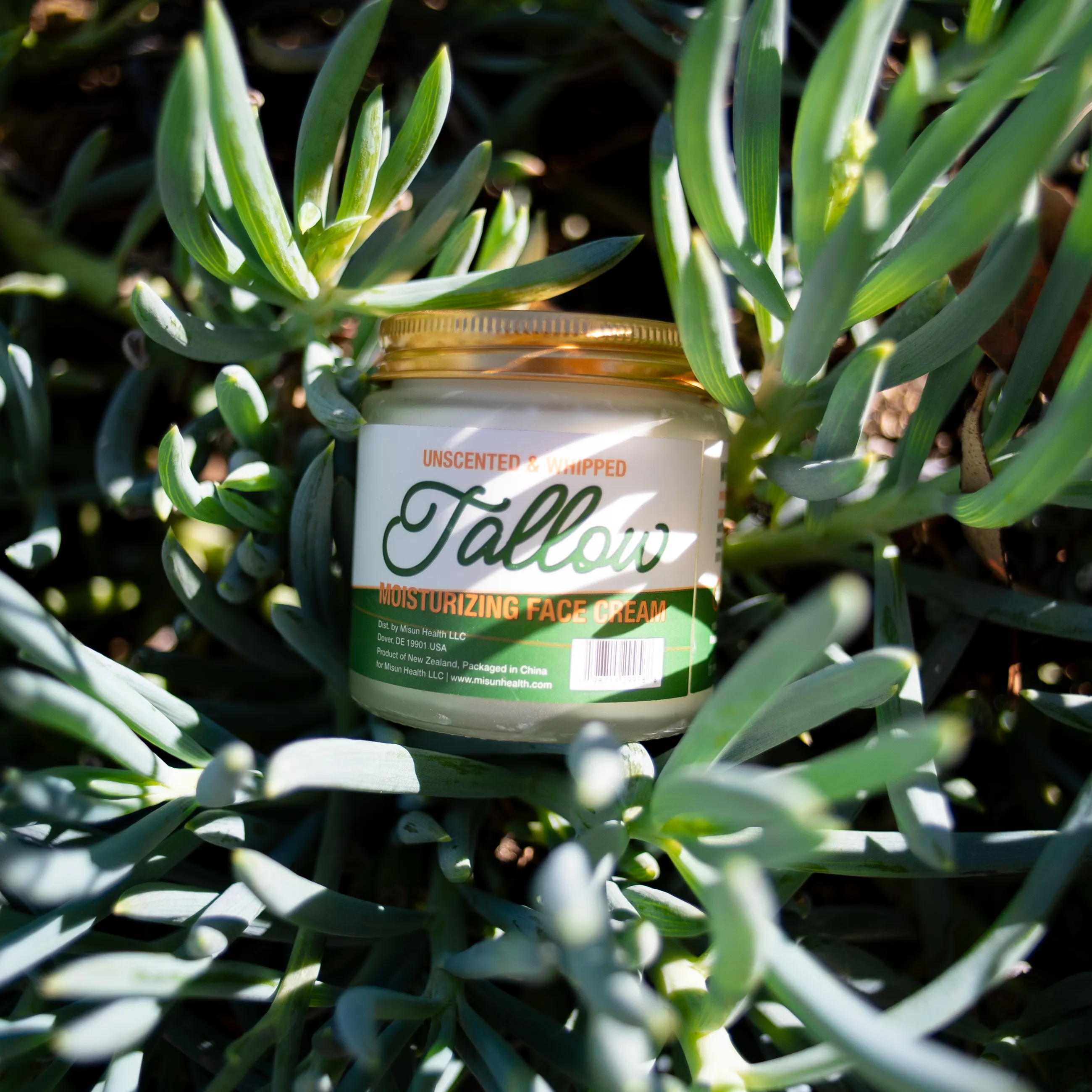
If tallow is the reason you are shopping, the place it does the most for dry skin is a product that stays on. In a bar of soap, most of the tallow has become sodium tallowate, and most of the rest leaves with the rinse water. In a leave-on cream or balm, the fat you apply is meant to stay on the skin as an emollient layer that slows water loss. The AAD's timing advice applies whichever cleanser you use: pat dry gently and apply moisturizer immediately, while the skin is still damp, and choose creams or ointments, which it rates as more effective than lotions. Our Whipped Tallow Cream is 100% grass-fed New Zealand beef tallow, unscented and fragrance-free, whipped so a small amount spreads thin over shins, arms or face after a shower. Beef Tallow Balm is the denser format for spots that crack or catch, such as heels, knuckles, elbows and cuticles. Washing with a tallow bar and then moisturizing with tallow is a coherent routine. The second step is the one that leaves tallow on your skin.
Reading a tallow soap label before you buy
A few details on the label tell you most of what matters. Look for tallow or sodium tallowate at the top of the ingredient list rather than coconut oil or sodium cocoate, for the mildness reasons above. A stated superfat tells you the maker deliberately left fat unreacted, and a cold-process method means the glycerin stayed in the bar. If you want a fragrance-free bar, scan the list for fragrance, parfum and essential oils. The FDA notes that fragrance formulas mix natural and synthetic ingredients and that the law treats ingredients from plants the same as those from any other source, so lavender or peppermint oil is a scent ingredient like any other. Add-ins such as honey, goat milk or clay do not change the basic chemistry: the bar is still an alkaline soap. Treat a promise to cure eczema, psoriasis or acne as a sign the seller has stepped outside the cosmetic rules, not as evidence the bar works.
FAQ
Common Questions
Is tallow soap good for dry skin?
It is one of the milder true soaps, because tallow's long fatty acid chains make a gentler soap than coconut oil's lauric acid. It is still alkaline, at roughly pH 9 to 10, so for dry skin keep the lather brief and put a moisturizer on while your skin is still damp.
Does tallow soap moisturize?
Not the way a leave-on product does. Lye converts most of the tallow into sodium tallowate, which is a cleanser. A handmade bar keeps its glycerin and a few percent of unreacted fat, which make it less drying than a lean commodity soap, but most of that rinses off with the lather.
What is the pH of tallow soap?
Like other true soaps, roughly 9 to 10 once dissolved. Published reviews put soap between 8.5 and 11 and natural skin surface pH at about 4.7. The fat a soap is made from affects its mildness, not its alkalinity.
What is sodium tallowate?
It is the ingredient name for soap made from tallow: the sodium salts of tallow's fatty acids, formed when tallow reacts with sodium hydroxide. A label listing tallow, water and sodium hydroxide describes the same soap by its starting materials.
What does superfat mean on a soap label?
It is the percentage of fat the maker left unreacted by using less lye than the fat could consume. At 5 percent superfat, about 5 grams of every 100 grams of fat in the recipe is still fat in the finished bar.
Is tallow soap gentler than regular soap?
Gentler than coconut-heavy soap, on the available evidence: a 1988 forearm wash study found bar soap mildness rose with tallow content and fell with high coconut content. It is not gentler than a mild syndet bar, which is formulated much closer to skin pH.
Does hard water make tallow soap more drying?
Hard water reacts with any true soap to form insoluble soap scum, and the USGS notes the film of residue it leaves on hands. If your water is hard, use less lather, rinse longer and moisturize right after you dry off.
Can I use tallow soap and tallow cream together?
Yes. Wash with the bar where you need soap, pat dry, and apply a thin layer of tallow cream while your skin is still damp. The cream is the step that leaves tallow on your skin.
Is there lye left in tallow soap?
A correctly made superfatted bar should contain no free lye, because the recipe uses less lye than the fat can consume and the lye is used up in the reaction. If a bar stings or burns on contact, stop using it.
Primary sources
Sources and evidence limits
- FDA: Frequently Asked Questions on Soap
Source for the conditions a product must meet to be regulated as soap, Consumer Product Safety Commission jurisdiction over true soap, the rule that moisturizing or scent claims make a soap a cosmetic and claims to treat conditions such as acne or eczema make it a drug, and the point that many bars sold as soap are detergent bars. Content current as of August 20, 2024.
- 21 CFR 701.20: Detergent substances, other than soap, intended for use in cleansing the human body
The regulation that limits the term soap to products whose nonvolatile matter is mostly alkali salts of fatty acids, whose cleaning comes from those salts, and which are labeled, sold and represented only as soap.
- 21 CFR 701.3: Designation of ingredients
Requires cosmetic ingredient declarations in descending order of predominance, which is why the first fat named on a cosmetic soap label is informative.
- Mijaljica, Spada and Harrison, 2022: Skin Cleansing without or with Compromise: Soaps and Syndets (Molecules)
Review giving soap pH as 8.5 to 11.0, syndet pH as 5.5 to 7.0 and newer syndet blends as 5.0 to 5.5. Source for protein swelling above pH 8, greater cholesterol removal by a harsh soap than by a syndet, tallow as a soap feedstock, sodium tallowate as a soap type, and the conclusion that mild syndets are the preferred choice.
- Mukhopadhyay, 2011: Cleansers and their role in various dermatological disorders (Indian Journal of Dermatology)
Gives soap pH as 9 to 10, describes glycerin bars as containing glycerin to counter the drying effects of soap, and ranks surfactant type and rinsability above pH as causes of cleanser dryness, noting work that found pH had little effect.
- Tarun et al., 2014: Evaluation of pH of Bathing Soaps and Shampoos for Skin and Hair Care (Indian Journal of Dermatology)
Measured 64 soaps bought from local shops in India and found 53 between pH 9.01 and 10. The study did not report the fats each soap was made from.
- Lambers et al., 2006: Natural skin surface pH is on average below 5, which is beneficial for its resident flora (International Journal of Cosmetic Science)
Study of 330 people estimating natural skin surface pH at about 4.7 and reporting that plain tap water around pH 8 raised skin pH for up to six hours after washing.
- Korting et al., 1987: Influence of repeated washings with soap and synthetic detergents on pH and resident flora of the skin of forehead and forearm (Acta Dermato-Venereologica)
Crossover trial in ten healthy volunteers washing forehead and forearm twice a day for consecutive four-week periods. Skin pH was higher during the soap periods, by a mean of 0.3 units.
- Lukacovic et al., 1988: Forearm wash test to evaluate the clinical mildness of cleansing products (Journal of the Society of Cosmetic Chemists)
Source for the findings that bar soap mildness increases with tallow soap content and decreases with high coconut soap content, that sodium laurate is the most irritating common fatty acid soap and makes up close to half of coconut soap, and that dew point was a key indicator of skin response to soap. The study compared bar formulations, not named retail tallow soaps.
- Codex Alimentarius: Standard for Named Animal Fats (CXS 211-1999)
Source for the edible tallow saponification value of 190 to 202 mg KOH per gram and the bovine fat fatty acid ranges. The lye, soap and glycerin figures in the worked example are our arithmetic from that value, not measurements of a product.
- Lin, Zhong and Santiago, 2018: Anti-Inflammatory and Skin Barrier Repair Effects of Topical Application of Some Plant Oils (International Journal of Molecular Sciences)
Reports coconut oil at 49 percent lauric acid, the figure used here to show why coconut soap carries so much sodium laurate.
- EPA AP-42, Section 6.8: Soap and Detergents
Describes soap's carboxylate ions reacting with calcium and magnesium in hard water to form insoluble lime soap, and lists easy recovery of glycerin, a byproduct, among the advantages of the continuous soap process.
- USGS Water Science School: Hardness of Water
Source for the hardness bands in milligrams per liter as calcium carbonate, the soap scum reaction and the residue it leaves on hands, and the prevalence of hard water in the east-central and western United States.
- Danby et al., 2018: The Effect of Water Hardness on Surfactant Deposition after Washing and Subsequent Skin Irritation in Atopic Dermatitis Patients and Healthy Control Subjects (Journal of Investigative Dermatology)
Study of 80 people washed with sodium lauryl sulfate in water of different hardness. It tested a detergent rather than soap, and a water softener company is listed among its funders.
- American Academy of Dermatology: Dermatologists' tips for relieving dry skin
Source for the five to ten minute warm shower, a closed bathroom door, cleanser only where needed and without a thick lather, moisturizer applied immediately to damp skin, creams and ointments over lotions, glycerin as a moisturizer ingredient, and deodorant soaps being too harsh for dry, sensitive skin. Last updated January 2, 2026.
- FDA: Fragrances in Cosmetics
Notes that fragrance formulas combine natural and synthetic ingredients and that the law treats ingredients from plants the same as those from any other source. Content current as of February 28, 2022.
Use the tools
Related skincare tools
- Fragrance Label CheckerPaste a soap or moisturizer ingredient list to check it for fragrance, perfume, or parfum before you trust a fragrance-free line on the wrapper.Open tool
- Indoor Humidity Calculator for Dry SkinWork out how dry your heated indoor air gets in winter, the season when the same bar of soap tends to feel more drying.Open tool
- Skincare Layering Order PlannerPut a cleanser, moisturizer and balm in order, with the reason for each position.Open tool
Keep reading
Related guides
Explore next
Related skin concerns
Shop the routine
Build your tallow routine
Shop the products that best match the concerns and routines covered in this guide.