Informational + foot care research · 12 min read
Is Bag Balm Good for Feet and Cracked Heels? What's in the Tin and How to Use It
Yes. Bag Balm is mostly petrolatum, the ingredient dermatologists suggest putting on cracked heels at bedtime under socks. What is in the green tin, how to use it on dry feet, who should skip its lanolin, and what a cosmetic safety panel concluded in October 2026 about its antiseptic ingredient.
Last updated November 17, 2026
Short answer: yes, because the tin is mostly petrolatum
Yes. Bag Balm suits dry, cracked heels, and the reason is its first ingredient. The maker lists petrolatum, lanolin, paraffin wax, water and 8-hydroxyquinoline sulfate, and US rules require cosmetic ingredients to be declared in descending order of predominance, so there is more petrolatum in the tin than anything else. Petrolatum is what the American Academy of Dermatology (AAD) tells people with cracked heels to use at night: apply plain petroleum jelly before bed, and consider wearing socks so the grease stays off your bedding. Two other ingredients decide whether Bag Balm should be your nightly ointment. Lanolin can cause allergic reactions. The Cosmetic Ingredient Review (CIR) panel calls the rate of allergic reaction in the general population extremely low, but the reactions it describes show up mainly on damaged skin, and a cracked heel is damaged skin. The last ingredient is the subject of a fresh finding: on October 5 to 6, 2026, the same panel concluded that the available data are insufficient to determine the safety of oxyquinoline sulfate, the name cosmetic safety reviews use for 8-hydroxyquinoline sulfate, in any use other than stabilizing hydrogen peroxide in hair products. That is a request for missing data, not a finding of harm. If you have diabetes, cracked skin on your feet is a reason to call your doctor before you reach for any tin.
Why heels crack, and what an ointment does about it
Heel skin starts out unusual. Measurements published in Science Advances in 2019 found the stratum corneum, the dead outer layer of skin, 16 times thicker in skin from the sole of the foot than in the non-sole skin the researchers compared it with. When that thick layer dries, it loses stretch. In a Journal of Foot and Ankle Research study of 93 adults, 34 of them with heel fissures, dry heel skin and heel cracks held significantly less water, were less elastic and had a rougher surface than unaffected skin, and unaffected sites on the sole were about four times as hydrated as the center of a heel fissure. AAD notes that the skin on the feet easily becomes dry and cracked, especially in winter, and that long baths and showers make it worse. An ointment works on the water side of that problem by leaving a greasy film that slows evaporation, and petrolatum is the measured standard. A 2016 review in the Indian Journal of Dermatology reports that petrolatum at a concentration of 5 percent or more reduces water loss through the skin by more than 98 percent, while lanolin, mineral oil and silicones reduce it by only 20 to 30 percent, so in Bag Balm the petrolatum does most of the sealing.
What is in the green tin
Bag Balm's maker says its formula has not changed since 1988, that the Original and Hand & Body tins hold the same formula, and that Bag Balm has been made in Vermont since 1899. The ingredient list is short. Petrolatum is the occlusive base. Lanolin, listed second, is a refined form of the fat-like secretion of sheep, extracted from wool fleece. Paraffin wax is a petroleum-derived wax, and water is listed fourth. The last ingredient, 8-hydroxyquinoline sulfate, is the compound PubChem and cosmetic safety reviews also call oxyquinoline sulfate, and CIR describes it as a cosmetic biocide. On the label the maker filed in Canada for its veterinary version, dated August 20, 2018, it is the single active ingredient, at 0.3 percent by weight, in what that label calls an antiseptic ointment for chapped or sore teats and minor wounds in dairy cattle. A related over-the-counter product, Bag Balm Skin Protectant, with a marketing start date of March 1, 2018, declared petrolatum at 84.3 percent as its active ingredient, with benzethonium chloride, lanolin, paraffin wax and purified water as inactive ingredients. No fragrance appears in the classic tin's ingredient list. The maker also says Bag Balm has no stated expiration date for efficacy, that it may look or smell different over time, and that you should refresh your tin at least once every 5 years.
How to use Bag Balm on dry or cracked heels
Bag Balm fits the bedtime step of AAD's routine for dry, cracked heels. Keep baths and showers to 5 to 10 minutes, since long soaks dry the skin further, and wash with a gentle, fragrance-free cleanser. Pat your feet dry and moisturize within 5 minutes. For daytime moisturizing, AAD suggests a cream with 10 to 25 percent urea, alpha hydroxy acid or salicylic acid, applied after bathing and whenever your heels feel dry. Bag Balm contains none of these, so it does not replace that step. At bedtime, spread a small amount of Bag Balm over the heel and along the cracks, then put on clean socks. The maker recommends exactly that: apply it before bed, then put socks on. AAD suggests socks for the same step, to keep petroleum jelly off your bedding. During the day, AAD suggests a liquid bandage over the cracks to create a protective barrier, and shoes that cover the heel: it advises against open-heeled styles such as flip flops and slingbacks, and against shoes that are worn down or do not fit well. If you have diabetes, keep any lotion or ointment out of the spaces between your toes, which CDC says could lead to infection. The maker's own directions are external use only, and discontinue use if irritation occurs.
Lanolin: who should skip it
Lanolin can trigger allergic reactions, though CIR's 2024 safety assessment calls it a weak sensitizer, says the rate of allergic reaction to it is extremely low in the general population, and found it safe in cosmetics as currently used. The detail that matters for heels is where reactions happen. The same report describes the lanolin paradox: lanolin may cause allergic contact dermatitis when applied to damaged skin, while a patch test on normal, healthy skin in the same person can come back negative. The panel names stasis dermatitis, leg ulcers, perianal and genital dermatitis, and atopic dermatitis as the conditions in which reactions are observed primarily, and notes that children and older adults carry a greater risk. In people referred for patch testing, a group already suspected of a skin allergy, the North American Contact Dermatitis Group found that 3.3 percent of 43,691 patients tested from 2001 to 2018 reacted to lanolin, and 4.63 percent of those tested from 2011 to 2018. If your heels itch, redden or sting more after you start Bag Balm, stop using it and mention the lanolin to your doctor or dermatologist. Plain petroleum jelly, the ointment AAD names for the bedtime step, contains no lanolin.
The ingredient under review in 2026: 8-hydroxyquinoline sulfate
CIR was established in 1976 by the US cosmetics trade association, now the Personal Care Products Council, with the support of the FDA and the Consumer Federation of America. The Council funds it, and CIR says its expert panel and review process are independent of the Council and the industry. The panel has now assessed oxyquinoline sulfate three times without finding it safe for leave-on use on skin. An earlier review found the data insufficient to support safety. The 2006 report found it safe as a stabilizer for hydrogen peroxide in rinse-off hair care products, but for leave-on cosmetic products it said that the absence of impurities and ultraviolet absorption data resulted in a finding that the available data are insufficient to support safety. At its meeting on October 5 to 6, 2026, the panel issued a tentative amended report for public comment with a split conclusion: oxyquinoline sulfate was considered safe as a hydrogen peroxide stabilizer in hair products, and the available data are insufficient to make a determination of its safety for all other uses. For those other uses, which include a leave-on heel ointment, the panel listed the data it needs: maximum concentrations of use, eye irritation data at the maximum concentration of use, and phototoxicity or photosensitization data.
What the October finding means for the tin you already own
Insufficient data is a different verdict from unsafe, and CIR keeps the two apart. As of March 2017 the program had reviewed 4,740 ingredients: 4,611 were found safe as used or safe with qualifications, 12 were found unsafe, and 117 had information insufficient to determine safety. The 2006 report also records that in clinical tests, oxyquinoline, the parent compound, was neither an irritant nor a sensitizer when tested at 1 percent in petrolatum. In the United States, cosmetic products and ingredients other than color additives do not need FDA approval before they go on the market, and the companies that make and sell cosmetics have a legal responsibility for their safety. Bag Balm's maker says its formula is safe for human and animal use. Taken together, the October finding is an open question about missing data, not evidence that the tin has hurt anyone, and the conclusion is still tentative. If you would rather not put an ingredient with an open question on cracked skin every night while the review finishes, plain petroleum jelly covers the same bedtime step without it.
Bag Balm, plain petroleum jelly or a tallow balm
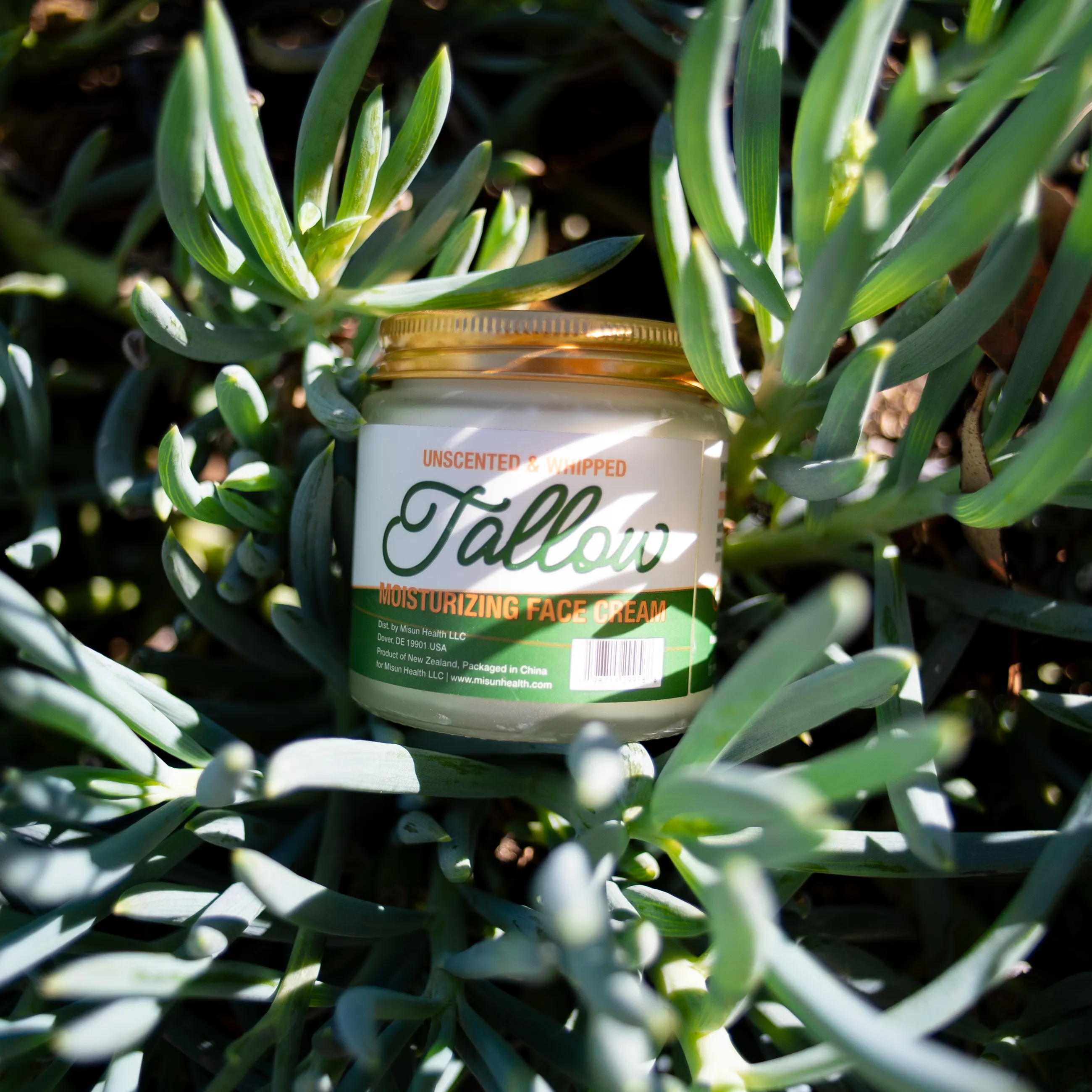
For the bedtime step, plain petroleum jelly is the closest match to AAD's advice: one ingredient, with no lanolin and no antiseptic. Bag Balm puts the same base in a tin with lanolin, paraffin wax, water and 8-hydroxyquinoline sulfate added. Beef tallow is the option for people who want neither petroleum nor lanolin on their feet. It is rendered beef fat, and we found no published study that measures how much water loss tallow prevents, so on sealing power alone petrolatum has the evidence and tallow does not. What tallow changes is the ingredient list: a single fat, with nothing added for scent and nothing from wool or petroleum. Misun Health makes two fragrance-free tallow products. Whipped Tallow Cream lists one ingredient, 100 percent grass-fed New Zealand beef tallow, and its whipped texture spreads thin over the heel and the sides of the foot during the day. If lanolin is the reason you are leaving Bag Balm, it is the one to start with. Beef Tallow Balm is the denser of the two, made for small areas such as heels, hands, elbows and cuticles, and it is the jar for the bedtime layer under socks. You can also split the job: tallow during the day, and petroleum jelly or Bag Balm on the worst cracks at night.
When cracked heels need a doctor
AAD's advice is that dry, cracked heels that are severe, or that do not improve after its self-care steps, need a board-certified dermatologist, and it notes that cracked heels are sometimes caused by a medical condition, such as diabetes. For people with diabetes, CDC says to check your feet every day, even if they feel fine, and lists dry, cracked skin on the feet among the symptoms that should not wait for your next appointment. CDC also notes that nerve damage can lower your ability to feel pain, heat or cold, so a crack can go unnoticed. The Drug Facts label on Bag Balm Skin Protectant, which listed chapped or cracked skin among its uses, says not to use it on deep or puncture wounds, and to stop and ask a doctor if the condition worsens or symptoms last more than 7 days. A crack deep enough to count as a wound, or one that keeps getting worse, needs a clinician, not another layer of any ointment, tallow included.
FAQ
Common Questions
Can I use Bag Balm on my feet every night?
Yes, as long as it does not irritate your skin. AAD's bedtime step for cracked heels is plain petroleum jelly under socks, and Bag Balm is mostly petrolatum. Use a small amount, put on socks, and stop if your heels itch, redden or sting more than before, since lanolin reactions show up mainly on damaged skin.
Is Bag Balm the same as petroleum jelly?
No. Plain petroleum jelly is petrolatum alone. Bag Balm is mostly petrolatum, with lanolin, paraffin wax, water and 8-hydroxyquinoline sulfate added. For holding water in, the petrolatum they share does most of the work: a 2016 review puts petrolatum's reduction in water loss at more than 98 percent, against 20 to 30 percent for lanolin.
Does Bag Balm expire?
The maker says Bag Balm has no stated expiration date for efficacy, but that it may look or smell different over time, and it recommends refreshing your tin at least once every 5 years.
Can humans use Bag Balm, or is it only for cows?
The maker says Bag Balm is safe for human and animal use, and that the Original and Hand & Body tins hold the same formula. The brand began on a dairy farm, and the label the maker filed in Canada for its veterinary version describes an antiseptic ointment for dairy cattle.
Should I stop using Bag Balm because of the 2026 ingredient review?
That is your call. The October 2026 finding is that the data are insufficient to determine the safety of 8-hydroxyquinoline sulfate outside hair products, not that it caused harm, and the conclusion is tentative and open for public comment. If you would rather avoid it in the meantime, plain petroleum jelly covers the same bedtime step without it.
Can I put Bag Balm between my toes?
Not if you have diabetes. CDC tells people with diabetes to put lotion on the tops and bottoms of the feet but not between the toes, because that could lead to infection.
Is tallow better than Bag Balm for cracked heels?
Not on sealing power: petrolatum has a measured effect on water loss, and tallow has not been measured the same way. Tallow is the choice if you want to avoid lanolin, petroleum or the open question about 8-hydroxyquinoline sulfate. Whipped Tallow Cream lists tallow as its only ingredient, and Beef Tallow Balm is the denser jar for heels at night.
Primary sources
Sources and evidence limits
- American Academy of Dermatology: How to care for dry, cracked heels (last updated January 31, 2022)
Source for limiting baths and showers to 5 to 10 minutes, a gentle fragrance-free cleanser, moisturizing within 5 minutes of bathing, a cream with 10 to 25 percent urea, alpha hydroxy acid or salicylic acid, plain petroleum jelly before bed with socks to keep grease off bedding, a daytime liquid bandage over the cracks, avoiding open-heeled, worn-down or ill-fitting shoes, foot skin drying and cracking especially in winter, diabetes as a possible cause, and seeing a board-certified dermatologist when cracked heels are severe or do not improve.
- Bag Balm: Frequently Asked Questions
The maker's statements that the formula has been unchanged since 1988 and contains petrolatum, lanolin, paraffin wax, water and 8-hydroxyquinoline sulfate; that the Original and Hand & Body tins hold the same formula; that it is safe for human and animal use; that it is for external use only and use should be discontinued if irritation occurs; that it has no stated expiration date for efficacy but may look or smell different over time, with a tin refreshed at least once every 5 years; and that it has been made in Vermont since 1899.
- Bag Balm blog: A Trusted Family Secret For Rough, Cracked, Dry Feet (October 12, 2020)
The maker's advice that a small amount can be applied to dry, cracked feet, before bed and followed by socks, and its account of the brand beginning on a dairy farm.
- Health Canada Drug Product Database: Bag Balm Antiseptic Ointment label, DIN 00090565 (Vermont's Original LLC, version August 20, 2018)
Veterinary label marked For Veterinary Use Only. Source for 8-hydroxyquinoline sulfate at 0.3 percent weight for weight as the active ingredient, the product described as an antiseptic ointment for chapped or sore teats, minor wounds and inflammation in dairy cattle, and petrolatum, lanolin and water as inactive ingredients.
- DailyMed: Bag Balm Skin Protectant (petrolatum ointment), Vermont's Original, LLC
Over-the-counter Drug Facts label with a marketing start date of March 1, 2018. Source for petrolatum at 84.3 percent as the active ingredient, benzethonium chloride, lanolin, paraffin wax and purified water as inactive ingredients, and the warnings not to use it on deep or puncture wounds, animal bites or serious burns and to stop use and ask a doctor if the condition worsens or symptoms last more than 7 days. DailyMed marks both of its package codes as inactive.
- Cosmetic Ingredient Review: Post Meeting Announcement, Expert Panel for Cosmetic Ingredient Safety, 177th Meeting (October 5 to 6, 2026), dated October 9, 2026
Source for the tentative amended report issued for public comment with a split conclusion: oxyquinoline sulfate safe as a hydrogen peroxide stabilizer in hair products in the present practices of use and concentration, and the available data insufficient to determine its safety for all other uses; and for the data needs for those other uses: maximum concentrations of use, ocular irritation data at the maximum concentration of use, and phototoxicity or photosensitization data.
- Andersen A. Final amended report on the safety assessment of oxyquinoline and oxyquinoline sulfate as used in cosmetics. International Journal of Toxicology, 2006, volume 25, supplement 1, pages 1 to 9
Source for both ingredients being described as cosmetic biocides, an earlier CIR assessment finding the data insufficient to support safety, the finding that they are safe as stabilizers for hydrogen peroxide in rinse-off hair care products, the leave-on finding that the absence of impurities and ultraviolet absorption data left the available data insufficient to support safety, and oxyquinoline being neither an irritant nor a sensitizer in clinical tests at 1 percent in petrolatum.
- Boyer IJ, Bergfeld WF, Heldreth B, Fiume MM, Gill LJ. The Cosmetic Ingredient Review Program: Expert Safety Assessments of Cosmetic Ingredients in an Open Forum. International Journal of Toxicology, 2017, volume 36, issue 5, supplement 2, pages 5S to 13S
Source for the program's totals as of March 2017: 4,740 ingredients reviewed, 4,611 determined safe as used or safe with qualifications, 12 determined unsafe, and 117 with information insufficient to determine safety.
- Cosmetic Ingredient Review: About
Source for CIR's establishment in 1976 by the industry trade association, now the Personal Care Products Council, with the support of the FDA and the Consumer Federation of America, its funding by the Council, and its statement that the panel and review process are independent of the Council and the cosmetics industry.
- FDA: FDA Authority Over Cosmetics: How Cosmetics Are Not FDA-Approved, but Are FDA-Regulated (content current as of November 18, 2025)
Source for cosmetic products and ingredients other than color additives not needing FDA approval before they go on the market, and for companies and individuals who manufacture or market cosmetics having a legal responsibility to ensure their safety.
- PubChem: Oxyquinoline sulfate (CID 517000)
Lists 8-hydroxyquinoline sulfate as a synonym of oxyquinoline sulfate (CAS 134-31-6), the name used in the CIR reports.
- Code of Federal Regulations, 21 CFR 701.3: Designation of ingredients
Requires cosmetic labels to declare each ingredient in descending order of predominance, with ingredients present at more than 1 percent listed in that order.
- Sethi A, Kaur T, Malhotra SK, Gambhir ML. Moisturizers: The Slippery Road. Indian Journal of Dermatology, 2016, volume 61, pages 279 to 287
Review source for petrolatum at a minimum concentration of 5 percent reducing transepidermal water loss by more than 98 percent, against 20 to 30 percent for lanolin, mineral oil and silicones.
- Boyle CJ, Plotczyk M, Fayos Villalta S, et al. Morphology and composition play distinct and complementary roles in the tolerance of plantar skin to mechanical load. Science Advances, 2019, volume 5, article eaay0244
Source for the stratum corneum of plantar skin measuring 16 times thicker than the stratum corneum of nonplantar skin.
- Hashmi F, Nester C, Wright C, Newton V, Lam S. Characterising the biophysical properties of normal and hyperkeratotic foot skin. Journal of Foot and Ankle Research, 2015, volume 8, article 35
93 volunteers aged 20 to 78, 34 of them with heel fissures. Source for calluses, corns, xerotic heel skin and heel fissures having significantly lower hydration, less elasticity and greater surface texture than unaffected skin, and for unaffected sites being approximately 4 times more hydrated than the center of heel fissures.
- Cosmetic Ingredient Review: Amended Safety Assessment of Lanolin and Lanolin-Derived Ingredients as Used in Cosmetics (final amended report, released November 21, 2024)
Source for lanolin as a refined derivative of the fat-like secretion of sheep obtained from wool fleece, lanolin as a weak sensitizer, the lanolin paradox, reactions observed primarily in stasis dermatitis, leg ulcers, perianal and genital dermatitis and atopic dermatitis, the greater risk for children and the elderly, the extremely low rate of allergic reaction in the general population, and the conclusion that lanolin is safe in cosmetics in the present practices of use and concentration.
- Silverberg JI, Patel N, Warshaw EM, et al. Lanolin Allergic Reactions: North American Contact Dermatitis Group Experience, 2001 to 2018. Dermatitis, 2022, volume 33, issue 3, pages 193 to 199
Patch test results for 43,691 patients: 3.3 percent positive overall and 4.63 percent from 2011 to 2018. These are patients referred for patch testing, not a sample of the general public.
- CDC: Your Feet and Diabetes (May 15, 2024)
Source for checking your feet every day even if they feel fine, applying lotion to the tops and bottoms of the feet but not between the toes because that could lead to infection, dry, cracked skin on the feet among the symptoms that should not wait for the next appointment, and nerve damage lowering the ability to feel pain, heat or cold.
Use the tools
Related skincare tools
- Moisturizer Ingredient DecoderPaste Bag Balm's ingredient list, or any heel balm's, to see which entries are occlusives like petrolatum and lanolin and which are emollients or humectants.Open tool
- Patch Test PlannerGet a dated schedule for trying a new ointment or tallow balm on a small area before it goes on both heels every night.Open tool
- Moisturizer Cost Per Use CalculatorWork out what a tin of ointment and a jar of tallow each cost per application and how long each lasts.Open tool
Keep reading
Related guides
Explore next
Related skin concerns
Shop the routine
Build your tallow routine
Shop the products that best match the concerns and routines covered in this guide.