Informational + ingredient research · 12 min read
Is Lanolin Good for Dry Skin? What It Does and Why It Can Feel Drying
Lanolin softens dry skin and slows water loss, but it does not pull moisture from deeper layers. Why it can still feel drying, who reacts to it, and how it compares with glycerin, petrolatum and tallow.
Last updated November 14, 2026
Yes for most dry skin, with two real exceptions
Yes, for most people with dry skin. Lanolin is a wax recovered from sheep's wool that softens rough skin and slows the evaporation that leaves skin tight, and the American Academy of Dermatology (AAD) lists it among the ingredients to look for in a moisturizer for dry skin. It does not pull moisture up from the lower layers of skin. That is what humectants such as glycerin do, and the two are easy to confuse. The exceptions are allergy and chapped lips. Lanolin is a recognized contact allergen: patch testing turns up a lanolin allergy in about 3 to 5 percent of patients referred to dermatologists for suspected contact allergy, and the AAD tells people with chapped lips to stop using lanolin lip products until their lips heal. Lanolin is also a lighter seal than its reputation suggests. Published reviews put its reduction in water loss at 20 to 30 percent, against more than 98 percent for petrolatum.
What lanolin is made of
Lanolin, also sold as wool wax, wool fat or adeps lanae, is the waxy secretion of sheep's sebaceous glands. It is washed out of shorn fleece, where it makes up 10 to 25 percent of the wool's weight, according to the 2024 safety assessment of lanolin by the Cosmetic Ingredient Review (CIR), the expert panel that reviews cosmetic ingredient safety in the United States. Despite the name wool fat, lanolin is chemically a wax. About 87 percent of a typical sample is high molecular weight esters, mainly esters of sterols such as cholesterol and lanosterol and esters of long chain aliphatic alcohols. Roughly 11 percent is free compounds, led by free aliphatic alcohols (5.6 percent) and free sterols (4.1 percent), with traces of hydrocarbons and free fatty acids. The CIR also notes that glycerol, the backbone of every triglyceride, is not found in lanolin. Two practical properties follow from that structure: lanolin is tacky and clings where it is put, and it can take up about twice its own weight in water without separating, which is why formulators use it to hold creams together.
Does lanolin draw moisture from lower layers of skin?
No. Pulling water up from deeper skin is what humectants do, and lanolin is not a humectant. Moisturizer ingredients are usually sorted into humectants, which attract water into the outer layer of skin, and occlusives, which lay down a water-repellent film that slows evaporation. A 2017 review in Clinical Medicine and Research describes humectants as drawing water from the dermis and from humid air into the epidermis, names glycerin, urea, sorbitol, panthenol and hyaluronic acid among them, and notes that humectants can increase water loss when the water they pull up evaporates. That is the reason formulas pair humectants with occlusives. The same review files lanolin with the occlusives, and the official cosmetic functions the CIR lists for lanolin are emollient, skin protectant, emulsifying agent and emulsion stabilizer, with no humectant role. Lanolin's water capacity describes water mixed into it when a product is made. On skin, the measured effect of a lanolin film is less water loss, not more.
Why lanolin can still leave skin feeling dry
When skin feels drier after lanolin, the cause is usually how it went on or a reaction to it, not water being drawn out. An occlusive slows the loss of water that is already in the skin, so spread over skin that is already dry, it has little to hold in. That is why the AAD's advice for dry skin is to apply moisturizer while skin is still damp from a shower or bath. Lanolin's seal is also modest. Reviews place it at a 20 to 30 percent reduction in water loss, in the same band as mineral oil and dimethicone, while petrolatum at a concentration of at least 5 percent cuts water loss by more than 98 percent. In heated winter air, a thin film of lanolin over dry skin may not hold in enough water to make a difference. The fixes are mechanical: apply it to damp skin, choose a cream or ointment over a lotion (the AAD rates creams and ointments as more effective than lotions for dry skin), and use a heavier layer at night when shine does not matter.
When the dryness is actually a reaction
An allergic reaction to lanolin can pass for stubborn dryness, with redness, itching and rough skin where the product goes on. In North American patch test records, the most common primary sites of lanolin allergy were the hands (20.7 percent of allergic patients), scattered or widespread areas (19.6 percent) and the face (17.0 percent), the same places people apply hand creams and face balms. The pattern worth noticing is a patch that gets worse each time the same product goes on, rather than better. Stop using the product on that area. A dermatologist can confirm a lanolin allergy with patch testing, though lanolin is tricky to test: the 2023 review that named it Allergen of the Year recommends testing two lanolin preparations together, because either one alone can miss reactions.
Lanolin on chapped lips
The AAD's advice for chapped lips names lanolin directly. Its list of ingredients to stop using while lips are chapped includes lanolin alongside camphor, eucalyptus, flavoring, fragrance, menthol, octinoxate or oxybenzone, phenol, propyl gallate and salicylic acid. The page does not give a reason for each entry. Its general rule is that a lip product causing discomfort is irritating the lips and should be stopped, and lanolin is a recognized contact allergen. The same page warns that licking dry lips makes them drier as the saliva evaporates, and it recommends balms made with ingredients such as petrolatum, white petroleum jelly, mineral oil, dimethicone, shea butter, ceramides, castor seed oil or hemp seed oil. Lanolin also turns up in lip color: the CIR reports it used at up to 20.7 percent in lipsticks, so a lipstick can carry lanolin even when the balm underneath does not.
Who reacts to lanolin, and how often
The American Contact Dermatitis Society named lanolin its Allergen of the Year for 2023. The largest North American data come from the North American Contact Dermatitis Group, which patch tested 43,691 patients between 2001 and 2018 with lanolin alcohol 30 percent or Amerchol L-101 50 percent. Of those, 1,431 (3.3 percent) reacted, and 1,238 (2.8 percent) had reactions judged currently relevant. The rate reached 4.63 percent over 2011 to 2018, children reacted more often than adults (4.5 percent against 3.2 percent), and personal care products and medications were the most common sources. These are people already referred for suspected contact allergy, so the figures overstate the rate in the general public. The CIR panel describes lanolin as a weak sensitizer that shows no to minimal sensitization on healthy skin, with an extremely low rate of allergic reaction in the general population.
Broken skin changes the odds
Where lanolin goes on matters as much as who uses it. The CIR describes the lanolin paradox: a person can tolerate lanolin on healthy skin yet react when it is applied to damaged skin, and a patch test on normal skin can miss the allergy. Allergic reactions are seen mainly in people whose skin was already broken or inflamed, such as around leg ulcers, and the panel adds that children and older adults carry a greater risk. In practice, a lanolin hand cream that has been fine for years can start causing trouble once the knuckles split, and a product going onto cracked skin deserves a closer look than one going onto intact skin.
Medical grade and HPA lanolin
Free lanolin alcohols are considered the main allergens in lanolin, so refiners sell grades with less of them. According to the CIR, medical grade lanolin is processed to remove detergents and bring free lanolin alcohol below 3 percent, and highly purified anhydrous (HPA) lanolin is reported below 1.5 percent and free of odor, taste, bleach and preservatives. The panel noted that sensitization can be reduced further when lanolin is ultra refined. Purity also covers farm chemicals. At least 28 pesticides have been used to control pests on sheep, residues have been detected in lanolin, and the panel asks manufacturers to keep heavy metals and pesticide residues within FDA and EPA limits. An ingredient list that reads simply lanolin does not say which grade is inside.
When lanolin counts as a skin protectant drug
Lanolin is one of a short list of moisturizing ingredients the FDA recognizes as an over-the-counter drug active. Under OTC Monograph M016 for skin protectant drug products, lanolin at 12.5 to 50 percent can serve as the active ingredient, as can petrolatum (30 to 100 percent), dimethicone (1 to 30 percent), glycerin (20 to 45 percent), and cocoa butter or mineral oil (50 to 100 percent). A product that uses lanolin this way carries a Drug Facts panel, and its permitted uses include temporarily protecting chapped or cracked skin and helping protect from the drying effects of wind and cold weather. A product sold as a cosmetic lists lanolin in its ordinary ingredient declaration instead, and its claims stay cosmetic, such as moisturizing or softening. Cosmetic use runs high too: the CIR reports lanolin at up to 40 percent in leave-on nail creams and lotions.
Lanolin or glycerin for dry skin
They do different jobs, so the better answer is usually both. Glycerin is a humectant that draws water into the outer layer of skin; lanolin slows that water's escape and softens the surface. The AAD lists both among the ingredients to look for in a moisturizer for dry skin, and the FDA monograph recognizes both as skin protectant actives at high concentrations. Used alone, a humectant can pull water up from the dermis that then evaporates, which is the reason the 2017 review gives for pairing humectants with occlusives. A sensible order on very dry skin is a glycerin-containing product on damp skin, followed by a thin occlusive layer, whether that is lanolin, petrolatum or a tallow balm. If you would rather use one product, look for an ingredient list that contains both a humectant and an occlusive.
Lanolin compared with petrolatum and coconut oil
Petrolatum is the stronger seal: the 2017 review cites work showing that petrolatum at 5 percent or more cuts water loss by more than 98 percent. It is also the substitute a 2023 Cutis review of lanolin allergy suggests for people with a confirmed allergy, describing plain petrolatum as safe, inexpensive and equally moisturizing. Coconut oil is a plant triglyceride oil rather than a wax. In a 2004 randomized double-blind trial, 34 adults with mild to moderately dry skin on the legs applied extra virgin coconut oil or mineral oil twice a day for two weeks. Both oils improved skin hydration and surface lipid levels by similar amounts, and no adverse reactions were reported. The trial compared coconut oil with mineral oil, not lanolin, so it says nothing direct about the two.
Lanolin compared with beef tallow
Beef tallow is a triglyceride fat, the same chemical family as butter and plant oils. Under the Codex Alimentarius standard for edible tallow, oleic acid makes up 30 to 45 percent of its fatty acids, palmitic 20 to 30 percent, stearic 15 to 30 percent and linoleic only 1 to 6 percent. It contains none of the wool wax esters or free wool alcohols in lanolin, because it does not come from wool. In use, the difference is mostly feel. Lanolin is tacky and stays on one spot, which suits a cracked fingertip or a split heel edge. Tallow softens with the warmth of your hands and spreads into a thin layer with less drag, which suits hands, face and larger dry areas.
Choosing between a tallow cream and a tallow balm
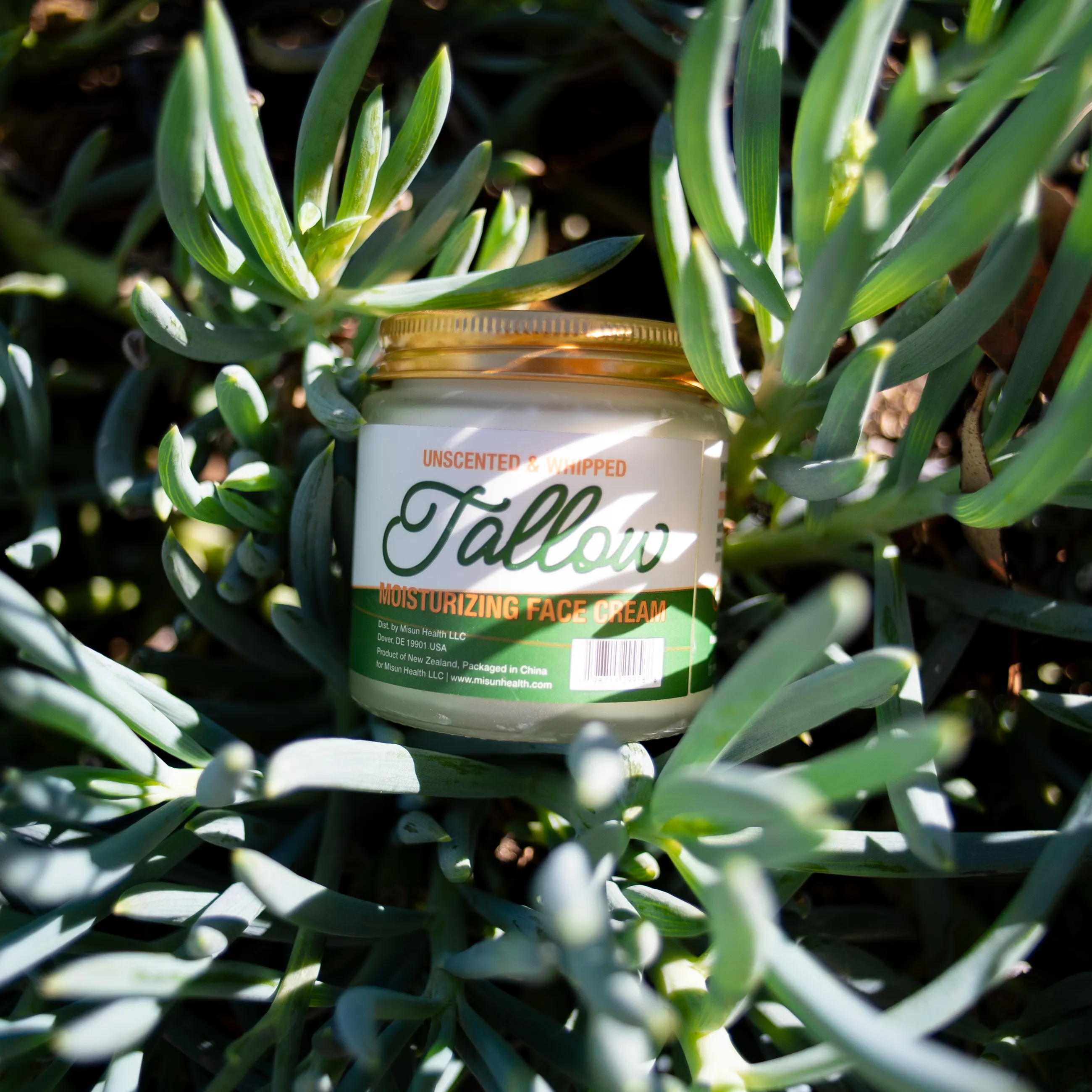
If lanolin's tack or smell puts you off, or a dermatologist has confirmed a lanolin allergy, a tallow moisturizer gives a rich finish with no wool-derived ingredients. Misun Health's Whipped Tallow Cream is 100 percent grass-fed New Zealand beef tallow, unscented and fragrance-free, whipped so a small amount covers hands, face or body in a thin layer. The denser Beef Tallow Balm is made for small dry areas such as hands, heels, elbows and cuticles. A workable split is the cream on broad areas during the day and the balm on the roughest spots at night, both over skin that is still slightly damp.
If you keep using lanolin
Lanolin works best as a thin layer over skin that is still damp. Pick fragrance-free formulas: the AAD recommends products labeled fragrance-free for dry skin and warns that products labeled unscented can contain chemicals that mask other odors. Try a new lanolin product on a small patch of intact skin for several days before it goes on your face, lips or cracked areas, since damaged skin is where reactions concentrate. For chapped lips, follow the AAD and set lanolin balms aside until your lips heal, using a balm built on petrolatum or another ingredient from its recommended list in the meantime.
FAQ
Common Questions
Does lanolin dry out your skin?
Not by pulling water out of it. Lanolin is an occlusive and emollient that slows water loss, by roughly 20 to 30 percent in published reviews. When skin feels drier after lanolin, the usual reasons are applying it to dry rather than damp skin, a seal too light for very dry winter skin, or an allergic reaction, which most often shows up on the hands or face.
Does lanolin draw moisture from the lower layers of skin?
No. Drawing water up from the dermis is a property of humectants such as glycerin, urea and hyaluronic acid, and a 2017 review notes that humectants used alone can increase water loss for that reason. Lanolin is classed as an occlusive, and its official cosmetic functions are emollient, skin protectant and emulsifier, with no humectant role.
Is lanolin or glycerin better for dry skin?
Neither replaces the other. Glycerin pulls water into the outer layer of skin and lanolin slows its escape, which is why moisturizers often combine a humectant with an occlusive. On very dry skin, apply a glycerin-containing product to damp skin and seal it with a thin occlusive layer such as lanolin, petrolatum or a tallow balm.
Is lanolin good for very dry, cracked hands?
For many people, yes. Lanolin at 12.5 to 50 percent is an FDA-recognized skin protectant active for chapped or cracked skin, and the AAD lists it among dry-skin ingredients. Hands are also the most common site of lanolin allergy in North American patch test data, and broken skin is where reactions concentrate, so stop if cracked areas get redder or itchier with use.
Why does the AAD say to avoid lanolin on chapped lips?
Its chapped lips advice lists lanolin among the ingredients to stop while lips are chapped, along with camphor, menthol, fragrance, flavoring and others. The page does not explain each entry, but its general rule is to stop any lip product that causes discomfort, and lanolin is a recognized contact allergen. It recommends balms with petrolatum, white petroleum jelly, mineral oil, dimethicone, shea butter or ceramides instead.
Is lanolin comedogenic?
The evidence is thin. The CIR assessment reports hydroxylated lanolin at 6 percent as non-comedogenic in a rabbit ear test and a finished product containing lanolin as non-comedogenic in a double-blind randomized trial of 15 people, while older studies described comedogenic effects for some lanolin materials without reporting the concentrations tested. If you break out easily, keep lanolin off the areas where you break out most and judge a product on your own skin.
Is lanolin better for your skin than coconut oil?
A 2004 randomized trial of 34 adults with mildly to moderately dry legs found extra virgin coconut oil improved hydration as much as mineral oil over two weeks, but it did not test lanolin. Coconut oil is a plant oil with no wool alcohols, while lanolin is a tacky wax and a known, if weak, contact allergen. Choose on feel, where you will apply it and whether you react to either.
What does lanolin alcohol mean on an ingredient list?
Lanolin alcohol is the alcohol fraction of lanolin, roughly two thirds sterols such as cholesterol and lanosterol and one quarter long chain aliphatic alcohols, according to the CIR. The FDA notes that fatty alcohols such as cetyl, stearyl, cetearyl and lanolin alcohol affect skin quite differently from ethyl alcohol. Free lanolin alcohols are also the part of lanolin most linked to allergic reactions.
Primary sources
Sources and evidence limits
- American Academy of Dermatology: Dermatologists' top tips for relieving dry skin (last updated January 2, 2026)
Lists lanolin, glycerin, petrolatum, dimethicone and other ingredients to look for in a moisturizer for dry skin. Source for applying moisturizer while skin is still damp, ointments and creams rating above lotions, and the advice to choose products labeled fragrance-free rather than unscented.
- American Academy of Dermatology: 7 dermatologists' tips for healing dry, chapped lips
Lists lanolin among the ingredients to stop using while lips are chapped, with camphor, eucalyptus, flavoring, fragrance, menthol, octinoxate or oxybenzone, phenol, propyl gallate and salicylic acid. Also the source for lip licking making lips drier and for the recommended balm ingredients.
- FDA Final Administrative Order OTC000005, OTC Monograph M016: Skin Protectant Drug Products for Over-the-Counter Human Use (posted September 24, 2021)
Source for lanolin at 12.5 to 50 percent, glycerin at 20 to 45 percent, petrolatum at 30 to 100 percent, dimethicone at 1 to 30 percent, and cocoa butter and mineral oil at 50 to 100 percent as skin protectant active ingredients, and for the permitted wording on chapped or cracked skin and the drying effects of wind and cold weather.
- FDA: Alcohol Free (cosmetics labeling claims, content current as of February 25, 2022)
States that cetyl, stearyl, cetearyl and lanolin alcohol are fatty alcohols whose effects on the skin are quite different from those of ethyl alcohol.
- Cosmetic Ingredient Review: Amended Safety Assessment of Lanolin and Lanolin-Derived Ingredients as Used in Cosmetics (final amended report, released November 21, 2024)
Source for lanolin's origin and share of fleece weight, its composition (about 87 percent esters, about 11 percent free compounds, no glycerol), water uptake of about twice its weight, its listed cosmetic functions, free lanolin alcohol levels in medical grade and HPA lanolin, pesticide residues, use at up to 20.7 percent in lipsticks and 40 percent in leave-on nail creams and lotions, the lanolin paradox, the weak sensitizer finding, the comedogenicity data, and the panel's conclusion that lanolin is safe in cosmetics as currently used.
- Silverberg JI, Patel N, Warshaw EM, et al. Lanolin Allergic Reactions: North American Contact Dermatitis Group Experience, 2001 to 2018. Dermatitis, 2022, volume 33, issue 3
Patch test results for 43,691 patients: 3.3 percent positive, 2.8 percent currently relevant, 4.63 percent over 2011 to 2018, children 4.5 percent against adults 3.2 percent, with the hands, scattered or generalized areas and the face as the most common primary sites. These are patients referred for patch testing, not a sample of the general public.
- Jenkins BA, Belsito DV. Lanolin. Dermatitis, 2023, volume 34, pages 4 to 12
The American Contact Dermatitis Society's 2023 Allergen of the Year review of lanolin, including the recommendation to patch test with lanolin alcohol 30 percent and Amerchol L-101 50 percent together.
- Johnson H, Norman T, Adler BL, Yu J. Lanolin: The 2023 American Contact Dermatitis Society Allergen of the Year. Cutis, volume 112, issue 2, pages 78 to 81
Review identifying the free alcohols as lanolin's principal allergen and describing plain petrolatum as a safe, inexpensive substitute with equivalent moisturizing efficacy for people with a confirmed lanolin allergy.
- Purnamawati S, Indrastuti N, Danarti R, Saefudin T. The Role of Moisturizers in Addressing Various Kinds of Dermatitis: A Review. Clinical Medicine and Research, 2017, volume 15, pages 75 to 87
Source for the humectant and occlusive definitions, humectants drawing water from the dermis and increasing water loss when used alone, lanolin's classification as an occlusive, and petrolatum at 5 percent or more cutting water loss by more than 98 percent (citing Ghadially 1992). The review gives the 20 to 30 percent figure for lanolin, mineral oil and silicones without its own citation; the Cutis review reports the same range.
- Agero AL, Verallo-Rowell VM. A randomized double-blind controlled trial comparing extra virgin coconut oil with mineral oil as a moisturizer for mild to moderate xerosis. Dermatitis, 2004, volume 15, pages 109 to 116
34 adults applied coconut oil or mineral oil to the legs twice daily for two weeks. Both improved skin hydration and surface lipid levels by similar amounts, with no adverse reactions. Lanolin was not tested.
- Codex Alimentarius: Standard for Named Animal Fats (CXS 211-1999)
Source for the fatty acid ranges of edible tallow quoted here: oleic acid 30 to 45 percent, palmitic 20 to 30 percent, stearic 15 to 30 percent and linoleic 1 to 6 percent of total fatty acids.
Use the tools
Related skincare tools
- Moisturizer Ingredient DecoderPaste an ingredient list to see which entries are humectants, occlusives or emollients, which shows at a glance whether a lanolin product also carries glycerin.Open tool
- Patch Test PlannerGet a dated schedule for trying a new lanolin or tallow product on a small area before it goes on your face, lips or cracked skin.Open tool
- Fatty Acid Comparison for Skincare Oils and ButtersSee lanolin listed as a wax next to the triglyceride profile of beef tallow, with the published composition behind each.Open tool
- Indoor Humidity Calculator for Dry SkinCheck how dry your heated indoor air is, which affects how quickly skin loses water between applications.Open tool
Keep reading
Related guides
Explore next
Related skin concerns
Shop the routine
Build your tallow routine
Shop the products that best match the concerns and routines covered in this guide.