Transactional hand-repair product comparison
11 min read
Beef Tallow vs O’Keeffe’s Working Hands for Dry, Cracked Hands
Beef tallow and O’Keeffe’s Working Hands can both help rough, overwashed hands, but they usually solve different jobs. O’Keeffe’s often fits quick daytime reapplication after washing. Beef tallow balm often fits the richer overnight role on knuckles, cuticles, and fingertip edges. If you are also comparing Bag Balm or another heavy crack salve, the useful split is daytime hand cream, nighttime spot seal, and broader dry-zone comfort.
Compare beef tallow vs O’Keeffe’s Working Hands for dry, cracked hands, including workday reapplication, fingertip crack support, Bag Balm-style spot sealing, and overnight repair.
Quick summary
- Beef tallow and O’Keeffe’s Working Hands can both help rough, overwashed hands, but they usually solve different jobs. O’Keeffe’s often fits quick daytime reapplication after washing. Beef tallow balm often fits the richer overnight role on knuckles, cuticles, and fingertip edges. If you are also comparing Bag Balm or another heavy crack salve, the useful split is daytime hand cream, nighttime spot seal, and broader dry-zone comfort.
- How the texture difference changes real-world hand use: The biggest difference is usually not whether either product can help dryness. It is how each one feels after you put it on and whether that feel matches your day. O’Keeffe’s Working Hands is often chosen because it can feel more set-down and easier to tolerate when you still need to grip a steering wheel, type, open boxes, or wash again soon. Beef tallow balm usually feels richer and more cushiony, which can be a better match when the skin is tight, flaky, or starting to split around knuckles and cuticle lines. If you hate heavy residue during the day, O’Keeffe’s often has the easier workday lane. If the problem is that your hands never feel comfortable long enough to recover, tallow can have the stronger comfort advantage.
- Wash-after-wash dryness vs deeper crack-prone roughness: For hands that simply feel dry again after every sink trip, a quick daytime barrier product often wins because the routine is easier to repeat. That is where O’Keeffe’s often fits well. For hands that have moved beyond basic dryness into rough knuckles, torn cuticles, fingertip splits, or hard hand edges that catch on fabric, beef tallow balm often makes more sense because it can soften a wider rough zone and leave the skin feeling less brittle by bedtime. Many people get stuck by trying to pick one universal winner. In practice, lighter-feeling fast reapplication helps the workday, while a richer product helps the damaged zones that need more time in contact with the skin.
Why people choose this approach
- The biggest difference is usually not whether either product can help dryness. It is how each one feels after you put it on and whether that feel matches your day. O’Keeffe’s Working Hands is often chosen because it can feel more set-down and easier to tolerate when you still need to grip a steering wheel, type, open boxes, or wash again soon. Beef tallow balm usually feels richer and more cushiony, which can be a better match when the skin is tight, flaky, or starting to split around knuckles and cuticle lines. If you hate heavy residue during the day, O’Keeffe’s often has the easier workday lane. If the problem is that your hands never feel comfortable long enough to recover, tallow can have the stronger comfort advantage.
- For hands that simply feel dry again after every sink trip, a quick daytime barrier product often wins because the routine is easier to repeat. That is where O’Keeffe’s often fits well. For hands that have moved beyond basic dryness into rough knuckles, torn cuticles, fingertip splits, or hard hand edges that catch on fabric, beef tallow balm often makes more sense because it can soften a wider rough zone and leave the skin feeling less brittle by bedtime. Many people get stuck by trying to pick one universal winner. In practice, lighter-feeling fast reapplication helps the workday, while a richer product helps the damaged zones that need more time in contact with the skin.
Keep in mind
- Patch test first and increase use gradually based on comfort.
- Skincare supports moisture and comfort but is not a cure for medical conditions.
- If symptoms persist, worsen, or become painful, consult a licensed clinician.
Quick comparison
| Feature | Beef tallow balm | O’Keeffe’s Working Hands |
|---|---|---|
| Best fit | Richer comfort on rough knuckles, cuticles, hand edges, and fingertip splits when longer contact time is available | Lower-fuss daytime hand dryness from washing, work, cold air, and repeated reapplication |
| Where Bag Balm-style products enter | Use tallow across the rough zone first, then reserve very dense ointment only for the deepest crack if needed | Use Working Hands for repeat hand maintenance; it is usually not the heavy cracked-heel or fissure spot-seal lane |
| Best timing | Evening, bedtime, or low-touch windows when richer residue can sit on the dry edges | After key hand-wash cycles during the day when you still need to type, drive, clean, or handle tools |
| Main tradeoff | Can feel too rich if applied heavily across palms before active tasks | May feel too light for stubborn fingertip cracks, cuticle splits, or heel-style fissure lines |
Routine steps
How the texture difference changes real-world hand use
The biggest difference is usually not whether either product can help dryness. It is how each one feels after you put it on and whether that feel matches your day. O’Keeffe’s Working Hands is often chosen because it can feel more set-down and easier to tolerate when you still need to grip a steering wheel, type, open boxes, or wash again soon. Beef tallow balm usually feels richer and more cushiony, which can be a better match when the skin is tight, flaky, or starting to split around knuckles and cuticle lines. If you hate heavy residue during the day, O’Keeffe’s often has the easier workday lane. If the problem is that your hands never feel comfortable long enough to recover, tallow can have the stronger comfort advantage.
Wash-after-wash dryness vs deeper crack-prone roughness
For hands that simply feel dry again after every sink trip, a quick daytime barrier product often wins because the routine is easier to repeat. That is where O’Keeffe’s often fits well. For hands that have moved beyond basic dryness into rough knuckles, torn cuticles, fingertip splits, or hard hand edges that catch on fabric, beef tallow balm often makes more sense because it can soften a wider rough zone and leave the skin feeling less brittle by bedtime. Many people get stuck by trying to pick one universal winner. In practice, lighter-feeling fast reapplication helps the workday, while a richer product helps the damaged zones that need more time in contact with the skin.
Day shift vs night repair: where each option usually wins
During the day, the winning product is usually the one you will actually reapply. If you wash often, a thin layer of O’Keeffe’s after key hand-wash cycles may feel more realistic than a heavier balm every time. At night, that logic often flips. A richer tallow layer on knuckles, cuticles, fingertip edges, and the backs of hands can be more useful because you are no longer worried about touching screens or leaving residue on everything. A practical split routine is O’Keeffe’s through the day when you need low-fuss repeat use, then tallow balm at night when you want longer contact time and a stronger comfort layer on the roughest spots.
A fair 10 to 14 day test so you do not pick by first impression alone
Keep the rest of your hand routine boring while you compare. Use the same soap, same sanitizer habits, and the same glove exposure for 10 to 14 days. Track four things twice a day: tightness rebound after washing, visible flaking, fingertip tenderness, and how urgently you felt the need to reapply. If one product feels nicer at first but your hands still split by evening, that product may only be winning on immediate feel. If one product feels richer but actually reduces fabric-snags and soreness by morning, it may be the better repair step even if it is not your preferred daytime texture. The winner is the product role that improves consistency and comfort, not the one that gives the best first five minutes.
How the texture difference changes real-world hand use
The biggest difference is usually not whether either product can help dryness. It is how each one feels after you put it on and whether that feel matches your day. O’Keeffe’s Working Hands is often chosen because it can feel more set-down and easier to tolerate when you still need to grip a steering wheel, type, open boxes, or wash again soon. Beef tallow balm usually feels richer and more cushiony, which can be a better match when the skin is tight, flaky, or starting to split around knuckles and cuticle lines. If you hate heavy residue during the day, O’Keeffe’s often has the easier workday lane. If the problem is that your hands never feel comfortable long enough to recover, tallow can have the stronger comfort advantage.
Wash-after-wash dryness vs deeper crack-prone roughness
For hands that simply feel dry again after every sink trip, a quick daytime barrier product often wins because the routine is easier to repeat. That is where O’Keeffe’s often fits well. For hands that have moved beyond basic dryness into rough knuckles, torn cuticles, fingertip splits, or hard hand edges that catch on fabric, beef tallow balm often makes more sense because it can soften a wider rough zone and leave the skin feeling less brittle by bedtime. Many people get stuck by trying to pick one universal winner. In practice, lighter-feeling fast reapplication helps the workday, while a richer product helps the damaged zones that need more time in contact with the skin.
Day shift vs night repair: where each option usually wins
During the day, the winning product is usually the one you will actually reapply. If you wash often, a thin layer of O’Keeffe’s after key hand-wash cycles may feel more realistic than a heavier balm every time. At night, that logic often flips. A richer tallow layer on knuckles, cuticles, fingertip edges, and the backs of hands can be more useful because you are no longer worried about touching screens or leaving residue on everything. A practical split routine is O’Keeffe’s through the day when you need low-fuss repeat use, then tallow balm at night when you want longer contact time and a stronger comfort layer on the roughest spots.
If your real comparison is Bag Balm vs Working Hands
Some people land on this decision because they are comparing every heavy hand-repair option at once: O’Keeffe’s Working Hands, Bag Balm, tallow balm, and other cracked-skin salves. The cleaner way to decide is by job. O’Keeffe’s is the repeatable workday hand-cream lane. Bag Balm is the heavier spot-seal lane for one deep fissure, heel edge, or fingertip split when residue is acceptable. Beef tallow balm sits between those jobs for many routines: richer and more cushiony than a quick hand cream, but easier to spread across a rough dry zone before deciding whether the deepest crack needs a denser ointment on top. That framing keeps you from using a heavy salve everywhere when only one seam needs it.
Fingertip cracks, cuticles, and knuckles: where comparison gets more specific
The best choice can change by hand zone. Fingertip cracks and cuticle edges often need more than a quick all-over hand cream pass, especially if they sting after sanitizer or catch on towels. Tallow balm often performs better there because you can press a tiny amount directly into the driest seams and let it sit overnight. O’Keeffe’s may still be useful on the backs of hands or as a daytime maintenance layer, but very stubborn spot damage often responds better to a denser product and less friction. If your main complaint is rough knuckles and split sidewalls, tallow often has the better overnight role. If your main complaint is rebound dryness after washing, O’Keeffe’s may be the easier daytime base.
A fair 10 to 14 day test so you do not pick by first impression alone
Keep the rest of your hand routine boring while you compare. Use the same soap, same sanitizer habits, and the same glove exposure for 10 to 14 days. Track four things twice a day: tightness rebound after washing, visible flaking, fingertip tenderness, and how urgently you felt the need to reapply. If one product feels nicer at first but your hands still split by evening, that product may only be winning on immediate feel. If one product feels richer but actually reduces fabric-snags and soreness by morning, it may be the better repair step even if it is not your preferred daytime texture. The winner is the product role that improves consistency and comfort, not the one that gives the best first five minutes.
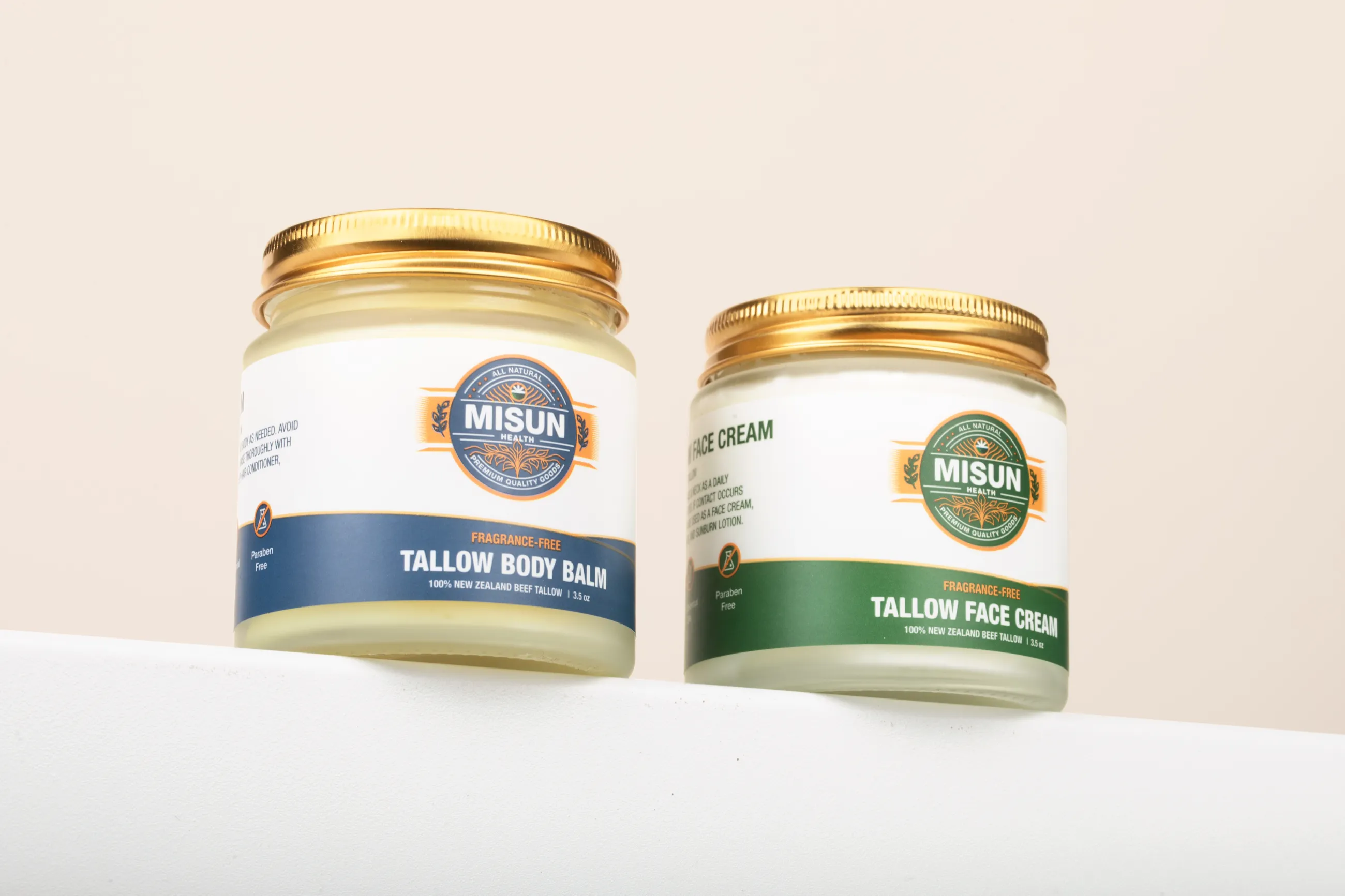 Misun Health
Common Questions
Is beef tallow better than O’Keeffe’s Working Hands for cracked hands?
Not automatically. O’Keeffe’s often wins for easier daytime reapplication after frequent washing, while beef tallow often wins when hands feel more brittle, rough, or crack-prone and need a richer overnight recovery step.
Which one is better for fingertip cracks and cuticle edges?
For stubborn fingertip splits and rough cuticle lines, many people prefer beef tallow balm because it can be pressed onto very specific dry seams and left in place overnight. O’Keeffe’s can still help, but the spot-treatment role often favors a richer balm.
Can I use O’Keeffe’s during the day and tallow at night?
Yes. That is often the most practical routine. O’Keeffe’s can cover low-fuss daytime maintenance, while tallow balm handles the drier knuckles, cuticles, and fingertip edges when you have longer recovery time overnight.
What if I am choosing between Bag Balm, Working Hands, and beef tallow?
Separate the jobs. O’Keeffe’s Working Hands usually fits repeat daytime hand use. Bag Balm usually fits a very dense spot seal on a stubborn crack or heel fissure. Beef tallow balm can cover the broader rough hand zone at night before you decide whether one deep split needs an even heavier top layer.
How long should I test beef tallow vs Working Hands before deciding?
Give the comparison at least 10 to 14 days unless one product clearly irritates you. Hand dryness from washing and friction is repetitive, so you need enough time to judge tenderness, flaking, and reapplication burden across real life instead of only the first impression.
When is hand dryness too severe for DIY skincare alone?
If cracks are deep, bleeding, increasingly painful, or showing signs of infection, stop relying only on home skincare and get professional advice. Supportive products can help barrier comfort, but they are not a substitute for medical care when fissures become severe.
Build your routine
 Buy on Amazon
 Buy on Amazon
Related guides
More commercial pages
Explore similar commercial concerns or jump to the closest concern hub.
- Can You Bring Beef Tallow on a Plane? Carry-On Packing and Travel Dryness Routine
- Can You Put Beef Tallow on Your Lips? Dry Lips, Chapped Lips, and Lip-Line Flaking
- Unscented Moisturizer for Sensitive Skin: How to Choose a Fragrance-Free Routine That Actually Feels Comfortable
- Beef Tallow vs Lotion for Dry Skin
Related concern pages
Educational content only. This page is not medical advice and is not intended to diagnose, treat, cure, or prevent disease. If symptoms persist or worsen, consult a licensed clinician.