Transactional cracked skin product comparison
12 min read
Beef Tallow vs Bag Balm for Cracked Heels, Feet, and Hand Edges
Bag Balm is often stronger when you want a stubborn overnight seal on a few heel fissures, while beef tallow is usually easier when the whole heel rim, dry foot edge, or hand edge needs broader coverage you will actually keep using. The better choice is usually about crack pattern, shoe friction, sock timing, and how much residue you can tolerate, not just which product feels heaviest.
Compare beef tallow vs Bag Balm for cracked heels, dry feet, and hand edges with guidance on sealing strength, shoe friction, socks, and overnight repair strategy.
Quick summary
- Bag Balm is often stronger when you want a stubborn overnight seal on a few heel fissures, while beef tallow is usually easier when the whole heel rim, dry foot edge, or hand edge needs broader coverage you will actually keep using. The better choice is usually about crack pattern, shoe friction, sock timing, and how much residue you can tolerate, not just which product feels heaviest.
- Sealing strength vs spreadability in real use: The biggest difference is how much drag and residue you can tolerate. Bag Balm usually feels denser, waxier, and more obviously sealing, which can be helpful on heel fissures, split fingertip edges, and tiny painful cracks that reopen fast. Beef tallow balm usually spreads more easily over a wider zone, so it often feels more practical when both heels are rough, the side of the foot feels chalky, the whole hand feels overwashed, or you want one product that covers more skin without heavy shine. If you mainly need a strong top layer on a very small area, Bag Balm often has the edge. If you need richer comfort across a broader dry zone, tallow is often easier to live with consistently.
- Feet, cracked heels, and hands: where each option usually fits better: For feet and cracked heels, the decision is usually about how broad the problem is. If the entire heel rim, outer sidewall, and ball-of-foot edge feel chalky or rough, tallow is often easier to spread over the full stress zone before socks. If one or two fissure lines keep catching on fabric or reopening after long standing hours, Bag Balm often makes more sense as a smaller overnight seal right over those trouble spots. For hand edges, knuckles, cuticles, and fingertip splits, the better option often depends on how often you wash your hands and whether you need to touch keyboards, phones, or steering wheels soon after applying. Tallow usually feels easier for daytime hand use because a very small amount can soften multiple dry spots with less drag. Bag Balm usually makes more sense when a few cracks are so stubborn that you care more about staying power than cosmetic feel.
Why people choose this approach
- The biggest difference is how much drag and residue you can tolerate. Bag Balm usually feels denser, waxier, and more obviously sealing, which can be helpful on heel fissures, split fingertip edges, and tiny painful cracks that reopen fast. Beef tallow balm usually spreads more easily over a wider zone, so it often feels more practical when both heels are rough, the side of the foot feels chalky, the whole hand feels overwashed, or you want one product that covers more skin without heavy shine. If you mainly need a strong top layer on a very small area, Bag Balm often has the edge. If you need richer comfort across a broader dry zone, tallow is often easier to live with consistently.
- For feet and cracked heels, the decision is usually about how broad the problem is. If the entire heel rim, outer sidewall, and ball-of-foot edge feel chalky or rough, tallow is often easier to spread over the full stress zone before socks. If one or two fissure lines keep catching on fabric or reopening after long standing hours, Bag Balm often makes more sense as a smaller overnight seal right over those trouble spots. For hand edges, knuckles, cuticles, and fingertip splits, the better option often depends on how often you wash your hands and whether you need to touch keyboards, phones, or steering wheels soon after applying. Tallow usually feels easier for daytime hand use because a very small amount can soften multiple dry spots with less drag. Bag Balm usually makes more sense when a few cracks are so stubborn that you care more about staying power than cosmetic feel.
Keep in mind
- Patch test first and increase use gradually based on comfort.
- Skincare supports moisture and comfort but is not a cure for medical conditions.
- If symptoms persist, worsen, or become painful, consult a licensed clinician.
Quick comparison
| Feature | Beef tallow | Bag Balm |
|---|---|---|
| Best fit | Broader heel rims, dry foot edges, hand edges, and routines where easier spread makes repeat use more likely | Small stubborn heel fissures, fingertip splits, and overnight spot-sealing when residue and sock transfer matter less |
| Daytime use | Usually easier before shoes, sandals, keyboards, or repeated handwashing when applied in a very thin layer | Often too heavy for broad daytime foot coverage, but useful on a tiny crack that needs extra protection |
| Overnight role | Covers the wider dry zone first so the heel rim or hand edge does not dry back out around the crack | Works best as a rice-grain to pea-sized topcoat on the exact fissure line or split-prone seam |
| Main tradeoff | Less forceful as a spot seal, but easier to use consistently across more skin | Stronger sealing feel, but easier to overapply and harder to tolerate across the whole heel or hand |
Routine steps
Daytime routine vs overnight repair
During the day, consistency matters more than maximum occlusion. A tiny tallow layer after washing can be easier to reapply to hand edges without leaving every fingertip overly slick, and a thin layer on the back and outer rim of the heel can feel more manageable before shoes. That matters because a lot of cracked-heel routines fail once shoes start rubbing and the whole foot feels too greasy to maintain. Overnight, stronger sealing power becomes more useful. A practical split routine is tallow on the full dry zone first, then a rice-grain to pea-sized amount of Bag Balm only on the cracks that sting, catch on fabric, or still feel hard by bedtime. For heels, breathable socks can help hold the routine in place and reduce friction restart by morning. For hands, cotton gloves can help if the residue will not bother you while sleeping.
How to use Bag Balm for cracked feet without overdoing it
If your main question is whether Bag Balm is good for cracked feet, the useful answer is yes for targeted sealing, but it is usually too heavy to treat like an all-over foot lotion. Wash and dry feet well, apply a lighter broad layer first if the entire heel rim or sidewall feels dry, then press a very small amount of Bag Balm directly into the deepest heel lines. Put on clean socks before walking around so the product stays where you placed it and does not make floors or sandals slick. Avoid aggressive filing right before heavy occlusion; if you smooth rough skin, keep it gentle and follow with a thin layer so the area does not feel raw. If a fissure is bleeding, hot, swollen, draining, or sharply painful, stop treating it as a cosmetic dryness problem.
A fair 10 to 14 day comparison method
Keep the rest of the routine boring while you test. Use the same hand soap, same shower temperature, and same sock or glove habits for at least 10 to 14 days. Split-test by zone when possible: tallow on one heel and Bag Balm on the other, or tallow on one hand edge and Bag Balm on the other at bedtime. Score four things the next morning and again midday: tightness rebound, crack tenderness, visible roughness, and how badly you needed to reapply. If one product feels better but does not last, that usually means it belongs in the daytime slot while the denser product belongs at night, not that either product failed completely.
Sealing strength vs spreadability in real use
The biggest difference is how much drag and residue you can tolerate. Bag Balm usually feels denser, waxier, and more obviously sealing, which can be helpful on heel fissures, split fingertip edges, and tiny painful cracks that reopen fast. Beef tallow balm usually spreads more easily over a wider zone, so it often feels more practical when both heels are rough, the side of the foot feels chalky, the whole hand feels overwashed, or you want one product that covers more skin without heavy shine. If you mainly need a strong top layer on a very small area, Bag Balm often has the edge. If you need richer comfort across a broader dry zone, tallow is often easier to live with consistently.
Feet, cracked heels, and hands: where each option usually fits better
For feet and cracked heels, the decision is usually about how broad the problem is. If the entire heel rim, outer sidewall, and ball-of-foot edge feel chalky or rough, tallow is often easier to spread over the full stress zone before socks. If one or two fissure lines keep catching on fabric or reopening after long standing hours, Bag Balm often makes more sense as a smaller overnight seal right over those trouble spots. For hand edges, knuckles, cuticles, and fingertip splits, the better option often depends on how often you wash your hands and whether you need to touch keyboards, phones, or steering wheels soon after applying. Tallow usually feels easier for daytime hand use because a very small amount can soften multiple dry spots with less drag. Bag Balm usually makes more sense when a few cracks are so stubborn that you care more about staying power than cosmetic feel.
Daytime routine vs overnight repair
During the day, consistency matters more than maximum occlusion. A tiny tallow layer after washing can be easier to reapply to hand edges without leaving every fingertip overly slick, and a thin layer on the back and outer rim of the heel can feel more manageable before shoes. That matters because a lot of cracked-heel routines fail once shoes start rubbing and the whole foot feels too greasy to maintain. Overnight, stronger sealing power becomes more useful. A practical split routine is tallow on the full dry zone first, then a rice-grain to pea-sized amount of Bag Balm only on the cracks that sting, catch on fabric, or still feel hard by bedtime. For heels, breathable socks can help hold the routine in place and reduce friction restart by morning. For hands, cotton gloves can help if the residue will not bother you while sleeping.
How to use Bag Balm for cracked feet without overdoing it
If your main question is whether Bag Balm is good for cracked feet, the useful answer is yes for targeted sealing, but it is usually too heavy to treat like an all-over foot lotion. Wash and dry feet well, apply a lighter broad layer first if the entire heel rim or sidewall feels dry, then press a very small amount of Bag Balm directly into the deepest heel lines. Put on clean socks before walking around so the product stays where you placed it and does not make floors or sandals slick. Avoid aggressive filing right before heavy occlusion; if you smooth rough skin, keep it gentle and follow with a thin layer so the area does not feel raw. If a fissure is bleeding, hot, swollen, draining, or sharply painful, stop treating it as a cosmetic dryness problem.
When one clearly wins, and when using both makes more sense
Beef tallow usually wins when the main problem is broad dryness, roughness, and low routine consistency with heavier ointments. Bag Balm usually wins when the main problem is a few stubborn cracks that keep reopening and need a denser seal. If your search is really `is Bag Balm good for cracked heels` or `can I use Bag Balm on feet`, the honest answer is yes, especially as a spot-seal for the deepest heel lines, but that does not automatically make it the best all-over heel routine. Many people do best by not forcing one winner everywhere. Use tallow when you want easier all-zone coverage and Bag Balm when you want a more stubborn top layer on the most damaged spots. That body-zone split is often more realistic than expecting either product to outperform in every context.
A fair 10 to 14 day comparison method
Keep the rest of the routine boring while you test. Use the same hand soap, same shower temperature, and same sock or glove habits for at least 10 to 14 days. Split-test by zone when possible: tallow on one heel and Bag Balm on the other, or tallow on one hand edge and Bag Balm on the other at bedtime. Score four things the next morning and again midday: tightness rebound, crack tenderness, visible roughness, and how badly you needed to reapply. If one product feels better but does not last, that usually means it belongs in the daytime slot while the denser product belongs at night, not that either product failed completely.
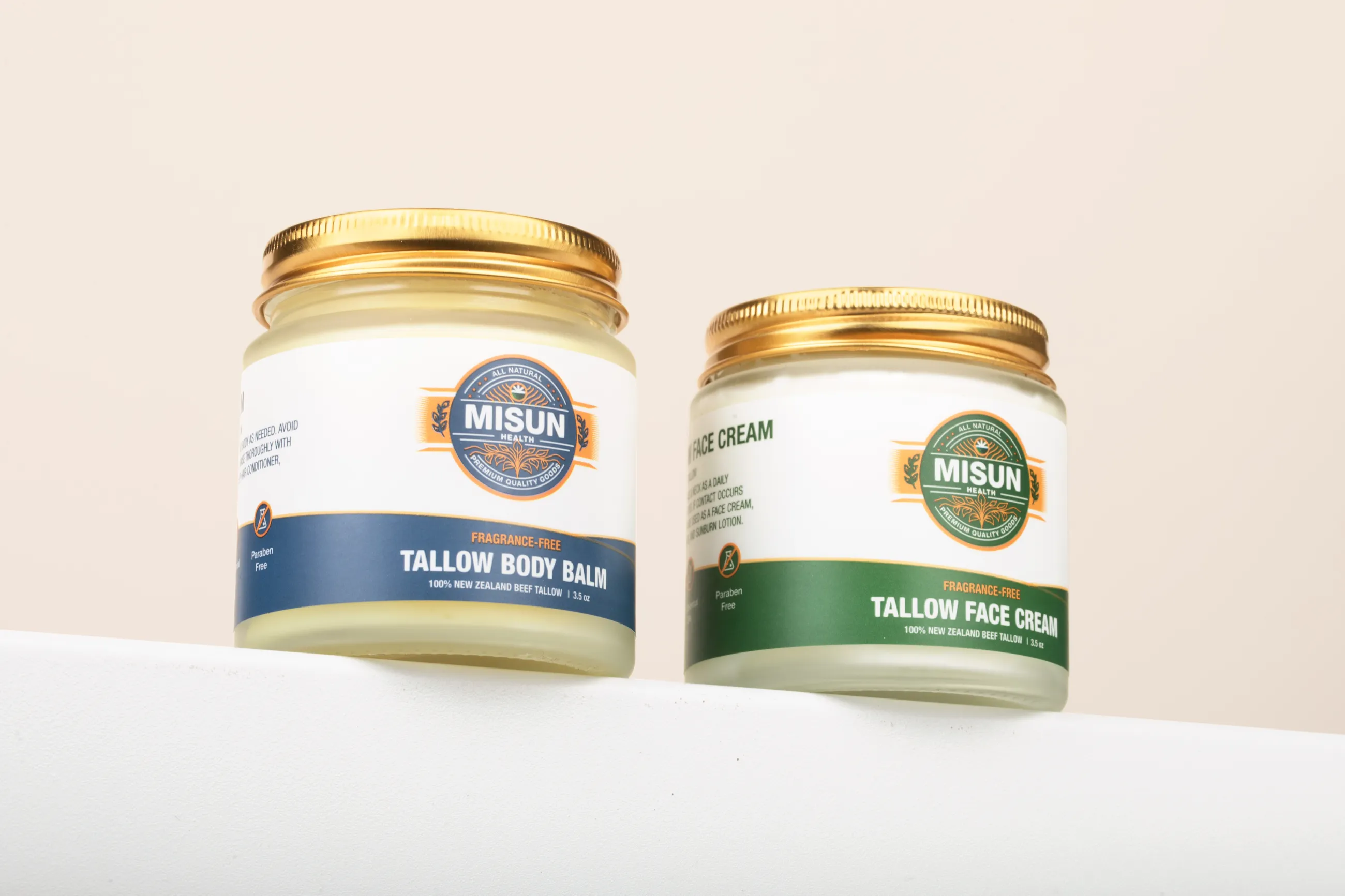 Misun Health
Common Questions
Is Bag Balm good for cracked heels?
Yes, Bag Balm can be good for cracked heels, especially when you want a denser overnight seal on a few stubborn fissure lines. The tradeoff is that it can feel too heavy for all-over daytime heel coverage, so many people use it as a spot treatment and rely on tallow for broader heel-rim dryness.
Can you use Bag Balm on dry feet?
Yes, but it usually works best as a targeted layer for cracked heel lines or rough pressure points rather than a thick coating over the whole foot. Apply a small amount, cover with clean socks, and avoid walking barefoot on slick floors after applying.
Is Bag Balm stronger than tallow for cracked heels?
Bag Balm often feels stronger as a sealing layer on the deepest heel cracks, but stronger sealing is not always the same thing as the best full-routine choice. If you avoid using it because it feels too heavy over the whole heel, a tallow routine may work better in practice because you apply it more consistently.
Which is better for cracked hand edges?
For daytime hand edges, many people prefer beef tallow because it usually spreads faster and feels easier to reapply after washing. For a few painful splits around fingertips or cuticles, Bag Balm may work better as a small overnight topcoat when you want more staying power.
Can I use tallow in daytime and Bag Balm at night?
Yes. That is one of the most practical ways to use both. Tallow can handle broader daytime dryness with less drag, while Bag Balm can be reserved for overnight sealing on the cracks that keep reopening or feeling raw. This split is especially useful when heels rub in shoes during the day but need a heavier seal once you are off your feet.
Should I put Bag Balm over tallow or use them separately?
If you use both in the same routine, start with a thin tallow layer across the broader dry zone and then add a very small amount of Bag Balm only to the worst cracks. Putting a dense ointment everywhere often feels harder to maintain than spot-sealing only the areas that truly need it.
How long should I test beef tallow vs Bag Balm before deciding?
Give the comparison at least 10 to 14 days unless the product clearly irritates you or feels unusable. Cracked heels and split hand edges usually improve gradually, so a fair test needs enough time to judge tenderness, roughness, and reapplication burden instead of only the first impression.
Build your routine
 Buy on Amazon
 Buy on Amazon
Related guides
More commercial pages
Explore similar commercial concerns or jump to the closest concern hub.
- Can You Bring Beef Tallow on a Plane? Carry-On Packing and Travel Dryness Routine
- Can You Put Beef Tallow on Your Lips? Dry Lips, Chapped Lips, and Lip-Line Flaking
- Unscented Moisturizer for Sensitive Skin: How to Choose a Fragrance-Free Routine That Actually Feels Comfortable
- Beef Tallow vs Lotion for Dry Skin
Related concern pages
Educational content only. This page is not medical advice and is not intended to diagnose, treat, cure, or prevent disease. If symptoms persist or worsen, consult a licensed clinician.