Transactional product comparison
14 min read
Vaseline vs Beef Tallow for Skin, Dry Patches, and Petroleum Jelly Routines
If you are comparing Vaseline vs beef tallow for skin, the short answer is this: Vaseline usually wins when you want a dense petroleum-jelly seal on a few stubborn spots, while tallow usually feels easier to spread across larger dry areas. Most people get the best result by choosing based on skin zone and time of day instead of forcing one product to do everything.
Compare Vaseline vs beef tallow for skin with a practical petroleum-jelly comparison guide for dry patches, face vs body use, layering order, and a fair side-by-side test.
Quick summary
- If you are comparing Vaseline vs beef tallow for skin, the short answer is this: Vaseline usually wins when you want a dense petroleum-jelly seal on a few stubborn spots, while tallow usually feels easier to spread across larger dry areas. Most people get the best result by choosing based on skin zone and time of day instead of forcing one product to do everything.
- Quick answer: when beef tallow usually wins vs when Vaseline usually wins: Beef tallow usually wins when your biggest problem is broad dry skin that needs a richer feel than lotion without the drag and shine of straight petrolatum. Vaseline usually wins when the main problem is a very stubborn patch that keeps cracking, stinging, or drying back out overnight. In plain terms, tallow is often the more livable all-over option, while Vaseline is often the more forceful spot-sealing option. That is why the comparison works better as tallow vs petroleum jelly for different jobs, not as a single universal winner for every inch of skin.
- Texture, slip, and what the finish feels like after ten minutes: The biggest real-world difference is how they feel once the novelty wears off. Vaseline has more drag at first, then leaves a glossy film that can stay obvious on skin, pillowcases, or cuffs. Beef tallow usually has a softer glide and a more balm-like or cream-like spread, so it is often easier to work over cheeks, forearms, legs, or larger dry body areas without feeling like you coated the whole zone in a heavy shell. If you care most about a flexible finish you will actually keep using, tallow often feels better. If you care most about a dense topcoat that refuses to budge, Vaseline usually has the edge.
Why people choose this approach
- Beef tallow usually wins when your biggest problem is broad dry skin that needs a richer feel than lotion without the drag and shine of straight petrolatum. Vaseline usually wins when the main problem is a very stubborn patch that keeps cracking, stinging, or drying back out overnight. In plain terms, tallow is often the more livable all-over option, while Vaseline is often the more forceful spot-sealing option. That is why the comparison works better as tallow vs petroleum jelly for different jobs, not as a single universal winner for every inch of skin.
- The biggest real-world difference is how they feel once the novelty wears off. Vaseline has more drag at first, then leaves a glossy film that can stay obvious on skin, pillowcases, or cuffs. Beef tallow usually has a softer glide and a more balm-like or cream-like spread, so it is often easier to work over cheeks, forearms, legs, or larger dry body areas without feeling like you coated the whole zone in a heavy shell. If you care most about a flexible finish you will actually keep using, tallow often feels better. If you care most about a dense topcoat that refuses to budge, Vaseline usually has the edge.
Keep in mind
- Patch test first and increase use gradually based on comfort.
- Skincare supports moisture and comfort but is not a cure for medical conditions.
- If symptoms persist, worsen, or become painful, consult a licensed clinician.
Quick comparison
| Feature | Beef tallow | Vaseline |
|---|---|---|
| Best fit | Broader dry skin zones where spreadability, comfort, and repeat use matter | Small stubborn cracks, flaky corners, or high-friction spots that need a dense seal |
| Texture tradeoff | Softer glide with a balm-like or cream-like finish, depending on format | Glossy petroleum-jelly film that can feel sticky but stays put well |
| Face use | Often easier for thin layers on cheeks, around the mouth, or general facial dryness | Usually better as a tiny night layer on flaky corners rather than full-face daytime use |
| Body and hands | More practical for shins, arms, backs of hands, and larger rough areas | Stronger spot seal for knuckles, elbows, heel fissure edges, and lip perimeter |
| Simple routine | Use first on the broader dry area where you want comfort and coverage | Add only on the spots that still crack, sting, or dry back out overnight |
Routine steps
Texture, slip, and what the finish feels like after ten minutes
The biggest real-world difference is how they feel once the novelty wears off. Vaseline has more drag at first, then leaves a glossy film that can stay obvious on skin, pillowcases, or cuffs. Beef tallow usually has a softer glide and a more balm-like or cream-like spread, so it is often easier to work over cheeks, forearms, legs, or larger dry body areas without feeling like you coated the whole zone in a heavy shell. If you care most about a flexible finish you will actually keep using, tallow often feels better. If you care most about a dense topcoat that refuses to budge, Vaseline usually has the edge.
Daytime vs overnight use
For daytime, spreadability matters more because you need something that feels tolerable under clothing, sunscreen, or makeup and does not make every area shiny. That is where a whipped tallow texture often makes routine consistency easier. Overnight, sealing power becomes more valuable, so Vaseline may outperform on stubborn dry patches that feel tight again by morning. One practical compromise is to apply tallow on the broader dry zone first, then use a pin-head to pea-sized amount of Vaseline only where dryness keeps breaking through overnight.
How to choose by skin zone instead of asking for one winner
Use location-specific logic instead of expecting one product to win everywhere. For cheeks and general facial dryness, start with a very thin tallow layer. For lips, nostril edges, knuckles, elbows, and heel cracks, Vaseline often provides a tougher seal. For hands and forearms, the better choice usually comes down to workday tolerance: tallow if you want easier spread with less slick residue, Vaseline if repeated washing leaves small areas painfully dry and you need a stronger spot barrier. For legs and torso, tallow is often the easier option simply because it covers more area with less friction during application.
Can you layer beef tallow and Vaseline together? Yes, but order matters
Yes, and this is often the most realistic routine for people who do not want to fully switch sides. Put the easier-spreading product where you want broad comfort first, then use the heavier seal only where it adds value. In most routines that means tallow first on the larger dry area, followed by a very small amount of Vaseline on the places that still crack, sting, or feel exposed. Reversing that order usually makes the routine messier and harder to spread evenly. If you want the benefits of both, think base layer first, topcoat second.
Quick answer: when beef tallow usually wins vs when Vaseline usually wins
Beef tallow usually wins when your biggest problem is broad dry skin that needs a richer feel than lotion without the drag and shine of straight petrolatum. Vaseline usually wins when the main problem is a very stubborn patch that keeps cracking, stinging, or drying back out overnight. In plain terms, tallow is often the more livable all-over option, while Vaseline is often the more forceful spot-sealing option. That is why the comparison works better as tallow vs petroleum jelly for different jobs, not as a single universal winner for every inch of skin.
Texture, slip, and what the finish feels like after ten minutes
The biggest real-world difference is how they feel once the novelty wears off. Vaseline has more drag at first, then leaves a glossy film that can stay obvious on skin, pillowcases, or cuffs. Beef tallow usually has a softer glide and a more balm-like or cream-like spread, so it is often easier to work over cheeks, forearms, legs, or larger dry body areas without feeling like you coated the whole zone in a heavy shell. If you care most about a flexible finish you will actually keep using, tallow often feels better. If you care most about a dense topcoat that refuses to budge, Vaseline usually has the edge.
Beef tallow vs petroleum jelly for sealing power
Vaseline is commonly chosen when the goal is maximum moisture-loss reduction from the top down. That makes it useful for cracked corners, raw-feeling patches, nostril edges, lip perimeter, knuckles, heel fissure edges, and other tiny zones where a stronger seal is more important than elegance. Beef tallow usually fits better when skin needs broad comfort plus easier coverage, especially if you dislike the sticky, shiny feel of petroleum jelly on larger areas. In practice, many people prefer tallow for all-over dryness and Vaseline for rescue spots, which is a more useful answer than pretending they are perfect substitutes.
Face vs body: where each usually fits better
On the face, many people tolerate beef tallow better because thin layers can feel more workable around cheeks, temples, or around-the-mouth dryness. Vaseline can still help on the face, but it usually makes the most sense as a very small finishing layer on flaky corners or on wind-chapped patches at night rather than a full-face daytime coat. On the body, both can work, but tallow is usually easier for larger zones like shins, arms, shoulders, and torso, while Vaseline is often better reserved for elbows, knees, hands, heels, and other friction-heavy spots that keep drying out.
Daytime vs overnight use
For daytime, spreadability matters more because you need something that feels tolerable under clothing, sunscreen, or makeup and does not make every area shiny. That is where a whipped tallow texture often makes routine consistency easier. Overnight, sealing power becomes more valuable, so Vaseline may outperform on stubborn dry patches that feel tight again by morning. One practical compromise is to apply tallow on the broader dry zone first, then use a pin-head to pea-sized amount of Vaseline only where dryness keeps breaking through overnight.
How to choose by skin zone instead of asking for one winner
Use location-specific logic instead of expecting one product to win everywhere. For cheeks and general facial dryness, start with a very thin tallow layer. For lips, nostril edges, knuckles, elbows, and heel cracks, Vaseline often provides a tougher seal. For hands and forearms, the better choice usually comes down to workday tolerance: tallow if you want easier spread with less slick residue, Vaseline if repeated washing leaves small areas painfully dry and you need a stronger spot barrier. For legs and torso, tallow is often the easier option simply because it covers more area with less friction during application.
Can you layer beef tallow and Vaseline together? Yes, but order matters
Yes, and this is often the most realistic routine for people who do not want to fully switch sides. Put the easier-spreading product where you want broad comfort first, then use the heavier seal only where it adds value. In most routines that means tallow first on the larger dry area, followed by a very small amount of Vaseline on the places that still crack, sting, or feel exposed. Reversing that order usually makes the routine messier and harder to spread evenly. If you want the benefits of both, think base layer first, topcoat second.
A practical transition path if you are moving away from all-over Vaseline
If you are currently using Vaseline as your only occlusive, do not force a dramatic overnight switch. Keep Vaseline on the smallest stubborn areas and layer tallow over the broader dry field first. Start by replacing only about 60 to 70% of your normal bedtime coverage with tallow, then add Vaseline only to the highest-friction points that still feel cracked by bedtime. This improves spreadability and comfort without giving up the dense seal where it matters most. It also makes the comparison fairer because you are matching each product to the job it does best.
A fair side-by-side test for beef tallow vs Vaseline for skin
To compare them honestly, keep the rest of your routine boring for 7 to 14 days. Use the same cleanser, the same shower length, the same room humidity if possible, and avoid adding new actives. Then split-test by zone: for example, tallow on the left shin and Vaseline on the right shin, or tallow on one hand and Vaseline on the other at bedtime. Use the same amount each time and score five things the next morning and midday: tightness rebound, visible flaking, residue feel, whether clothing or bedding felt uncomfortable, and whether you needed to reapply. If one product wins on comfort but loses on staying power, that usually means it belongs in a different time slot or skin zone rather than being a total failure.
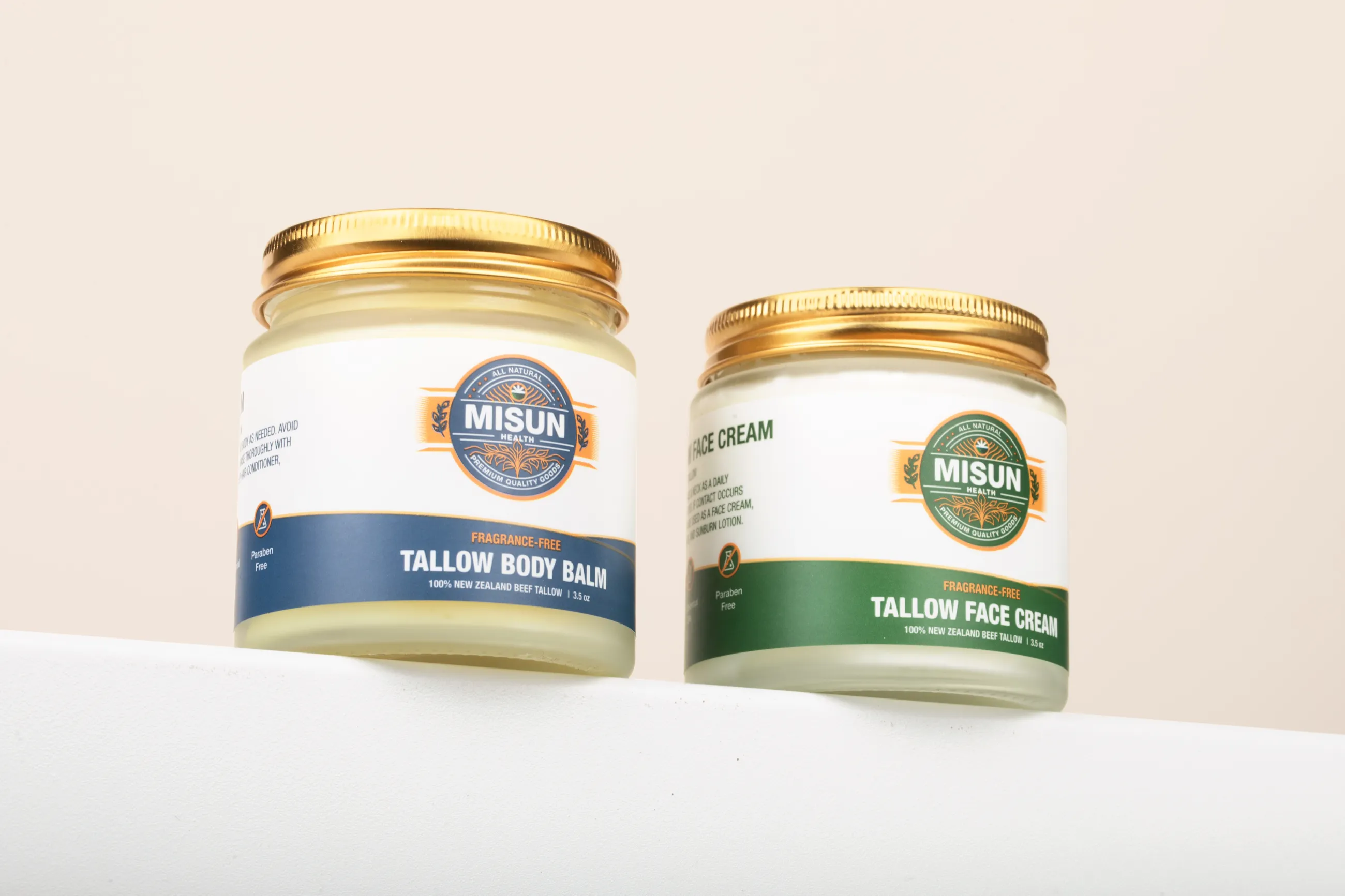 Misun Health
Common Questions
Is beef tallow better than Vaseline for skin?
Not automatically. Beef tallow is often easier to spread and live with on larger dry areas, while Vaseline is usually stronger when you want a dense seal on stubborn small patches. The better choice depends on whether your main problem is all-over dryness, texture tolerance, or the need for stronger overnight occlusion.
Is beef tallow better than petroleum jelly for dry skin?
It can be, especially when dry skin covers a larger area and you want something you will actually keep applying consistently. Petroleum jelly usually seals harder, but beef tallow often feels easier to spread and easier to live with across cheeks, arms, legs, or other broader zones. For many people, the practical winner is the one that balances comfort with enough staying power for that specific skin area.
Can I use beef tallow and Vaseline in the same routine?
Yes. One practical routine is to use whipped tallow cream or balm on the broader dry area first, then add a tiny amount of Vaseline only to the spots that still crack, sting, or need a stronger barrier overnight. This usually gives you tallow's easier spread plus Vaseline's stronger spot sealing without coating everything in a heavy layer.
Which one is better for the face?
For full-face use, many people find beef tallow easier to control because it spreads more naturally in thin layers. Vaseline usually makes more sense as a targeted finishing step on flaky corners, around the lips, or on wind-chapped patches at night. If your face feels congested or too shiny with either option, reduce the amount before assuming the product is wrong for you.
Which one is better for body skin?
For broad body dryness on legs, arms, or torso, beef tallow often feels more practical because it covers larger areas more easily. Vaseline is usually better when body dryness is concentrated in rough, high-friction zones like elbows, knees, hands, and heels where staying power matters more than elegant spread.
Is Vaseline more moisturizing than beef tallow?
Vaseline is usually thought of as the stronger seal, but stronger sealing is not always the same thing as better day-to-day moisturizer comfort. Some people feel more comfortable with tallow because they can apply it more evenly and consistently across dry skin. If a product feels too greasy, consistency drops, which often hurts results even when the formula is very occlusive.
How should I test beef tallow vs Vaseline without biasing the result?
Use the same amount, same timing, and same skin zone conditions for at least a week. Do not change cleanser, exfoliants, or shower habits during the test. Compare how each side feels after application, the next morning, and later in the day. The fairest winner is the one that gives enough comfort and staying power with the least reapplication burden for that specific zone.
Build your routine
 Buy on Amazon
 Buy on Amazon
Related guides
More commercial pages
Explore similar commercial concerns or jump to the closest concern hub.
- Can You Bring Beef Tallow on a Plane? Carry-On Packing and Travel Dryness Routine
- Can You Put Beef Tallow on Your Lips? Dry Lips, Chapped Lips, and Lip-Line Flaking
- Unscented Moisturizer for Sensitive Skin: How to Choose a Fragrance-Free Routine That Actually Feels Comfortable
- Beef Tallow vs Lotion for Dry Skin
Related concern pages
Educational content only. This page is not medical advice and is not intended to diagnose, treat, cure, or prevent disease. If symptoms persist or worsen, consult a licensed clinician.