High-intent product comparison
10 min read
Beef Tallow vs Urea Cream for Dry Skin
If dry skin feels rough, scaly, or built up, urea cream often has the advantage. If it feels tight, overwashed, wind-chapped, or simply uncomfortable, beef tallow often feels better faster. Many routines work best when urea handles the rough texture and tallow handles the sealing step only where moisture keeps escaping.
Compare beef tallow vs urea cream for dry skin with clearer guidance on smoothing versus sealing, urea-strength tradeoffs, sting risk, face-versus-feet fit, and how to layer them without wasting the routine.
Quick summary
- If dry skin feels rough, scaly, or built up, urea cream often has the advantage. If it feels tight, overwashed, wind-chapped, or simply uncomfortable, beef tallow often feels better faster. Many routines work best when urea handles the rough texture and tallow handles the sealing step only where moisture keeps escaping.
- Quick answer: urea usually smooths better, tallow usually seals better: People comparing beef tallow vs urea cream are usually not deciding which product is universally better. They are deciding whether the real problem is rough texture, rebound tightness, or both. Urea cream usually wins when skin feels flaky, thick, or stubbornly rough and needs help softening built-up dryness. Beef tallow usually wins when skin feels stripped, weather-beaten, overwashed, or uncomfortable and needs a richer layer that helps hold moisture in. If your skin feels both rough and tight, the best answer is often not choosing one forever. It is giving each product a more specific job.
- What urea cream actually does that tallow does not: Urea cream often behaves more like a treatment moisturizer than a simple comfort product. Depending on the formula strength, it can pull in water and help loosen rough, scaly, or hardened dry buildup. That is why people often use it on shins, outer arms, knees, heels, and elbows where ordinary lotion keeps making the skin feel coated but not actually smoother. Beef tallow does not fill that same role. It can soften the feel of the surface and reduce that tight, papery sensation, but it is not usually the better answer when the main complaint is dry texture that needs gradual smoothing.
Why people choose this approach
- People comparing beef tallow vs urea cream are usually not deciding which product is universally better. They are deciding whether the real problem is rough texture, rebound tightness, or both. Urea cream usually wins when skin feels flaky, thick, or stubbornly rough and needs help softening built-up dryness. Beef tallow usually wins when skin feels stripped, weather-beaten, overwashed, or uncomfortable and needs a richer layer that helps hold moisture in. If your skin feels both rough and tight, the best answer is often not choosing one forever. It is giving each product a more specific job.
- Urea cream often behaves more like a treatment moisturizer than a simple comfort product. Depending on the formula strength, it can pull in water and help loosen rough, scaly, or hardened dry buildup. That is why people often use it on shins, outer arms, knees, heels, and elbows where ordinary lotion keeps making the skin feel coated but not actually smoother. Beef tallow does not fill that same role. It can soften the feel of the surface and reduce that tight, papery sensation, but it is not usually the better answer when the main complaint is dry texture that needs gradual smoothing.
Keep in mind
- Patch test first and increase use gradually based on comfort.
- Skincare supports moisture and comfort but is not a cure for medical conditions.
- If symptoms persist, worsen, or become painful, consult a licensed clinician.
Quick comparison
| Feature | Whipped Tallow Cream | Beef Tallow Balm |
|---|---|---|
| Best use case | Daily face/body moisture with lighter spread | Targeted dry patches and high-friction zones |
| Typical routine timing | Morning + daytime maintenance | Night routine + targeted application |
| Texture feel | Lighter and easier to spread | Dense and more sealing |
Routine steps
How strength and sting change the urea decision
One reason this comparison gets confusing is that urea cream is not one fixed experience. Lower-strength formulas can feel more like supportive hydration, while higher-strength versions can feel more active and can sting more on cracked or freshly irritated skin. That matters if you are comparing it with tallow after shaving, after over-exfoliating, or on areas with tiny splits. In those moments, beef tallow often feels easier to tolerate because it gives comfort without the treatment-style bite some urea formulas create. If your skin is reactive, the better question is not only whether urea works. It is whether your skin can comfortably stick with that specific formula long enough for the smoothing payoff to matter.
How to layer urea cream and tallow without blocking the routine
If you want benefits from both, put urea cream first on the rough areas that need smoothing, then give it a little time to settle before adding a thin tallow layer only where moisture still escapes too fast. That order matters. Putting a very heavy occlusive layer down first can make the routine feel greasy without helping the urea do much. A common real-life split is urea after bathing on heels, knees, or rough arms, then tallow later in the evening on the driest edges or any spots that still feel tight. Another good approach is urea at night and tallow in the morning for comfort wear.
A simple test routine that shows which one your skin actually needs
Keep the rest of the routine stable for 10 to 14 days and judge the products by the problem they are solving, not by first-impression richness. Use urea cream consistently on one rough target area and watch whether the texture softens, flakes less, and feels less built up by the end of the week. Use beef tallow on one comfort-driven target area and watch whether the skin stays comfortable longer, feels less tight after washing, and is easier to keep moisturized through the day. The better product is not the one that feels strongest on night one. It is the one that fixes the specific dry-skin pattern you actually have and is realistic enough to keep using.
Quick answer: urea usually smooths better, tallow usually seals better
People comparing beef tallow vs urea cream are usually not deciding which product is universally better. They are deciding whether the real problem is rough texture, rebound tightness, or both. Urea cream usually wins when skin feels flaky, thick, or stubbornly rough and needs help softening built-up dryness. Beef tallow usually wins when skin feels stripped, weather-beaten, overwashed, or uncomfortable and needs a richer layer that helps hold moisture in. If your skin feels both rough and tight, the best answer is often not choosing one forever. It is giving each product a more specific job.
What urea cream actually does that tallow does not
Urea cream often behaves more like a treatment moisturizer than a simple comfort product. Depending on the formula strength, it can pull in water and help loosen rough, scaly, or hardened dry buildup. That is why people often use it on shins, outer arms, knees, heels, and elbows where ordinary lotion keeps making the skin feel coated but not actually smoother. Beef tallow does not fill that same role. It can soften the feel of the surface and reduce that tight, papery sensation, but it is not usually the better answer when the main complaint is dry texture that needs gradual smoothing.
How strength and sting change the urea decision
One reason this comparison gets confusing is that urea cream is not one fixed experience. Lower-strength formulas can feel more like supportive hydration, while higher-strength versions can feel more active and can sting more on cracked or freshly irritated skin. That matters if you are comparing it with tallow after shaving, after over-exfoliating, or on areas with tiny splits. In those moments, beef tallow often feels easier to tolerate because it gives comfort without the treatment-style bite some urea formulas create. If your skin is reactive, the better question is not only whether urea works. It is whether your skin can comfortably stick with that specific formula long enough for the smoothing payoff to matter.
When beef tallow usually makes more sense
Beef tallow usually makes more sense when the main issue is comfort, cushioning, and moisture retention rather than resurfacing. It tends to fit better on overwashed hands, face-adjacent dry zones, lip edges, neck dryness, wind-exposed cheeks, and larger areas that feel tight but not especially thick or built up. It also tends to fit better when you need a product you will actually reapply during the day. Many people find a richer tallow cream or balm more realistic in those situations because it feels gentler and less treatment-heavy, which can improve consistency.
Face, hands, feet, and elbows: where each option usually fits best
For feet, heels, elbows, knees, and rough shin patches, urea cream often has the clearer first job because those areas commonly need more than a seal. They need help loosening stubborn texture. For hands, lip line, cheeks, neck, and other reactive-feeling zones, beef tallow often feels more practical because comfort and wear feel matter more than aggressive smoothing. The split is not absolute. Some people use urea on the roughest body areas at night, then keep tallow for the places that need a richer protective layer during the day. Thinking by body zone usually leads to a better routine than trying to crown one single winner for every part of the body.
How to layer urea cream and tallow without blocking the routine
If you want benefits from both, put urea cream first on the rough areas that need smoothing, then give it a little time to settle before adding a thin tallow layer only where moisture still escapes too fast. That order matters. Putting a very heavy occlusive layer down first can make the routine feel greasy without helping the urea do much. A common real-life split is urea after bathing on heels, knees, or rough arms, then tallow later in the evening on the driest edges or any spots that still feel tight. Another good approach is urea at night and tallow in the morning for comfort wear.
A simple test routine that shows which one your skin actually needs
Keep the rest of the routine stable for 10 to 14 days and judge the products by the problem they are solving, not by first-impression richness. Use urea cream consistently on one rough target area and watch whether the texture softens, flakes less, and feels less built up by the end of the week. Use beef tallow on one comfort-driven target area and watch whether the skin stays comfortable longer, feels less tight after washing, and is easier to keep moisturized through the day. The better product is not the one that feels strongest on night one. It is the one that fixes the specific dry-skin pattern you actually have and is realistic enough to keep using.
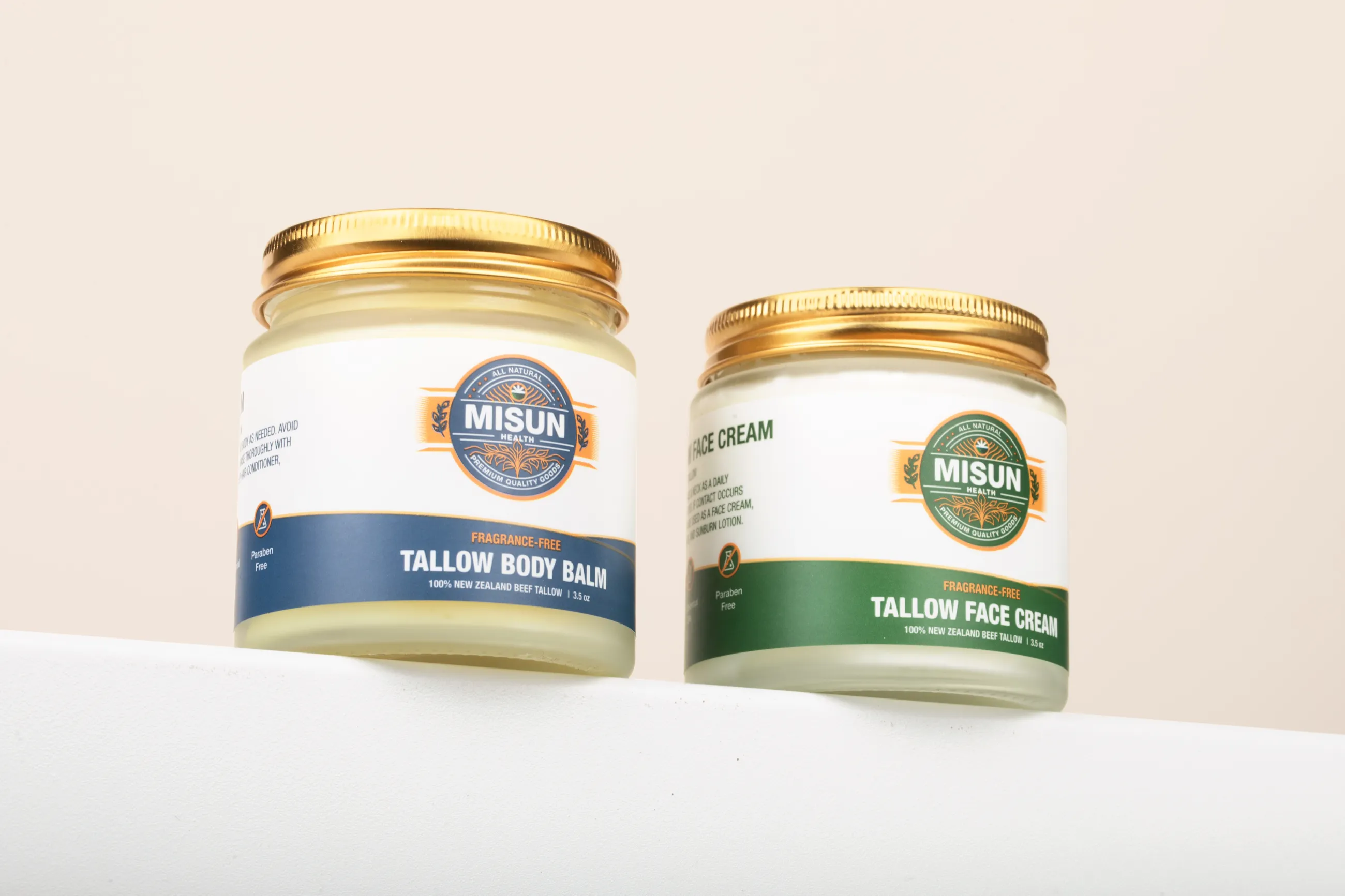 Misun Health
Common Questions
Is beef tallow better than urea cream for everyone?
No. Urea cream often works better when roughness, scale, and built-up dry texture are the main problem. Beef tallow often works better when the bigger issue is tightness, sensitivity, and moisture loss. The right choice depends on body zone, tolerance, and the kind of dryness you are trying to fix.
Can I use urea cream and beef tallow in the same routine?
Yes. A common approach is urea cream first on rough zones such as heels, knees, elbows, or shins, then a thin tallow layer later or on top only where dryness still rebounds quickly. That lets urea do the smoothing work while tallow handles extra sealing.
Why does urea cream sometimes sting when tallow does not?
Urea can feel more active, especially in stronger formulas or on cracked, over-exfoliated, freshly shaved, or otherwise irritated skin. Beef tallow usually feels more like a comfort layer, so some people tolerate it better on reactive dry areas even if they still prefer urea on rougher body zones.
Is urea cream or beef tallow better for feet and elbows?
Urea cream often has the edge when feet or elbows feel rough, thick, or built up and need actual smoothing. Beef tallow can still help as a richer sealing step, but if texture correction is the main goal, urea usually has the stronger role.
Is beef tallow or urea cream better for the face or overwashed hands?
Beef tallow is often the easier fit when the skin feels dry, tight, or overwashed but not especially rough. Many people prefer it on hands, lip edges, neck, or face-adjacent dry zones because it can feel gentler and more comfortable to reapply than a treatment-style cream.
Do I need a high-strength urea cream for ordinary dry skin?
Not always. If the skin is simply dry and tight rather than thick or scaly, a stronger urea formula may be more active than you need. Those cases are often where a comfort-focused moisturizer like tallow, or a lower-key layering routine, makes more sense.
Build your routine
 Buy on Amazon
 Buy on Amazon
Related guides
More commercial pages
Explore similar commercial concerns or jump to the closest concern hub.
- Can You Bring Beef Tallow on a Plane? Carry-On Packing and Travel Dryness Routine
- Can You Put Beef Tallow on Your Lips? Dry Lips, Chapped Lips, and Lip-Line Flaking
- Unscented Moisturizer for Sensitive Skin: How to Choose a Fragrance-Free Routine That Actually Feels Comfortable
- Beef Tallow vs Lotion for Dry Skin
Related concern pages
Educational content only. This page is not medical advice and is not intended to diagnose, treat, cure, or prevent disease. If symptoms persist or worsen, consult a licensed clinician.