Transactional product comparison
10 min read
Beef Tallow vs CeraVe Healing Ointment for Dry Skin
Beef tallow and CeraVe Healing Ointment can both help dry skin, but they usually win in different jobs. Tallow is often easier to spread across larger dry zones, while Healing Ointment usually works better as a dense finishing seal on the spots that lose moisture fastest or keep cracking back open.
Compare beef tallow vs CeraVe Healing Ointment for dry skin with practical guidance on spreadability, sealing power, face-vs-body fit, and when to layer both instead of forcing one winner.
Quick summary
- Beef tallow and CeraVe Healing Ointment can both help dry skin, but they usually win in different jobs. Tallow is often easier to spread across larger dry zones, while Healing Ointment usually works better as a dense finishing seal on the spots that lose moisture fastest or keep cracking back open.
- Quick answer: which one is easier to live with every day?: If your dry skin covers broader areas like cheeks, around the mouth, forearms, or the backs of hands, beef tallow usually feels easier to use consistently because it spreads with less drag and does not always leave the same heavy ointment finish. If the real problem is a few stubborn hot spots, like lip corners, nostril edges, knuckles, fingertip splits, or a flaky patch that keeps reopening, CeraVe Healing Ointment often makes more sense because it behaves more like a deliberate sealing layer. In real life, people often stop using the product that technically works if it feels too sticky for the zone they are treating, so day-to-day usability matters as much as raw occlusion strength.
- Spreadability vs sealing power: the biggest practical difference: The feel difference is what most searchers are actually trying to solve. Beef tallow usually melts and moves more easily over a larger area, which makes it more realistic for full dry-skin coverage after cleansing or showering. CeraVe Healing Ointment usually feels denser, shinier, and more obviously occlusive, which can be excellent when the goal is to keep a small area sealed longer. That does not make one universally better. It means tallow often works better as the main moisture layer, while Healing Ointment often works better as the final topcoat when you need stubborn overnight hold.
Why people choose this approach
- If your dry skin covers broader areas like cheeks, around the mouth, forearms, or the backs of hands, beef tallow usually feels easier to use consistently because it spreads with less drag and does not always leave the same heavy ointment finish. If the real problem is a few stubborn hot spots, like lip corners, nostril edges, knuckles, fingertip splits, or a flaky patch that keeps reopening, CeraVe Healing Ointment often makes more sense because it behaves more like a deliberate sealing layer. In real life, people often stop using the product that technically works if it feels too sticky for the zone they are treating, so day-to-day usability matters as much as raw occlusion strength.
- The feel difference is what most searchers are actually trying to solve. Beef tallow usually melts and moves more easily over a larger area, which makes it more realistic for full dry-skin coverage after cleansing or showering. CeraVe Healing Ointment usually feels denser, shinier, and more obviously occlusive, which can be excellent when the goal is to keep a small area sealed longer. That does not make one universally better. It means tallow often works better as the main moisture layer, while Healing Ointment often works better as the final topcoat when you need stubborn overnight hold.
Keep in mind
- Patch test first and increase use gradually based on comfort.
- Skincare supports moisture and comfort but is not a cure for medical conditions.
- If symptoms persist, worsen, or become painful, consult a licensed clinician.
Quick comparison
| Feature | Whipped Tallow Cream | Beef Tallow Balm |
|---|---|---|
| Best use case | Daily face/body moisture with lighter spread | Targeted dry patches and high-friction zones |
| Typical routine timing | Morning + daytime maintenance | Night routine + targeted application |
| Texture feel | Lighter and easier to spread | Dense and more sealing |
Routine steps
Quick answer: which one is easier to live with every day?
If your dry skin covers broader areas like cheeks, around the mouth, forearms, or the backs of hands, beef tallow usually feels easier to use consistently because it spreads with less drag and does not always leave the same heavy ointment finish. If the real problem is a few stubborn hot spots, like lip corners, nostril edges, knuckles, fingertip splits, or a flaky patch that keeps reopening, CeraVe Healing Ointment often makes more sense because it behaves more like a deliberate sealing layer. In real life, people often stop using the product that technically works if it feels too sticky for the zone they are treating, so day-to-day usability matters as much as raw occlusion strength.
Daytime vs overnight routine strategy
For daytime, the better choice is usually the one you will actually reapply. That often means a thin tallow layer on larger dry areas because it feels more manageable under clothes, during errands, or between hand washes. Overnight is when Healing Ointment becomes more useful. A strong routine is often tallow first across the whole dry zone, then a tiny amount of Healing Ointment only on the spots that still feel raw, flaky, or crack-prone by bedtime. This split routine usually works better than using dense ointment everywhere and then avoiding it because the finish feels too heavy.
When layering both makes more sense than choosing one winner
Many people do not need a permanent either-or answer. If your skin feels dry overall but only a few spots stay stubborn, use tallow as the base moisturizer and Healing Ointment as the seal for the tiny zones that rebound fastest. If your skin hates heavy textures, reverse the question and ask whether ointment should stay a spot-treatment tool instead of becoming your whole routine. The best setup is often the one that gives you enough coverage to stay comfortable without making the entire routine feel greasy or hard to repeat.
A fair 10 to 14 day comparison method
Keep the rest of your routine boring while testing. Use the same cleanser, shower temperature, and room conditions for 10 to 14 days. Compare matched zones when possible, such as left hand versus right hand or one side of the mouth area versus the other. Track four signals: how quickly tightness returns, whether flakes or rough edges soften by morning, how often you need to reapply, and whether the finish makes you avoid daytime use. If tallow feels better but does not last on a tiny crack, that usually means it should stay your base layer and the ointment should stay your spot sealer, not that either product failed.
Quick answer: which one is easier to live with every day?
If your dry skin covers broader areas like cheeks, around the mouth, forearms, or the backs of hands, beef tallow usually feels easier to use consistently because it spreads with less drag and does not always leave the same heavy ointment finish. If the real problem is a few stubborn hot spots, like lip corners, nostril edges, knuckles, fingertip splits, or a flaky patch that keeps reopening, CeraVe Healing Ointment often makes more sense because it behaves more like a deliberate sealing layer. In real life, people often stop using the product that technically works if it feels too sticky for the zone they are treating, so day-to-day usability matters as much as raw occlusion strength.
Spreadability vs sealing power: the biggest practical difference
The feel difference is what most searchers are actually trying to solve. Beef tallow usually melts and moves more easily over a larger area, which makes it more realistic for full dry-skin coverage after cleansing or showering. CeraVe Healing Ointment usually feels denser, shinier, and more obviously occlusive, which can be excellent when the goal is to keep a small area sealed longer. That does not make one universally better. It means tallow often works better as the main moisture layer, while Healing Ointment often works better as the final topcoat when you need stubborn overnight hold.
Face, hands, and body: where each option usually fits best
On the face, many people prefer the option that can be used in a very thin layer without feeling too glossy or trapped under sunscreen, which often gives beef tallow the edge for cheeks, around the mouth, and seasonal dry patches. Around the nose, lip corners, and tiny flaky spots, Healing Ointment can still be useful as a micro-layer when you want stronger sealing. On hands, tallow is often easier for the backs of hands and larger dry zones, while Healing Ointment is often better reserved for cuticles, fingertip splits, or one or two rough knuckles. On the body, the same logic applies: tallow usually wins for easier all-over use, while Healing Ointment wins when the target is a smaller high-friction patch that needs denser protection.
Daytime vs overnight routine strategy
For daytime, the better choice is usually the one you will actually reapply. That often means a thin tallow layer on larger dry areas because it feels more manageable under clothes, during errands, or between hand washes. Overnight is when Healing Ointment becomes more useful. A strong routine is often tallow first across the whole dry zone, then a tiny amount of Healing Ointment only on the spots that still feel raw, flaky, or crack-prone by bedtime. This split routine usually works better than using dense ointment everywhere and then avoiding it because the finish feels too heavy.
When layering both makes more sense than choosing one winner
Many people do not need a permanent either-or answer. If your skin feels dry overall but only a few spots stay stubborn, use tallow as the base moisturizer and Healing Ointment as the seal for the tiny zones that rebound fastest. If your skin hates heavy textures, reverse the question and ask whether ointment should stay a spot-treatment tool instead of becoming your whole routine. The best setup is often the one that gives you enough coverage to stay comfortable without making the entire routine feel greasy or hard to repeat.
A fair 10 to 14 day comparison method
Keep the rest of your routine boring while testing. Use the same cleanser, shower temperature, and room conditions for 10 to 14 days. Compare matched zones when possible, such as left hand versus right hand or one side of the mouth area versus the other. Track four signals: how quickly tightness returns, whether flakes or rough edges soften by morning, how often you need to reapply, and whether the finish makes you avoid daytime use. If tallow feels better but does not last on a tiny crack, that usually means it should stay your base layer and the ointment should stay your spot sealer, not that either product failed.
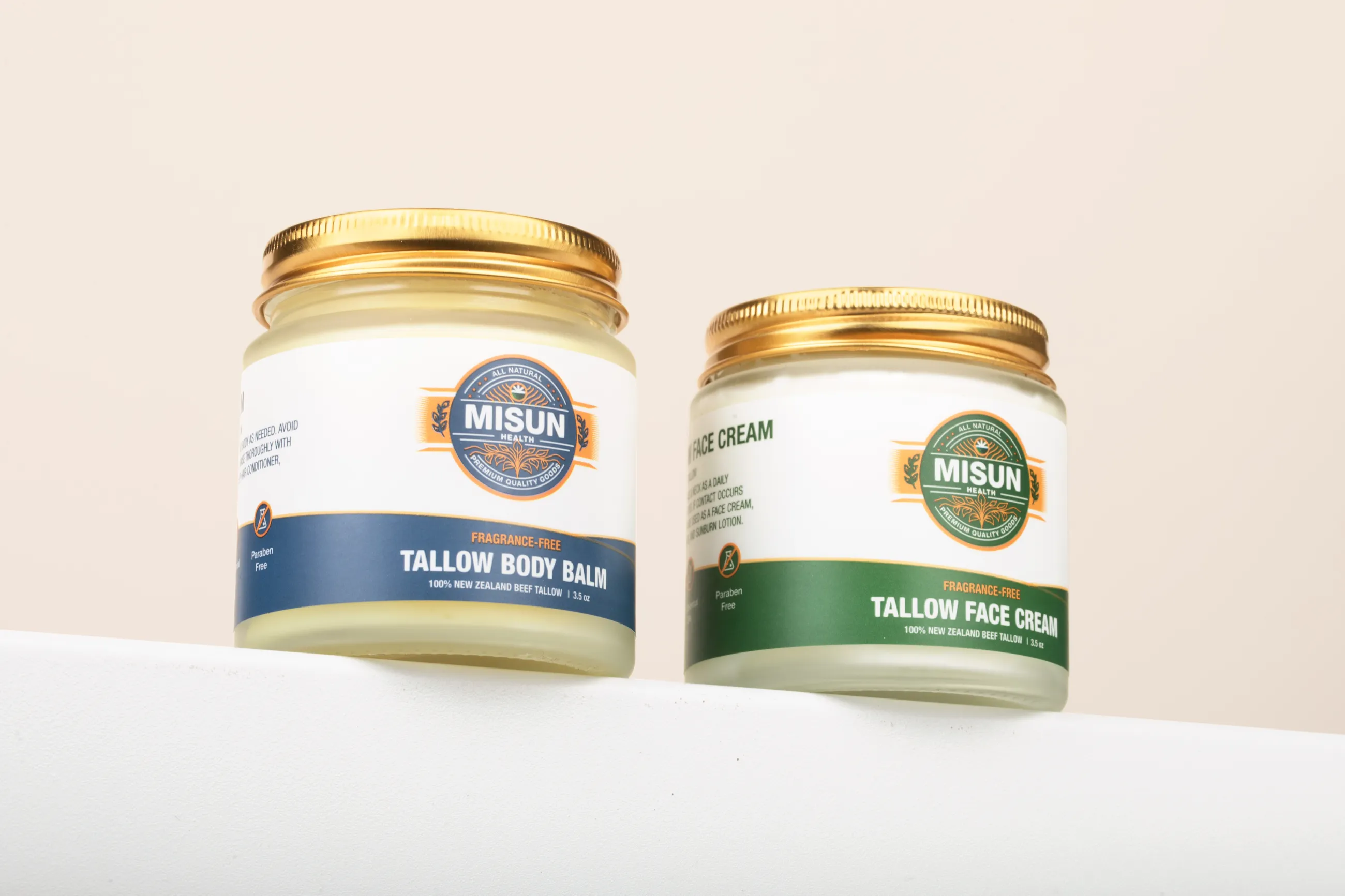 Misun Health
Common Questions
Is beef tallow better than CeraVe Healing Ointment for dry skin?
Not across every use case. Beef tallow is often easier for broader dry areas and routine consistency, while CeraVe Healing Ointment often works better as a dense top layer on smaller spots that need more staying power.
Can I use beef tallow in the day and CeraVe Healing Ointment at night?
Yes. That is often the most practical split. Tallow can handle larger daytime dry zones with less drag, while Healing Ointment can be reserved for overnight sealing on cracks, flaky corners, and rough patches that keep rebounding.
Should I put Healing Ointment over tallow?
If you are layering both, start with a thin tallow layer first and then add a very small amount of Healing Ointment only on the spots that need stronger sealing. Covering the whole area with ointment is usually less wearable than spot-sealing the stubborn zones.
Which one is better for the face?
For many people, beef tallow is the easier full-zone facial option because it spreads more easily in thin layers. Healing Ointment often works better as a targeted seal on tiny dry patches rather than an all-over face product, especially if you dislike a glossy finish.
How long should I test beef tallow vs CeraVe Healing Ointment before deciding?
Give the comparison at least 10 to 14 days with the rest of your routine held steady. That is usually long enough to judge comfort, morning softness, reapplication burden, and whether one texture is realistically easier for you to keep using.
Build your routine
 Buy on Amazon
 Buy on Amazon
Related guides
More commercial pages
Explore similar commercial concerns or jump to the closest concern hub.
- Can You Bring Beef Tallow on a Plane? Carry-On Packing and Travel Dryness Routine
- Can You Put Beef Tallow on Your Lips? Dry Lips, Chapped Lips, and Lip-Line Flaking
- Unscented Moisturizer for Sensitive Skin: How to Choose a Fragrance-Free Routine That Actually Feels Comfortable
- Beef Tallow vs Lotion for Dry Skin
Related concern pages
Educational content only. This page is not medical advice and is not intended to diagnose, treat, cure, or prevent disease. If symptoms persist or worsen, consult a licensed clinician.