High-intent product comparison
9 min read
Beef Tallow vs Aveeno for Dry, Sensitive Skin
Beef tallow and Aveeno can both help dry, sensitive skin, but they solve slightly different problems. Aveeno-style lotions usually win when you want lighter daytime comfort and fast spread across bigger areas, while beef tallow tends to make more sense when a few zones keep getting rough, flaky, or stripped again after washing, shaving, or cold-weather friction.
Compare beef tallow vs Aveeno for dry, sensitive skin with practical guidance on oat-lotion comfort, richer tallow sealing, shaving-prone irritation, and when layering both makes the most sense.
Quick summary
- Beef tallow and Aveeno can both help dry, sensitive skin, but they solve slightly different problems. Aveeno-style lotions usually win when you want lighter daytime comfort and fast spread across bigger areas, while beef tallow tends to make more sense when a few zones keep getting rough, flaky, or stripped again after washing, shaving, or cold-weather friction.
- Quick answer: which one makes more sense for dry, sensitive skin?: If your skin mainly needs an easy, low-friction everyday moisturizer that feels simple under clothes, sunscreen, or makeup, Aveeno-style lotion is often the easier daytime pick. If the real problem is that certain spots still stay tight or rough after lotion, beef tallow usually fits better as the richer follow-up for cheeks, hand edges, lip corners, shins, or other high-friction patches. The useful decision is not usually tallow or Aveeno forever. It is lighter all-over support versus richer spot support, then matching each one to the zone that actually needs it.
- Oat-lotion comfort vs richer tallow sealing: Aveeno is usually chosen for a softer lotion feel and easier all-over coverage, especially when dryness is broad but not severe. Beef tallow works differently in real use. It tends to feel richer, slower, and more deliberate, which is exactly why some people prefer it on the areas that keep losing comfort first. Think backs of hands, the sides of fingers, dry cheek patches, the skin around the mouth, elbows, or the front of the shins. If your skin dislikes heavy residue everywhere, that does not automatically rule tallow out. It usually means using it on smaller zones instead of replacing your whole routine with it.
Why people choose this approach
- If your skin mainly needs an easy, low-friction everyday moisturizer that feels simple under clothes, sunscreen, or makeup, Aveeno-style lotion is often the easier daytime pick. If the real problem is that certain spots still stay tight or rough after lotion, beef tallow usually fits better as the richer follow-up for cheeks, hand edges, lip corners, shins, or other high-friction patches. The useful decision is not usually tallow or Aveeno forever. It is lighter all-over support versus richer spot support, then matching each one to the zone that actually needs it.
- Aveeno is usually chosen for a softer lotion feel and easier all-over coverage, especially when dryness is broad but not severe. Beef tallow works differently in real use. It tends to feel richer, slower, and more deliberate, which is exactly why some people prefer it on the areas that keep losing comfort first. Think backs of hands, the sides of fingers, dry cheek patches, the skin around the mouth, elbows, or the front of the shins. If your skin dislikes heavy residue everywhere, that does not automatically rule tallow out. It usually means using it on smaller zones instead of replacing your whole routine with it.
Keep in mind
- Patch test first and increase use gradually based on comfort.
- Skincare supports moisture and comfort but is not a cure for medical conditions.
- If symptoms persist, worsen, or become painful, consult a licensed clinician.
Quick comparison
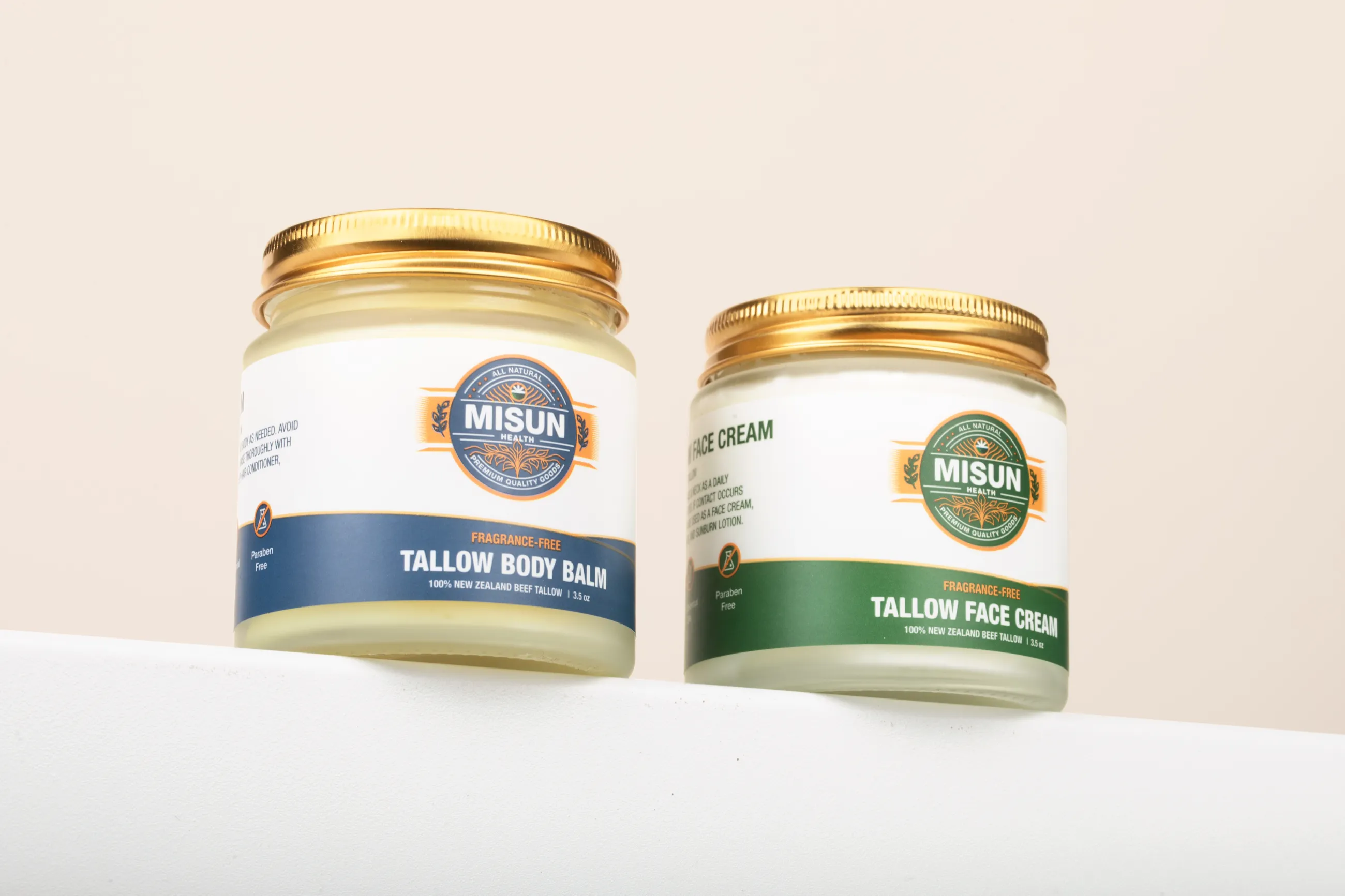
| Feature | Whipped Tallow Cream | Beef Tallow Balm |
|---|---|---|
| Best use case | Daily face/body moisture with lighter spread | Targeted dry patches and high-friction zones |
| Typical routine timing | Morning + daytime maintenance | Night routine + targeted application |
| Texture feel | Lighter and easier to spread | Dense and more sealing |
Routine steps
What to use during the day vs after washing, shaving, or cold exposure
Daytime usually favors the product you will reapply without hesitation. For many people, that is Aveeno on larger dry areas because it spreads quickly and feels lighter. Beef tallow becomes more useful after hand washing, after a hot shower, after shaving, or after wind and cold have made a few spots rebound into tightness again. A practical routine is Aveeno first when skin feels generally dry, then a tiny amount of whipped tallow cream or balm only where dryness keeps returning. That split keeps the routine wearable while still giving rougher spots a longer-lasting layer.
When layering both products is smarter than choosing one
Layering usually makes sense when skin wants water-light comfort first but still loses that comfort too quickly. Apply the lighter lotion on slightly damp skin, give it a moment to settle, then press a very small amount of tallow only onto the zones that usually relapse. This works especially well in winter, on overwashed hands, on wind-prone cheeks, or on dry patches after shaving. The goal is not building a thick mask. It is using the lighter product for easy coverage and the richer one only where staying power matters. If skin starts to feel coated, reduce the tallow area rather than assuming the entire pairing is wrong.
A simple 7-day comparison test for sensitive skin
To compare them fairly, keep cleanser, exfoliants, and other actives stable for one week. Use Aveeno alone on broad dry areas during the day, then decide whether the same zones still feel tight by afternoon or after washing. On the spots that repeatedly flare up, try a tiny layer of tallow at night or after the trigger event instead of applying it everywhere. Watch for three practical signals: how fast tightness comes back, whether flakes and rough texture calm down, and whether you are willing to keep using the routine. The better product is the one that actually keeps sensitive skin comfortable without turning the routine into a chore.
Quick answer: which one makes more sense for dry, sensitive skin?
If your skin mainly needs an easy, low-friction everyday moisturizer that feels simple under clothes, sunscreen, or makeup, Aveeno-style lotion is often the easier daytime pick. If the real problem is that certain spots still stay tight or rough after lotion, beef tallow usually fits better as the richer follow-up for cheeks, hand edges, lip corners, shins, or other high-friction patches. The useful decision is not usually tallow or Aveeno forever. It is lighter all-over support versus richer spot support, then matching each one to the zone that actually needs it.
Oat-lotion comfort vs richer tallow sealing
Aveeno is usually chosen for a softer lotion feel and easier all-over coverage, especially when dryness is broad but not severe. Beef tallow works differently in real use. It tends to feel richer, slower, and more deliberate, which is exactly why some people prefer it on the areas that keep losing comfort first. Think backs of hands, the sides of fingers, dry cheek patches, the skin around the mouth, elbows, or the front of the shins. If your skin dislikes heavy residue everywhere, that does not automatically rule tallow out. It usually means using it on smaller zones instead of replacing your whole routine with it.
What to use during the day vs after washing, shaving, or cold exposure
Daytime usually favors the product you will reapply without hesitation. For many people, that is Aveeno on larger dry areas because it spreads quickly and feels lighter. Beef tallow becomes more useful after hand washing, after a hot shower, after shaving, or after wind and cold have made a few spots rebound into tightness again. A practical routine is Aveeno first when skin feels generally dry, then a tiny amount of whipped tallow cream or balm only where dryness keeps returning. That split keeps the routine wearable while still giving rougher spots a longer-lasting layer.
Face, hands, and body zones do not need the same answer
Sensitive skin routines work better when you stop forcing one product to perform everywhere. On the face, many people want the lighter feel of lotion during the day and reserve richer tallow for flaky corners around the nose or mouth at night. On hands, tallow often earns its place faster because soap, sanitizer, paper friction, and repeated rinsing can erase a light lotion quickly. On the body, Aveeno may be the simpler choice for broad post-shower dryness, while tallow makes more sense on stubborn spots like elbows, knee patches, heel rims, or shin areas that still feel papery by evening. The more specific the placement, the less likely the routine feels greasy or annoying.
When layering both products is smarter than choosing one
Layering usually makes sense when skin wants water-light comfort first but still loses that comfort too quickly. Apply the lighter lotion on slightly damp skin, give it a moment to settle, then press a very small amount of tallow only onto the zones that usually relapse. This works especially well in winter, on overwashed hands, on wind-prone cheeks, or on dry patches after shaving. The goal is not building a thick mask. It is using the lighter product for easy coverage and the richer one only where staying power matters. If skin starts to feel coated, reduce the tallow area rather than assuming the entire pairing is wrong.
A simple 7-day comparison test for sensitive skin
To compare them fairly, keep cleanser, exfoliants, and other actives stable for one week. Use Aveeno alone on broad dry areas during the day, then decide whether the same zones still feel tight by afternoon or after washing. On the spots that repeatedly flare up, try a tiny layer of tallow at night or after the trigger event instead of applying it everywhere. Watch for three practical signals: how fast tightness comes back, whether flakes and rough texture calm down, and whether you are willing to keep using the routine. The better product is the one that actually keeps sensitive skin comfortable without turning the routine into a chore.
 Misun Health
Common Questions
Is beef tallow better than Aveeno for dry, sensitive skin?
Not automatically. Aveeno often wins for lighter all-over daytime comfort, while beef tallow can be more useful on smaller zones that stay rough or tight despite lotion. The best choice depends on where the dryness is and how much residue you tolerate.
Can I use Aveeno during the day and tallow at night?
Yes, that is often the most practical split. Lotion is easier for larger daytime coverage, while tallow works well as a richer night step on rougher patches, hand edges, lip corners, elbows, or shins.
Can I layer Aveeno and beef tallow in one routine?
Yes. Apply the lighter lotion first on slightly damp skin, then add a tiny amount of tallow only on the zones that keep drying back out. That usually feels better than coating the entire area in a richer product.
Which one is better after shaving or hand washing?
If skin feels mildly dry everywhere, a lighter lotion may be enough. If specific spots feel stripped, sting-prone, or rough after washing or shaving, a small amount of tallow on those exact areas often gives longer-lasting comfort.
How do I know if tallow is too heavy for me?
If skin feels greasy, sticky, or uncomfortable all over, use less and shrink the application area. Tallow usually works best here as a targeted support step, not an all-over replacement for every routine.
Build your routine
 Buy on Amazon
 Buy on Amazon
Related guides
More commercial pages
Explore similar commercial concerns or jump to the closest concern hub.
- Can You Bring Beef Tallow on a Plane? Carry-On Packing and Travel Dryness Routine
- Can You Put Beef Tallow on Your Lips? Dry Lips, Chapped Lips, and Lip-Line Flaking
- Unscented Moisturizer for Sensitive Skin: How to Choose a Fragrance-Free Routine That Actually Feels Comfortable
- Beef Tallow vs Lotion for Dry Skin
Related concern pages
Educational content only. This page is not medical advice and is not intended to diagnose, treat, cure, or prevent disease. If symptoms persist or worsen, consult a licensed clinician.