Informational + routine research · 12 min read
Tallow for Menopause and Perimenopause Skin: What Changes and Where a Balm Helps
Why skin turns drier in perimenopause and menopause, what the collagen and thickness figures actually measure, what a fragrance-free tallow cream or balm can and cannot change, and a bedtime routine that works around night sweats.
Last updated November 15, 2026
The short answer
Tallow is a good fit for the dryness that comes with perimenopause and menopause, and the reason is specific: as estrogen falls, the outer layer of skin holds less water, and a rich lipid film slows the evaporation that leaves skin feeling tight. It will not replace estrogen, rebuild collagen or thicken skin that has thinned, and no cosmetic can lawfully claim to. The practical setup is a thin layer of whipped tallow on the face, neck and arms while skin is still damp from an evening shower, with a denser balm kept for hands, heels, shins and cuticles. If your skin still feels tight by morning, put a glycerin or hyaluronic acid product underneath the tallow. Keep every product fragrance-free. Dryness is the part of menopausal skin that answers to a moisturizer, and it pays to separate it from the parts that do not before you spend money on anything sold for this stage of life.
What changes, and when it starts
Menopause is the point 12 months after your last period. In the United States it arrives at 52 on average, usually somewhere between 45 and 55, according to the federal Office on Women's Health. Perimenopause, the transition before it, usually begins in the mid to late 40s and lasts about four years on average, sometimes as long as ten. Skin does not wait for the final period. A 2019 review of estrogen-deficient skin in the International Journal of Women's Dermatology describes increased skin dryness as one of the first symptoms, followed by decreased firmness and elasticity, and the American Academy of Dermatology says that in menopause skin loses some of its ability to hold water. The AAD also notes that skin pH changes around age 50, which can leave skin more sensitive. That is why a cleanser or scented lotion you used without trouble for years can start to sting in your late 40s. Often the product has not changed. Your skin has.
The collagen and thickness numbers, and what they measure
The large figures quoted about menopausal skin are about collagen. The AAD says women's skin loses about 30 percent of its collagen during the first five years of menopause and about 2 percent a year for the next 20 years. A 2013 review in Dermato-Endocrinology, drawing on measurements by Brincat and colleagues, gives the yearly change in estrogen-deficient women as 1.13 percent of skin thickness and 2 percent of collagen content for each year after menopause. A 2020 review in Dermatology and Therapy describes a test you can try on yourself: pinch the skin on the back of your hand, and in postmenopausal women the fold can take three to four times as long to settle back, because the deeper layer holds less of the water-binding material, hyaluronic acid among it, that keeps it plump. All of this happens in the dermis, the living layer beneath the surface, and it explains why skin looks thinner and creases more easily after menopause. It is a different problem from dryness, and it does not respond to the same products.
Dryness lives at the surface, firmness does not
Dry skin is a problem of the stratum corneum, the outer layer usually described as bricks of flattened dead cells set in a mortar of lipids. It responds directly to what you put on it, because a moisturizer either draws water into that layer or slows the water leaving it. Firmness and thickness belong to the dermis, which a moisturizer does not rebuild. The Food and Drug Administration draws the same line in law. A product intended to affect the structure or function of the skin is a drug, and the agency names removing wrinkles and increasing the skin's production of collagen as examples of drug claims. Moisturizing is a cosmetic claim, and a product that makes lines less visible simply by moisturizing the skin remains a cosmetic. Well-moisturized skin does make fine lines look softer, and that is a real, visible effect. A menopause cream that promises to restore collagen, though, is making a claim the FDA regards as a drug claim, whatever shelf it sits on.
Where tallow fits on menopausal skin
The surface is where tallow has something to offer. Estrogen helps skin hold water partly by supporting hyaluronic acid in the dermis and sebum production at the surface, according to the 2019 and 2020 reviews, and the 2020 review lists increased dryness and itch, reduced hydration and reduced barrier function among the changes that follow menopause. Sebum, the oily film your skin makes for itself, averages about 45 percent triglycerides, 25 percent wax esters, 12 percent squalene and 10 percent free fatty acids, according to a review of epidermal surface lipids in Dermato-Endocrinology. Beef tallow is almost entirely triglycerides. A 2025 laboratory analysis of beef fat in Food Chemistry: X measured 30.3 percent palmitic acid, 28.8 percent oleic acid and 18.7 percent stearic acid. That makes tallow similar to the triglyceride share of sebum, not a copy of sebum, which also carries wax esters and squalene. Nor is it the same as the lipids between skin cells that form the water barrier, which are mostly ceramides, cholesterol and free fatty acids. What tallow does is lay a soft, fatty film over skin that is holding less water on its own and slow how fast that water escapes.
Pair it with a humectant, and put it on damp skin
Moisturizer ingredients work in two broad ways. Humectants such as glycerin, urea and hyaluronic acid attract water into the outer layer of skin. Emollients and occlusives are lipids that fill the gaps between surface cells and form a water-repellent layer that slows evaporation. Mineral oil, petroleum jelly and beeswax are the textbook examples, and tallow, a solid animal fat, belongs in the same group. A 2017 review of moisturizers in Clinical Medicine and Research makes two points that matter here. Combining humectants with occlusives improves the skin's water-holding capacity, and occlusives have their greatest effect on skin that is already damp. The AAD's advice lines up with both: its menopause page recommends a moisturizer with hyaluronic acid or glycerin, and its dry skin page says to apply moisturizer while skin is still damp from bathing and that creams and ointments are more effective than lotions. That gives two good ways to use tallow. The simplest is to press it onto skin that is still damp from the shower, so the film holds that water in. The second is to apply a plain glycerin or hyaluronic acid serum first and press tallow over it, which is the better choice if your skin feels tight again by morning.
What menopause skincare trials show in the fine print
Two findings are worth knowing before you pay extra for anything marketed to menopausal skin. The first is in the 2019 review of estrogen-deficient skin, which describes a 12-week trial in 234 postmenopausal women who applied an isoflavone cream, a plant compound that can interact with estrogen receptors, to the face, neck and one upper arm. Dryness improved by 32.9 percent and roughness by 22 percent in the treated areas. The comparison was the untreated arm, not the same cream without isoflavones, and the reviewers write that it is difficult to identify whether the isoflavone or the moisturizing vehicle produced the change. A plain moisturizing base may account for a good share of what was measured. The second is the Kronos Early Estrogen Prevention Study, a randomized trial in recently menopausal women. After four years of oral conjugated estrogens or transdermal estradiol, total wrinkle and rigidity scores did not differ significantly from placebo, and race and ethnicity predicted skin aging better than treatment did. If prescription hormone therapy did not change wrinkle scores over four years in a randomized trial, a cosmetic cream should not be expected to. Hormone therapy is a medical decision with benefits and risks well beyond skin, and it belongs in a conversation with your clinician.
Fragrance-free matters more after 50
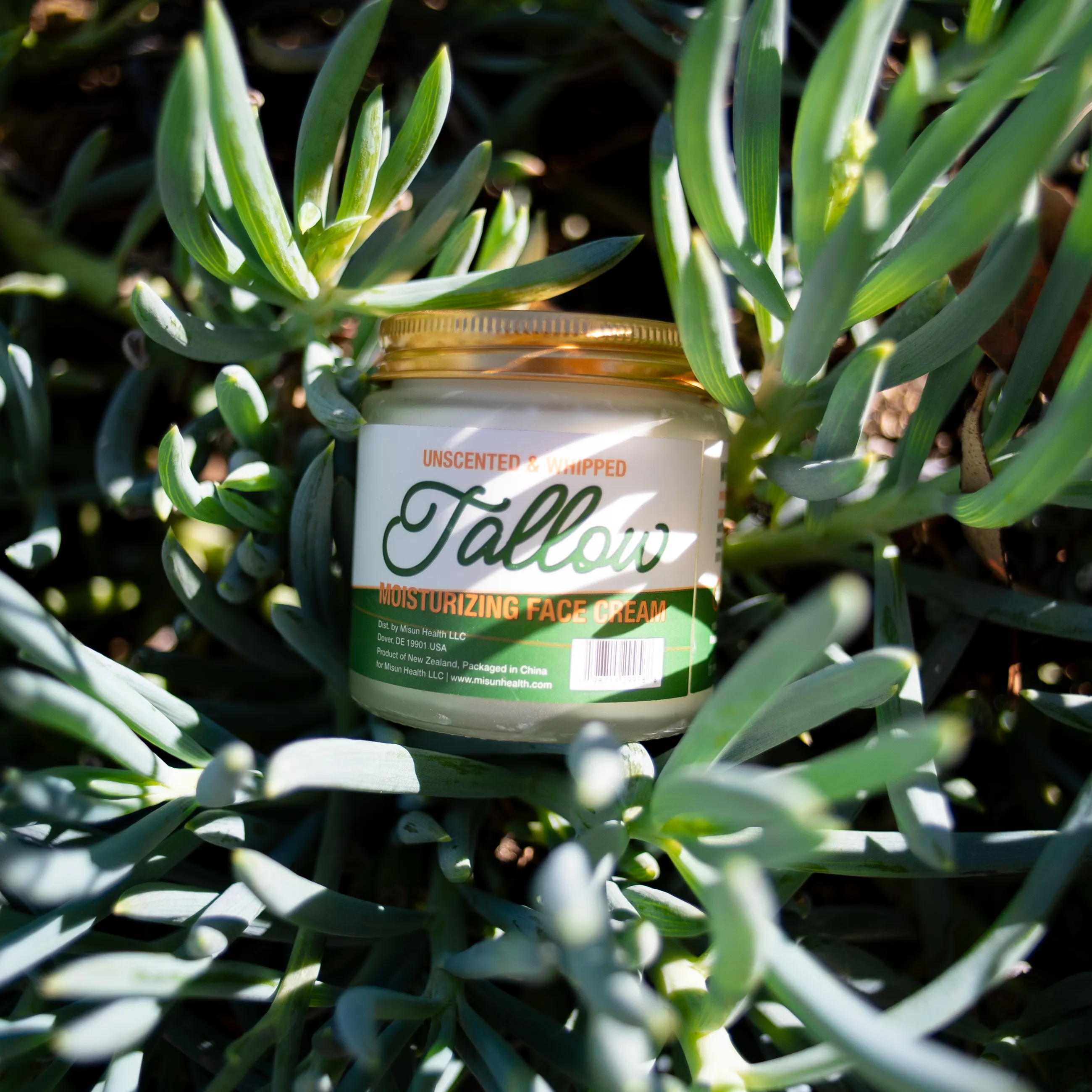
Fragrance is the easiest ingredient to remove from a routine as skin changes, and the AAD recommends doing so. Its dry skin guidance calls for gentle, fragrance-free products and warns that products labeled unscented can contain masking chemicals that irritate dry skin, because unscented describes how a product smells rather than what went into it. Its menopause page repeats the fragrance-free advice for irritated skin. On an ingredient declaration, fragrance, parfum, perfume and aroma all mean added scent. Whipped Tallow Cream is a single ingredient, grass-fed New Zealand beef tallow, with nothing added for scent, and Beef Tallow Balm is labeled fragrance-free.
Whipped cream or balm, by body area
The two formats do the same job at different densities. Whipped tallow has air folded into it, so a small amount spreads thin across the face, neck, chest and forearms without a waxy drag, which makes it the everyday product for large or visible areas. Balm is dense and slower to spread. That is a drawback on the face and an advantage on knuckles, cuticles, elbows, heels and shins, where skin takes the most friction and washing. Temperature explains the feel of both. In the 2025 analysis, beef fat was about 49 percent solid at 20 degrees Celsius (68 F), about 26 percent solid at 30 degrees Celsius (86 F) and about 16 percent solid at 35 degrees Celsius (95 F), with a slip melting point of about 40.8 degrees Celsius (105 F). That is why it is firm in the jar and turns glossy and spreadable once it is warmed between your fingertips. Use less than you think: about the size of a pea for the whole face, and more only on spots that still feel tight after a few minutes.
A bedtime routine that works around night sweats
Hot flashes and night sweats last 7 to 12 years on average, according to the Office on Women's Health. In the Study of Women's Health Across the Nation, women who had frequent symptoms had them for a median of 7.4 years, and for a median of 10.1 years among African American women. For many women that makes the bedtime routine the one worth designing. Keep the evening shower to five to ten minutes in warm rather than hot water, as the AAD advises, use a gentle cleanser only where you need it, and pat skin dry. While it is still damp, press a thin layer of whipped tallow onto the face, neck and any dry areas on the arms and legs, and put balm on hands, heels and shins only. If you wake up hot, the chest, neck and back are where a heavy layer feels sticky, so keep those areas to the thinnest film or skip them on bad nights. The AAD also suggests running a humidifier in the bedroom overnight when indoor air is dry, cleaned regularly to keep mold out of it, and wearing loose cotton rather than tight garments or wool and polyester against the skin.
Mornings, sunscreen and makeup
Mornings need less. Apply a thin layer of whipped tallow to skin that is still slightly damp after washing, give it a minute or two to settle, and finish with sunscreen as the outermost layer. The AAD's dry skin advice includes a broad-spectrum, water-resistant sunscreen of SPF 30 or higher. Tallow has no SPF and does not replace sunscreen. If makeup slides, use less tallow on the forehead and nose and keep the richer layer for the cheeks and the skin around the mouth.
When dryness or itch needs a doctor
Dry, itchy skin in midlife is not always about hormones. The AAD notes that conditions such as atopic dermatitis, psoriasis and kidney disease can cause dry skin, and that long-standing itch can be a sign of diseases including diabetes, an overactive thyroid, and liver, kidney or blood disease. Some medications also cause itch. See a board-certified dermatologist if your skin still feels dry after following the steps above, if a rash lasts or gets worse, if itching disrupts your sleep, or if you cannot work out what is causing it. Vaginal and vulvar dryness is a separate medical issue with its own treatments, and a skincare balm is not one of them, so raise it with your clinician.
How to tell whether it is working
Change one product at a time so you can tell what made the difference, and patch test anything new on a small area of the inner forearm before it goes on your face. The patch test planner builds a dated schedule if you are starting several products at once. Then watch how long your skin stays comfortable after a shower, and whether you still wake up with tight skin. Rough patches on the shins and hands are the slower check. If tightness comes back within a couple of hours, apply tallow to damper skin or add a humectant underneath. If skin feels greasy, or you notice clogged pores along the jaw or hairline, use less and keep tallow off those areas. Stop using any product that burns or stings, and tell your dermatologist about it, which is the AAD's advice for any product that causes burning, stinging or irritation.
FAQ
Common Questions
Is tallow good for menopause skin?
For the dryness, yes. Menopausal skin holds less water, and tallow is a lipid moisturizer that slows water loss from the surface, especially when it goes on damp skin. It does not reverse the collagen loss and thinning that also follow menopause. Those happen in the deeper dermis, and the FDA regards a claim to increase the skin's production of collagen as a drug claim.
Does tallow help perimenopause skin, before periods stop?
Yes. Perimenopause usually begins in the mid to late 40s and lasts about four years on average, and reviews of estrogen-deficient skin list increased dryness among the first changes women notice. The routine is the same: whipped tallow on damp skin for the face and body, balm on hands, heels and shins, and fragrance-free products throughout.
Can tallow rebuild collagen or firm thinning skin?
No. The AAD puts collagen loss at about 30 percent in the first five years of menopause and about 2 percent a year for the next 20 years, and that loss happens in the dermis, below the layer a moisturizer works on. A product that claims to increase collagen is making a drug claim in the FDA's terms, and tallow is a cosmetic moisturizer. Moisturized skin does make fine lines look softer, which is a real cosmetic effect.
Should I use whipped tallow cream or tallow balm during menopause?
Use the whipped cream on the face, neck, chest and arms, where a thin, quick-spreading layer is easier to live with, and the balm on knuckles, cuticles, elbows, heels and shins, where a denser layer earns its place. Many routines use both: cream after the evening shower and balm on the few spots that still feel rough.
Can I use tallow with hyaluronic acid or glycerin?
Yes, and it is one of the better pairings for menopausal dryness. Humectants such as glycerin and hyaluronic acid draw water into the outer layer of skin, and a lipid layer on top slows its escape. A 2017 review of moisturizers notes that combining humectants with occlusives improves the skin's water-holding capacity. Apply the humectant to damp skin, wait a minute, then press a thin layer of tallow over it.
Is tallow too heavy for night sweats?
Not if you place it carefully. A heavy layer over the chest, neck and back can feel sticky on a hot night, so keep those areas to a very thin film or skip them, and save the balm for hands, heels and shins. Hot flashes and night sweats last 7 to 12 years on average, so it is worth building a routine you can keep through them.
Is unscented the same as fragrance-free?
No. The AAD warns that products labeled unscented can contain masking chemicals that irritate dry skin. On an ingredient declaration, fragrance, parfum, perfume and aroma all mean added scent.
When should I see a doctor about itchy skin in menopause?
When the itch lasts despite moisturizing, disrupts your sleep, comes with a rash that lasts or gets worse, or has no obvious cause. The AAD notes that long-standing itch can be a sign of conditions such as diabetes, an overactive thyroid, and liver, kidney or blood disease, and some medications list itch as a side effect, so a board-certified dermatologist is the right next step.
Primary sources
Sources and evidence limits
- U.S. Department of Health and Human Services, Office on Women's Health: Menopause basics (page last updated October 19, 2026)
Source for the definition of menopause as 12 months in a row without a period, the US average age of 52, the usual 45 to 55 window, perimenopause starting in the mid to late 40s and lasting about four years on average and up to ten, and hot flashes and night sweats lasting 7 to 12 years on average.
- American Academy of Dermatology: Caring for your skin in menopause (last updated November 24, 2025)
Source for collagen loss of about 30 percent in the first five years of menopause and about 2 percent a year for the next 20 years, skin losing some ability to hold water, the pH change around age 50, and the advice to use a mild cleanser, a moisturizer with hyaluronic acid or glycerin, and a fragrance-free moisturizer for irritated skin.
- American Academy of Dermatology: Dermatologists' top tips for relieving dry skin (last updated January 2, 2026)
Source for five to ten minute showers in warm water, applying moisturizer while skin is still damp, creams and ointments being more effective than lotions, the warning that unscented products can contain masking chemicals, the bedroom humidifier and loose cotton clothing tips, daily SPF 30 or higher sunscreen, and the conditions that can cause dry skin.
- American Academy of Dermatology: 10 reasons your skin itches uncontrollably and how to get relief (last updated September 19, 2024)
Source for long-standing itch as a possible sign of diseases including diabetes, an overactive thyroid, and liver, kidney or blood disease, itch as a medication side effect, and seeing a board-certified dermatologist when the cause is unclear.
- Rzepecki AK, Murase JE, Juran R, Fabi SG, McLellan BN. Estrogen-deficient skin: The role of topical therapy. International Journal of Women's Dermatology, 2019, volume 5, pages 85 to 90
Source for increased skin dryness as one of the first symptoms of estrogen deficiency, estrogen's role in moisture retention through sebum secretion, and the 12-week isoflavone cream trial in 234 postmenopausal women with the reviewers' caveat that the moisturizing vehicle may explain the result.
- Thornton MJ. Estrogens and aging skin. Dermato-Endocrinology, 2013, volume 5, pages 264 to 270
Source for skin thickness falling 1.13 percent and collagen content 2 percent per postmenopausal year in estrogen-deficient women, citing Brincat and colleagues, and for type I and III collagen falling by as much as 30 percent in the first five years after menopause.
- Lephart ED, Naftolin F. Menopause and the Skin: Old Favorites and New Innovations in Cosmeceuticals for Estrogen-Deficient Skin. Dermatology and Therapy, 2021, volume 11, pages 53 to 69
Source for the hand skin-fold test taking three to four times as long to settle in postmenopausal women, the role of hyaluronic acid and sebum in estrogen-supported hydration, and increased dryness and itch with reduced hydration and barrier function after menopause.
- Owen CM, Pal L, Mumford SL, et al. Effects of hormones on skin wrinkles and rigidity vary by race/ethnicity: four-year follow-up from the ancillary skin study of the Kronos Early Estrogen Prevention Study. Fertility and Sterility, 2016, volume 106, pages 1170 to 1175
Source for the randomized finding that four years of oral conjugated estrogens or transdermal estradiol did not change total wrinkle or rigidity scores compared with placebo, and that race and ethnicity predicted skin aging better than treatment.
- Avis NE, Crawford SL, Greendale G, et al. Duration of menopausal vasomotor symptoms over the menopause transition. JAMA Internal Medicine, 2015, volume 175, pages 531 to 539
Study of Women's Health Across the Nation analysis of 1,449 women with frequent hot flashes or night sweats. Source for the median total duration of 7.4 years and the median of 10.1 years among African American women.
- U.S. Food and Drug Administration: Wrinkle Treatments and Other Anti-aging Products (content current as of February 25, 2022)
Source for products intended to affect the structure or function of the skin being drugs, removing wrinkles and increasing collagen production as examples of drug claims, and moisturizing being a cosmetic claim.
- U.S. Food and Drug Administration: Is It a Cosmetic, a Drug, or Both? (Or Is It Soap?) (content current as of September 11, 2024)
Source for the legal definitions of cosmetic and drug under the Federal Food, Drug, and Cosmetic Act and for intended use being established by claims, consumer perception and ingredients.
- Purnamawati S, Indrastuti N, Danarti R, Saefudin T. The Role of Moisturizers in Addressing Various Kinds of Dermatitis: A Review. Clinical Medicine and Research, 2017, volume 15, pages 75 to 87
Used only for how moisturizer classes work: the definitions of humectants, emollients and occlusives, combinations of humectants and occlusives improving water-holding capacity, and occlusives working best on damp skin. Not cited for any claim about a skin condition.
- Pappas A. Epidermal surface lipids. Dermato-Endocrinology, 2009, volume 1, pages 72 to 76
Source for the average composition of sebum (about 45 percent triglycerides, 25 percent wax esters, 12 percent squalene and 10 percent free fatty acids) and for barrier lipids being a mixture of ceramides, free fatty acids and cholesterol.
- Faridah MR, Hairi ANA, Yusoff MM, et al. Comparison of the physicochemical properties of palm-based shortenings of various melting temperatures and animal fats. Food Chemistry: X, 2025, volume 28, article 102583
Source for the beef fat measurements: 30.29 percent palmitic, 18.65 percent stearic and 28.80 percent oleic acid, solid fat content of 48.88 percent at 20 degrees Celsius, 26.35 percent at 30 and 16.11 percent at 35, and a slip melting point of 40.77 degrees Celsius.
Use the tools
Related skincare tools
- Skincare Layering Order PlannerPut a humectant serum, tallow and sunscreen in the right order for a morning or evening routine, with the reason for each position.Open tool
- Indoor Humidity Calculator for Dry SkinEnter the outdoor humidity and your thermostat setting to see how dry heated bedroom air really gets before you decide on a humidifier.Open tool
- Patch Test PlannerGet a dated patch test schedule, with the site, dose and watch period, before a new moisturizer goes on your face.Open tool
- Fragrance Label CheckerPaste an ingredient declaration to check for fragrance, perfume or parfum before trusting a fragrance-free or unscented line on the front of a jar.Open tool
Keep reading
Related guides
Explore next
Related skin concerns
Shop the routine
Build your tallow routine
Shop the products that best match the concerns and routines covered in this guide.