Commercial + educational
6 min read
Fragrance-Free Moisturizer for Winter Dry Sensitive Skin
Cold air, indoor heat, and more frequent hot showers can make already-sensitive skin feel tighter fast. A fragrance-free moisturizer routine works best when it stays simple and easy to repeat.
Looking for a fragrance-free moisturizer for winter dry sensitive skin? Learn how a simple beef tallow routine can support cold-weather moisture comfort without overcomplicating a reactive routine.
Quick summary
- Cold air, indoor heat, and more frequent hot showers can make already-sensitive skin feel tighter fast. A fragrance-free moisturizer routine works best when it stays simple and easy to repeat.
- Why winter dries out sensitive skin faster: Winter usually means lower humidity outdoors and drier heated air indoors, both of which can increase moisture loss. If your skin is already sensitive, that seasonal shift can make stinging, tightness, and flaky patches show up faster than usual.
- How to build a cold-weather routine without overloading your skin: Start with a fragrance-free moisturizer on slightly damp skin right after cleansing, then add a second thin layer only on the areas that stay rough or tight. Keep the rest of your routine boring during colder weeks so you can tell whether the added moisture is actually helping instead of reacting to too many moving parts.
Why people choose this approach
- Winter usually means lower humidity outdoors and drier heated air indoors, both of which can increase moisture loss. If your skin is already sensitive, that seasonal shift can make stinging, tightness, and flaky patches show up faster than usual.
- Start with a fragrance-free moisturizer on slightly damp skin right after cleansing, then add a second thin layer only on the areas that stay rough or tight. Keep the rest of your routine boring during colder weeks so you can tell whether the added moisture is actually helping instead of reacting to too many moving parts.
Keep in mind
- Patch test first and increase use gradually based on comfort.
- Skincare supports moisture and comfort but is not a cure for medical conditions.
- If symptoms persist, worsen, or become painful, consult a licensed clinician.
Why winter dries out sensitive skin faster
Winter usually means lower humidity outdoors and drier heated air indoors, both of which can increase moisture loss. If your skin is already sensitive, that seasonal shift can make stinging, tightness, and flaky patches show up faster than usual.
How to build a cold-weather routine without overloading your skin
Start with a fragrance-free moisturizer on slightly damp skin right after cleansing, then add a second thin layer only on the areas that stay rough or tight. Keep the rest of your routine boring during colder weeks so you can tell whether the added moisture is actually helping instead of reacting to too many moving parts.
When whipped cream vs balm makes more sense in winter
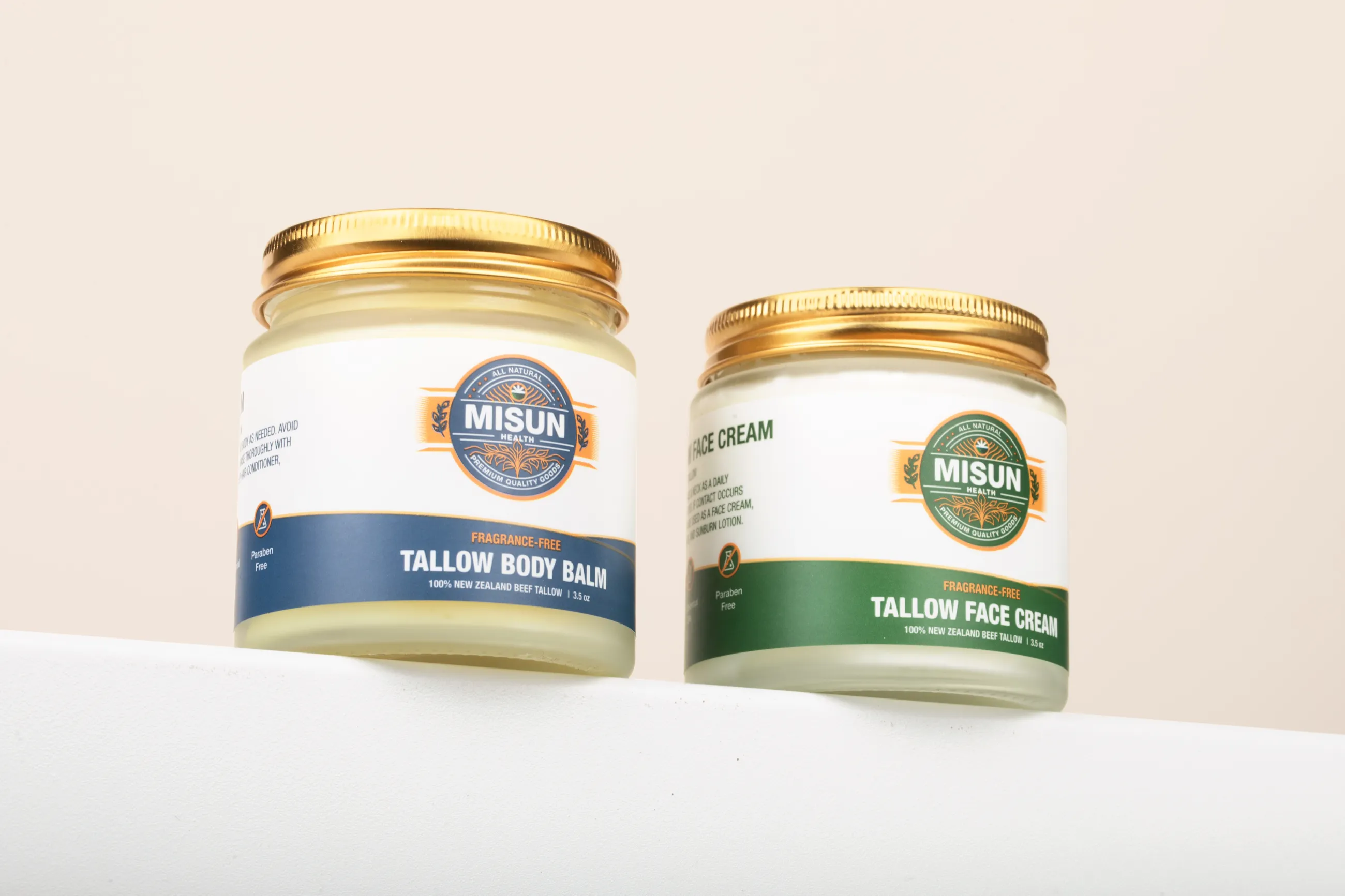
Whipped tallow cream works well as the all-over layer when your whole face or body feels drier in colder weather. Beef tallow balm fits better as a targeted overnight follow-up for wind-exposed cheeks, lip edges, knuckles, or other spots that keep catching and flaking.
 Misun Health
Common Questions
Do I need a different moisturizer in winter if my skin is sensitive?
Sometimes you just need a richer or more consistent fragrance-free layer rather than a whole new routine. Start with one change and give it a little time before adding anything else.
Can winter dryness make sensitive skin look redder?
Yes, dryness and barrier stress can make sensitive skin look more flushed or irritated. If redness is severe, painful, or not improving, get clinician guidance.
Build your routine
 Buy on Amazon
 Buy on Amazon
Related guides
More commercial pages
Explore similar commercial concerns or jump to the closest concern hub.
- Can You Bring Beef Tallow on a Plane? Carry-On Packing and Travel Dryness Routine
- Can You Put Beef Tallow on Your Lips? Dry Lips, Chapped Lips, and Lip-Line Flaking
- Unscented Moisturizer for Sensitive Skin: How to Choose a Fragrance-Free Routine That Actually Feels Comfortable
- Beef Tallow vs Lotion for Dry Skin
Related concern pages
Educational content only. This page is not medical advice and is not intended to diagnose, treat, cure, or prevent disease. If symptoms persist or worsen, consult a licensed clinician.