Commercial + educational
8 min read
Fragrance-Free Moisturizer for Acne-Prone Skin
A fragrance-free moisturizer can help acne-prone skin feel less reactive, but the best option is usually the one that adds comfort without trapping too much heaviness across oily zones. The smartest test is light, targeted, and boring enough to judge honestly.
Looking for a fragrance-free moisturizer for acne-prone skin? Use this practical guide to choose a lighter, low-variable routine and test beef tallow conservatively without overwhelming breakout-prone areas.
Quick summary
- A fragrance-free moisturizer can help acne-prone skin feel less reactive, but the best option is usually the one that adds comfort without trapping too much heaviness across oily zones. The smartest test is light, targeted, and boring enough to judge honestly.
- Quick answer: keep fragrance out and texture realistic: If your skin breaks out easily, fragrance-free is a good starting filter, but texture matters just as much as ingredients. Acne-prone skin usually does better with a moisturizer that supports dry or irritated areas without turning the whole face into a shiny occlusive layer. That is why a simple beef tallow routine should stay small, targeted, and mostly night-focused rather than becoming an all-over heavy cream test from day one.
- Why fragrance-free matters when breakouts and irritation overlap: Acne routines often already include retinoids, benzoyl peroxide, exfoliating acids, or frequent cleansing. When skin is dry, flaky, or stinging from those steps, fragrance and essential oils add one more variable that can blur the picture. Starting with a fragrance-free moisturizer makes it easier to judge whether you are dealing with simple dehydration, barrier stress, or true congestion from a product that is too rich for your skin.
Why people choose this approach
- If your skin breaks out easily, fragrance-free is a good starting filter, but texture matters just as much as ingredients. Acne-prone skin usually does better with a moisturizer that supports dry or irritated areas without turning the whole face into a shiny occlusive layer. That is why a simple beef tallow routine should stay small, targeted, and mostly night-focused rather than becoming an all-over heavy cream test from day one.
- Acne routines often already include retinoids, benzoyl peroxide, exfoliating acids, or frequent cleansing. When skin is dry, flaky, or stinging from those steps, fragrance and essential oils add one more variable that can blur the picture. Starting with a fragrance-free moisturizer makes it easier to judge whether you are dealing with simple dehydration, barrier stress, or true congestion from a product that is too rich for your skin.
Keep in mind
- Patch test first and increase use gradually based on comfort.
- Skincare supports moisture and comfort but is not a cure for medical conditions.
- If symptoms persist, worsen, or become painful, consult a licensed clinician.
Routine steps
How to test beef tallow without overwhelming breakout-prone areas
Patch test first for several days. If skin stays calm, use a rice-grain to pea-sized amount at night on the driest areas only, usually avoiding the nose, center forehead, and any zone that clogs first. Keep the rest of the routine simple, skip extra facial oils, and track 2 to 3 weeks of changes in comfort, flaking, and new clogged bumps so you can tell whether the added richness is helping or just creating noise.
Best routine position when retinoids or acne treatments are already in play
Most acne-prone users who tolerate tallow best use it as the final step over a lighter hydrating layer, not as the first product in a long stack. On retinoid nights, apply your usual treatment, wait until skin is dry if that is how you normally tolerate it, then press a very thin amount of whipped tallow cream onto the areas that get tight or flaky. On non-retinoid nights, you may not need it at all if a lighter fragrance-free moisturizer already keeps skin comfortable.
Quick answer: keep fragrance out and texture realistic
If your skin breaks out easily, fragrance-free is a good starting filter, but texture matters just as much as ingredients. Acne-prone skin usually does better with a moisturizer that supports dry or irritated areas without turning the whole face into a shiny occlusive layer. That is why a simple beef tallow routine should stay small, targeted, and mostly night-focused rather than becoming an all-over heavy cream test from day one.
Why fragrance-free matters when breakouts and irritation overlap
Acne routines often already include retinoids, benzoyl peroxide, exfoliating acids, or frequent cleansing. When skin is dry, flaky, or stinging from those steps, fragrance and essential oils add one more variable that can blur the picture. Starting with a fragrance-free moisturizer makes it easier to judge whether you are dealing with simple dehydration, barrier stress, or true congestion from a product that is too rich for your skin.
Who should trial a richer moisturizer and who should stay lighter
A richer test makes the most sense when acne-prone skin is also dry, tight after cleansing, flaky from acne treatment, or irritated around the cheeks, jawline, or mouth. If your skin is very oily, heat-prone, or already clogging from heavier creams, a lighter ceramide lotion or gel-cream is often the better baseline and tallow may fit only as a spot-treatment experiment on dry patches. The goal is not proving that one product works for everyone, but matching richness to where your skin actually needs help.
How to test beef tallow without overwhelming breakout-prone areas
Patch test first for several days. If skin stays calm, use a rice-grain to pea-sized amount at night on the driest areas only, usually avoiding the nose, center forehead, and any zone that clogs first. Keep the rest of the routine simple, skip extra facial oils, and track 2 to 3 weeks of changes in comfort, flaking, and new clogged bumps so you can tell whether the added richness is helping or just creating noise.
Best routine position when retinoids or acne treatments are already in play
Most acne-prone users who tolerate tallow best use it as the final step over a lighter hydrating layer, not as the first product in a long stack. On retinoid nights, apply your usual treatment, wait until skin is dry if that is how you normally tolerate it, then press a very thin amount of whipped tallow cream onto the areas that get tight or flaky. On non-retinoid nights, you may not need it at all if a lighter fragrance-free moisturizer already keeps skin comfortable.
Where whipped cream vs balm fits best
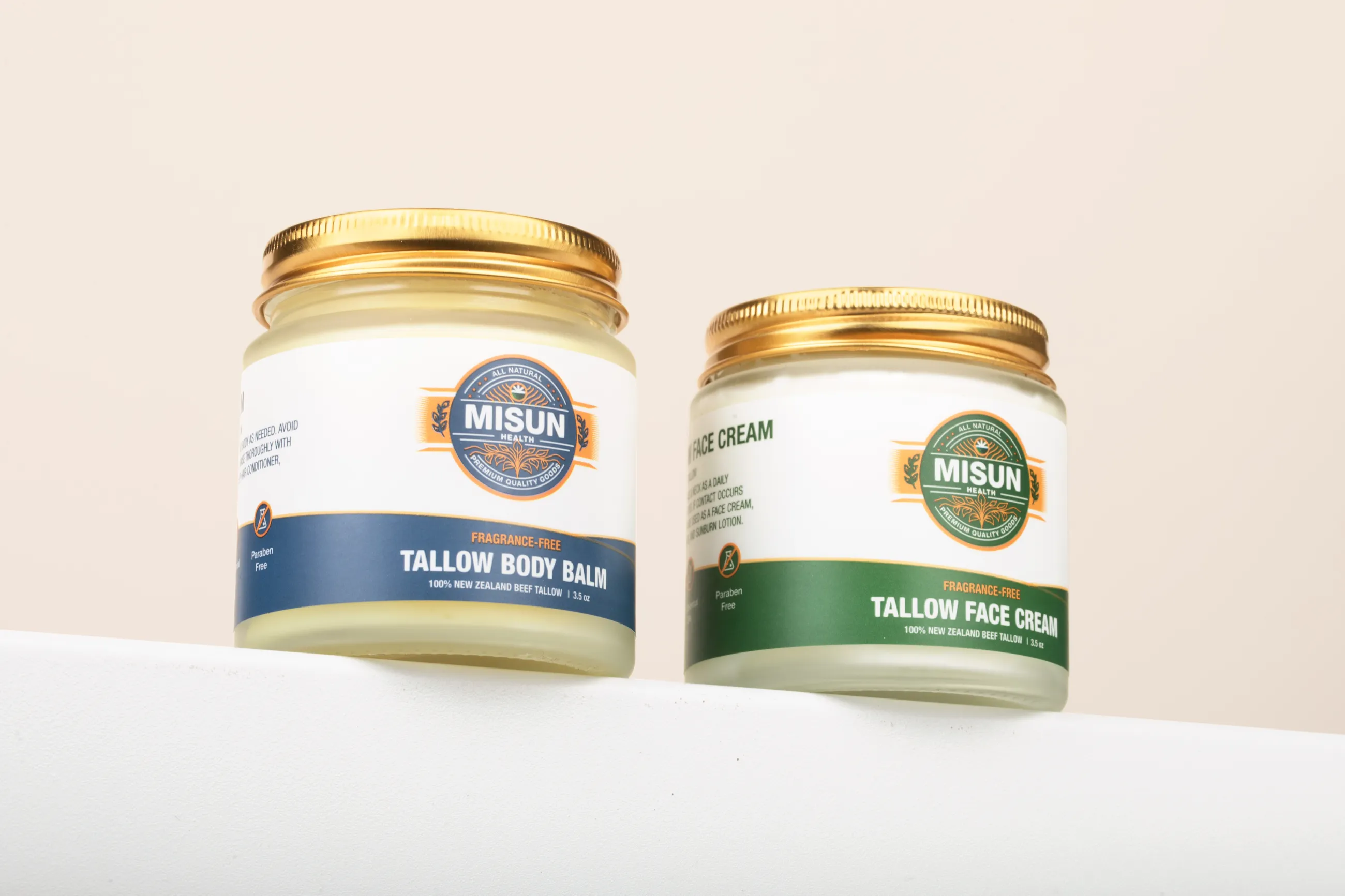
Whipped tallow cream is the better first test because it spreads more thinly and is easier to confine to cheeks, jawline dryness, or retinoid-stressed spots. Beef tallow balm is better reserved for tiny flaky corners, peeling around the mouth, or isolated rough patches that need stronger overnight sealing. If balm starts turning into an all-over face product, the routine is probably getting heavier than acne-prone skin needs.
Signs the moisturizer is helping versus signs it is too much
A good fit usually means less tightness, less visible flaking, and better comfort after cleansing or acne treatment without a noticeable spike in clogged bumps. A poor fit often looks like new congestion in your usual oily zones, a greasy film that never settles, or a routine that now needs extra cleansing to feel clean again. When that happens, scale back to spot use or return to a lighter fragrance-free moisturizer instead of forcing the richer option.
 Misun Health
Common Questions
Is beef tallow non-comedogenic for acne-prone skin?
No moisturizer is universally non-comedogenic for every person. Tolerance depends on your skin type, how much you use, where you apply it, and what else is already in the routine, which is why a slow targeted patch test matters more than a blanket claim.
Should I use a rich moisturizer during an active breakout?
Usually it is better to keep the routine simple and use richer moisture only where dryness is obvious. If breakouts, clogged pores, or irritation worsen, stop and return to your baseline routine rather than adding more products to compensate.
What type of fragrance-free moisturizer is usually safest for acne-prone skin?
Most acne-prone skin does best starting with a lighter fragrance-free lotion or cream that hydrates without leaving a thick residue. A richer tallow-based option can still fit, but usually as a conservative night test or targeted dry-zone layer instead of an all-over daytime moisturizer.
Can I use beef tallow with benzoyl peroxide or retinoids?
Many people can, especially when treatment leaves the skin dry or flaky. The safer approach is to keep the rest of the routine steady, apply only a very thin amount where needed, and watch closely for both irritation relief and any increase in clogged pores.
Build your routine
 Buy on Amazon
 Buy on Amazon
Related guides
More commercial pages
Explore similar commercial concerns or jump to the closest concern hub.
- Can You Bring Beef Tallow on a Plane? Carry-On Packing and Travel Dryness Routine
- Can You Put Beef Tallow on Your Lips? Dry Lips, Chapped Lips, and Lip-Line Flaking
- Unscented Moisturizer for Sensitive Skin: How to Choose a Fragrance-Free Routine That Actually Feels Comfortable
- Beef Tallow vs Lotion for Dry Skin
Related concern pages
Educational content only. This page is not medical advice and is not intended to diagnose, treat, cure, or prevent disease. If symptoms persist or worsen, consult a licensed clinician.