Transactional dry-skin product comparison
10 min read
Beef Tallow vs Nivea Creme for Dry, Sensitive Skin
Beef tallow and Nivea Creme can both support dry, sensitive skin, but they usually win for different reasons. Nivea often feels easier when you want a familiar dense cream, while tallow can make more sense when you want a simpler rich layer on stubborn dry zones that need longer-lasting comfort.
Compare beef tallow vs Nivea Creme for dry, sensitive skin with practical guidance on occlusion, texture, face-vs-body use, and how to decide which one fits daytime wear or overnight repair.
Quick summary
- Beef tallow and Nivea Creme can both support dry, sensitive skin, but they usually win for different reasons. Nivea often feels easier when you want a familiar dense cream, while tallow can make more sense when you want a simpler rich layer on stubborn dry zones that need longer-lasting comfort.
- Quick answer: beef tallow vs Nivea Creme for dry sensitive skin: Neither product wins everywhere. Nivea Creme often fits best when you want a dense cream feel that is easier to spread into a predictable daytime or all-over body routine. Beef tallow often makes more sense when the real problem is not just dryness but tight rough spots that keep rebounding, especially around knuckles, lip corners, heel rims, elbows, or flaky patches that want a richer finish. For many people the better choice comes down to zone, texture tolerance, and whether they need an everyday cream or a more targeted comfort layer.
- Is Nivea Creme occlusive, and how does that compare with tallow?: Nivea Creme is occlusive enough to help slow water loss, but it usually behaves more like a dense classic cream than a heavy ointment. That matters because people searching whether Nivea Creme is occlusive are usually really asking whether it will hold comfort long enough on dry skin that rebounds fast. In practice, Nivea often gives a cushioned cream layer that works well when you want some seal without the feel of a waxier topcoat. Beef tallow products can also act as an occlusive-emollient support step, but many people experience them as richer, slower-moving, and better suited to smaller stubborn zones than to fast all-over application.
Why people choose this approach
- Neither product wins everywhere. Nivea Creme often fits best when you want a dense cream feel that is easier to spread into a predictable daytime or all-over body routine. Beef tallow often makes more sense when the real problem is not just dryness but tight rough spots that keep rebounding, especially around knuckles, lip corners, heel rims, elbows, or flaky patches that want a richer finish. For many people the better choice comes down to zone, texture tolerance, and whether they need an everyday cream or a more targeted comfort layer.
- Nivea Creme is occlusive enough to help slow water loss, but it usually behaves more like a dense classic cream than a heavy ointment. That matters because people searching whether Nivea Creme is occlusive are usually really asking whether it will hold comfort long enough on dry skin that rebounds fast. In practice, Nivea often gives a cushioned cream layer that works well when you want some seal without the feel of a waxier topcoat. Beef tallow products can also act as an occlusive-emollient support step, but many people experience them as richer, slower-moving, and better suited to smaller stubborn zones than to fast all-over application.
Keep in mind
- Patch test first and increase use gradually based on comfort.
- Skincare supports moisture and comfort but is not a cure for medical conditions.
- If symptoms persist, worsen, or become painful, consult a licensed clinician.
Quick comparison
| Feature | Whipped Tallow Cream | Beef Tallow Balm |
|---|---|---|
| Best use case | Daily face/body moisture with lighter spread | Targeted dry patches and high-friction zones |
| Typical routine timing | Morning + daytime maintenance | Night routine + targeted application |
| Texture feel | Lighter and easier to spread | Dense and more sealing |
Routine steps
Is Nivea Creme occlusive, and how does that compare with tallow?
Nivea Creme is occlusive enough to help slow water loss, but it usually behaves more like a dense classic cream than a heavy ointment. That matters because people searching whether Nivea Creme is occlusive are usually really asking whether it will hold comfort long enough on dry skin that rebounds fast. In practice, Nivea often gives a cushioned cream layer that works well when you want some seal without the feel of a waxier topcoat. Beef tallow products can also act as an occlusive-emollient support step, but many people experience them as richer, slower-moving, and better suited to smaller stubborn zones than to fast all-over application.
Daytime wear vs overnight repair
If you care most about daytime tolerance, judge both products on how quickly they settle, how sticky they feel after ten minutes, and whether you actually want to reapply them. Nivea often wins when you want a richer-than-lotion cream without turning the routine into an overnight-style balm step. Beef tallow often wins when the main goal is bedtime recovery on rough patches that still feel tight after a lighter moisturizer. A practical split is Nivea on broader dry areas in the day and a small amount of tallow only on the places that still feel brittle or flaky at night.
How to compare them without confusing your skin
Keep the rest of the routine boring for 7 to 10 days. Use the same cleanser, same shower length, and the same active products. Then compare matched dry zones, such as one hand versus the other or one side of a rough body area versus the other. Score five signals that matter: ease of spread, how long skin stays comfortable before reapplying, whether the finish feels too heavy, whether flakes look calmer by the next morning, and which product you naturally reach for again. That last point matters because the best dry-skin product is usually the one that fits your real routine well enough to keep using.
Quick answer: beef tallow vs Nivea Creme for dry sensitive skin
Neither product wins everywhere. Nivea Creme often fits best when you want a dense cream feel that is easier to spread into a predictable daytime or all-over body routine. Beef tallow often makes more sense when the real problem is not just dryness but tight rough spots that keep rebounding, especially around knuckles, lip corners, heel rims, elbows, or flaky patches that want a richer finish. For many people the better choice comes down to zone, texture tolerance, and whether they need an everyday cream or a more targeted comfort layer.
Is Nivea Creme occlusive, and how does that compare with tallow?
Nivea Creme is occlusive enough to help slow water loss, but it usually behaves more like a dense classic cream than a heavy ointment. That matters because people searching whether Nivea Creme is occlusive are usually really asking whether it will hold comfort long enough on dry skin that rebounds fast. In practice, Nivea often gives a cushioned cream layer that works well when you want some seal without the feel of a waxier topcoat. Beef tallow products can also act as an occlusive-emollient support step, but many people experience them as richer, slower-moving, and better suited to smaller stubborn zones than to fast all-over application.
Face, hands, and body: where each one usually fits better
On the face, the better option is usually the one you can keep thin enough to avoid a heavy coated feel. Some people prefer Nivea there because it behaves more like a familiar cream, while others prefer a very small amount of whipped tallow when dry patches need more cushion. On hands, elbows, and heel edges, tallow balm often has the advantage when roughness is concentrated and you want a richer overnight recovery layer. For arms, legs, or larger body zones, Nivea can be easier simply because it spreads more predictably and feels simpler to repeat over more surface area. Sensitive skin routines usually get better when you stop trying to crown one universal winner and instead match the product to the body zone.
Daytime wear vs overnight repair
If you care most about daytime tolerance, judge both products on how quickly they settle, how sticky they feel after ten minutes, and whether you actually want to reapply them. Nivea often wins when you want a richer-than-lotion cream without turning the routine into an overnight-style balm step. Beef tallow often wins when the main goal is bedtime recovery on rough patches that still feel tight after a lighter moisturizer. A practical split is Nivea on broader dry areas in the day and a small amount of tallow only on the places that still feel brittle or flaky at night.
How to compare them without confusing your skin
Keep the rest of the routine boring for 7 to 10 days. Use the same cleanser, same shower length, and the same active products. Then compare matched dry zones, such as one hand versus the other or one side of a rough body area versus the other. Score five signals that matter: ease of spread, how long skin stays comfortable before reapplying, whether the finish feels too heavy, whether flakes look calmer by the next morning, and which product you naturally reach for again. That last point matters because the best dry-skin product is usually the one that fits your real routine well enough to keep using.
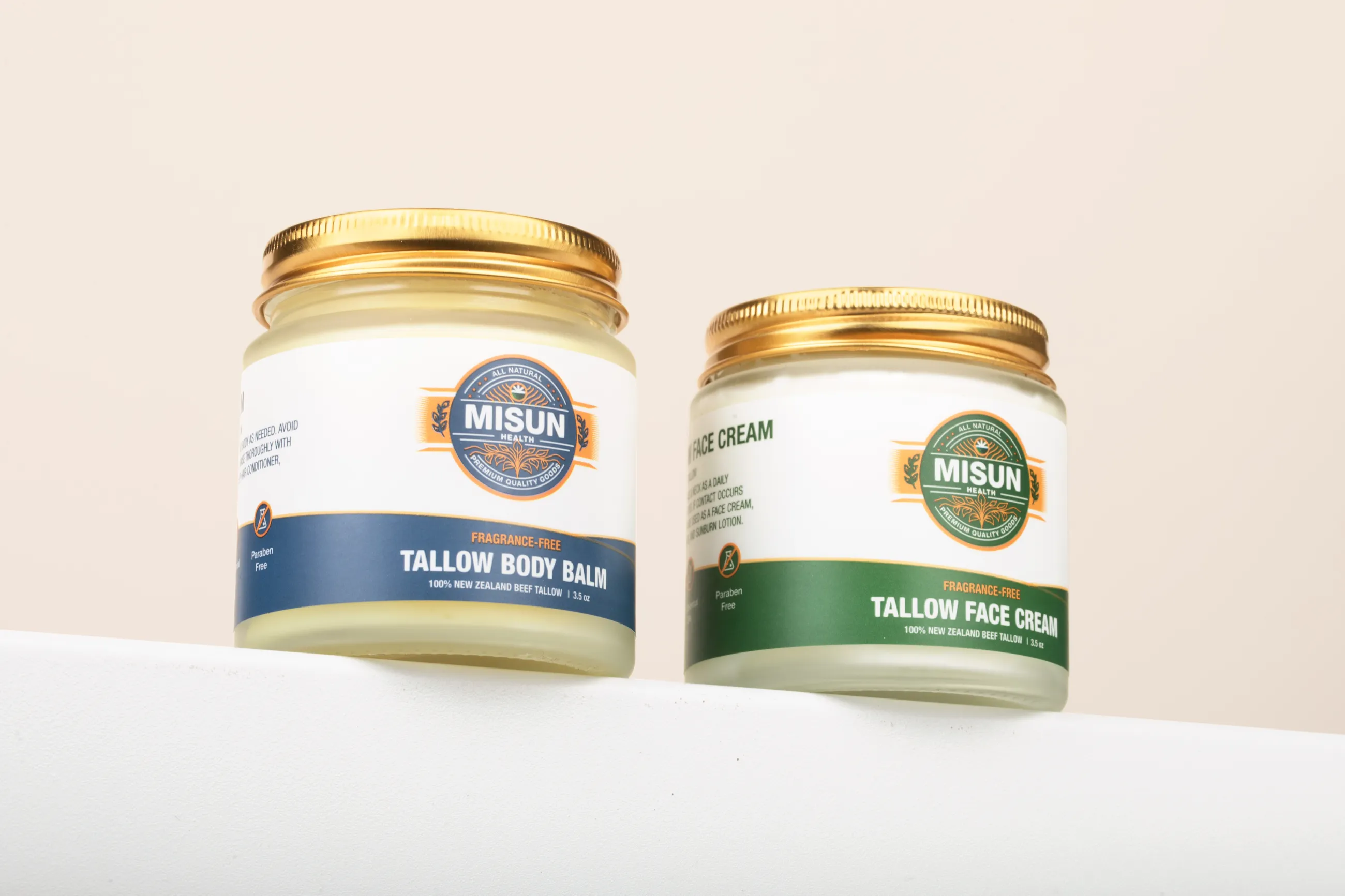 Misun Health
Common Questions
Is beef tallow always better than Nivea Creme for dry skin?
No. Tallow can be better for smaller stubborn rough zones that need a richer comfort step, while Nivea Creme can be easier for broader dry areas or for people who simply prefer a dense cream texture they already know they will use consistently.
Is Nivea Creme actually occlusive?
Yes, it can function as an occlusive-supportive cream because it helps slow moisture loss, but it usually feels more like a dense cream than a heavy ointment. That is why some people find it easier for repeat use even if they still want something richer on the driest spots.
Which one is better for sensitive facial dryness?
Usually whichever one you can keep light enough to avoid a coated or overheated feel. For some people that is a thin layer of Nivea Creme, while others prefer a very small amount of whipped tallow on limited patches rather than the whole face.
Can I use Nivea Creme and beef tallow in one routine?
Yes. A practical approach is to use Nivea on the broader dry area first, then reserve a very small amount of tallow for the spots that still feel tight, flaky, or high-friction by bedtime.
How long should I test beef tallow vs Nivea Creme before deciding?
Give the comparison at least a week if the rest of your routine is stable. Dry skin often looks different after one good night than it does after several normal wash-and-weather cycles, so the better signal is which option still feels useful after repeated daily use.
Build your routine
 Buy on Amazon
 Buy on Amazon
Related guides
More commercial pages
Explore similar commercial concerns or jump to the closest concern hub.
- Can You Bring Beef Tallow on a Plane? Carry-On Packing and Travel Dryness Routine
- Can You Put Beef Tallow on Your Lips? Dry Lips, Chapped Lips, and Lip-Line Flaking
- Unscented Moisturizer for Sensitive Skin: How to Choose a Fragrance-Free Routine That Actually Feels Comfortable
- Beef Tallow vs Lotion for Dry Skin
Related concern pages
Educational content only. This page is not medical advice and is not intended to diagnose, treat, cure, or prevent disease. If symptoms persist or worsen, consult a licensed clinician.