High-intent acne + comedogenic evaluation
10 min read
Is Beef Tallow Comedogenic? Acne-Prone Skin, Ratings, and Breakout Risk
If you are searching for a beef tallow comedogenic rating, the useful answer is not a clean 0-to-5 score. Beef tallow does not have one reliable universal comedogenic rating that predicts every face. Treat it as a richer occlusive with variable breakout risk: more reasonable for tiny dry-zone tests, riskier for oily or closed-comedone-prone facial use, and usually better kept off active acne until your routine is stable.
A practical answer to beef tallow comedogenic rating questions, including why there is no reliable universal score, who should avoid facial use, and how acne-prone skin can test it more safely.
Quick summary
- If you are searching for a beef tallow comedogenic rating, the useful answer is not a clean 0-to-5 score. Beef tallow does not have one reliable universal comedogenic rating that predicts every face. Treat it as a richer occlusive with variable breakout risk: more reasonable for tiny dry-zone tests, riskier for oily or closed-comedone-prone facial use, and usually better kept off active acne until your routine is stable.
- Quick answer: is beef tallow comedogenic?: Beef tallow can be comedogenic for some acne-prone people because it behaves like a rich occlusive, especially when it is used as a full-face night mask or layered over multiple already-heavy products. It is not automatically pore-clogging for everyone, but it also should not be marketed as universally non-comedogenic. The most accurate answer is that beef tallow belongs in the maybe category for breakout-prone skin: some dry, irritated, or over-treated skin types tolerate a very thin layer well, while oily, congestion-prone skin types often do better avoiding it on the face.
- Beef tallow comedogenic rating: why there is no dependable single score: Comedogenic ratings are rough shorthand, not a guarantee, and beef tallow is especially hard to reduce to one dependable number. Many rating charts are based on older ingredient tests, not modern finished products used on real acne-prone faces. Rendered tallow, whipped tallow cream, and dense tallow balm can also wear differently. A tiny amount of whipped cream on a dry cheek edge is not the same acne test as a thick balm layer across the forehead, nose, and chin. That is why a numeric beef tallow comedogenic rating can be directionally interesting, but it should not overrule your own history with rich oils, balms, and occlusive creams.
Why people choose this approach
- Beef tallow can be comedogenic for some acne-prone people because it behaves like a rich occlusive, especially when it is used as a full-face night mask or layered over multiple already-heavy products. It is not automatically pore-clogging for everyone, but it also should not be marketed as universally non-comedogenic. The most accurate answer is that beef tallow belongs in the maybe category for breakout-prone skin: some dry, irritated, or over-treated skin types tolerate a very thin layer well, while oily, congestion-prone skin types often do better avoiding it on the face.
- Comedogenic ratings are rough shorthand, not a guarantee, and beef tallow is especially hard to reduce to one dependable number. Many rating charts are based on older ingredient tests, not modern finished products used on real acne-prone faces. Rendered tallow, whipped tallow cream, and dense tallow balm can also wear differently. A tiny amount of whipped cream on a dry cheek edge is not the same acne test as a thick balm layer across the forehead, nose, and chin. That is why a numeric beef tallow comedogenic rating can be directionally interesting, but it should not overrule your own history with rich oils, balms, and occlusive creams.
Keep in mind
- Patch test first and increase use gradually based on comfort.
- Skincare supports moisture and comfort but is not a cure for medical conditions.
- If symptoms persist, worsen, or become painful, consult a licensed clinician.
Quick comparison
| Feature | Rating-style answer | Real-world acne decision |
|---|---|---|
| What a rating search can tell you | Only a rough clue that an ingredient or texture may be heavier than lightweight gels or lotions. | Whether your own face will clog from a finished product, amount used, weather, sunscreen layers, or acne routine. |
| Best next step | Use the rating as a reason to test conservatively, not as permission for full-face use. | Run a small dry-zone test for 3 to 4 nights and stop if closed comedones, uniform bumps, or waxy residue appear. |
| Who should be most cautious | Anyone with frequent closed comedones, oily T-zone congestion, or breakouts from thick creams and facial oils. | Dry, over-treated skin may still tolerate a rice-grain amount on flaky areas, but that is different from acne-safe daily use. |
Routine steps
How to test beef tallow without ruining your whole routine
Patch test first, then choose one small dry-prone area such as a flaky cheek edge or the area beside the mouth instead of your entire face. Use only a rice-grain amount at night for 3 to 4 nights, then reassess before expanding. Keep cleanser, active treatments, sunscreen, and every other moisturizer stable while you test so the signal stays readable. If new clogged pores, a waxy feel by morning, extra shine, or small uniform bumps show up, stop early instead of trying to rescue the reaction by adding exfoliants or switching three other products at once.
A simple 14-day method for judging breakout risk honestly
Days 1 through 4 should stay limited to a tiny test zone. Days 5 through 10 can expand only if the first area stays calm, and even then the better move is a thin layer on the driest parts of the face rather than full coverage. By days 11 through 14, judge the test on useful signals: Are pores looking more crowded, are bumps taking longer to calm down, does morning skin feel greasy instead of balanced, and are you needing more acne treatment just to keep up? If the answer is yes to any of those, the product is likely too occlusive for your face even if it feels soothing for a few hours.
Best use cases if you still want to keep tallow in your routine
For acne-prone people who still want to use beef tallow, the safer role is usually limited and strategic. Think dry corners of the mouth, a flaky patch from retinoids, or occasional non-acne-prone body areas, not automatic all-over facial use. Many people do better keeping richer tallow products for lips, hands, cuticles, or rough body zones while relying on a lighter dedicated facial moisturizer for everyday acne management.
Quick answer: is beef tallow comedogenic?
Beef tallow can be comedogenic for some acne-prone people because it behaves like a rich occlusive, especially when it is used as a full-face night mask or layered over multiple already-heavy products. It is not automatically pore-clogging for everyone, but it also should not be marketed as universally non-comedogenic. The most accurate answer is that beef tallow belongs in the maybe category for breakout-prone skin: some dry, irritated, or over-treated skin types tolerate a very thin layer well, while oily, congestion-prone skin types often do better avoiding it on the face.
Beef tallow comedogenic rating: why there is no dependable single score
Comedogenic ratings are rough shorthand, not a guarantee, and beef tallow is especially hard to reduce to one dependable number. Many rating charts are based on older ingredient tests, not modern finished products used on real acne-prone faces. Rendered tallow, whipped tallow cream, and dense tallow balm can also wear differently. A tiny amount of whipped cream on a dry cheek edge is not the same acne test as a thick balm layer across the forehead, nose, and chin. That is why a numeric beef tallow comedogenic rating can be directionally interesting, but it should not overrule your own history with rich oils, balms, and occlusive creams.
What to do if a chart says tallow is low, medium, or high comedogenic
Treat any chart score as a caution label, not a verdict. If a source claims beef tallow is low-comedogenic, that still does not make full-face use smart for someone who clogs easily. If a source labels it high-comedogenic, that does not prove a tiny amount on a flaky non-oily patch will fail. The practical move is to translate the uncertainty into a stricter test: use less product, apply it to fewer zones, avoid the areas that clog first, and keep every other routine step unchanged long enough to read the result.
Who should be most careful or avoid facial use altogether
Beef tallow is a riskier facial experiment if you already get frequent closed comedones, stubborn forehead bumps, oily midday shine, or breakouts from richer creams and facial oils. It is also a poor first choice if you are trying to control active inflammatory acne, painful cysts, or recurring jawline congestion, because a heavy new variable can make the picture harder to read. If your skin is acne-prone but also very dry from retinoids, benzoyl peroxide, cold weather, or over-cleansing, a tiny amount on flaky zones may still be tolerable, but that is different from saying full-face use is a smart default.
Why some acne-prone people tolerate it anyway
Not every acne-prone routine fails with richer products. Some people mainly break out from fragrance, over-exfoliation, or harsh acne treatments that leave the barrier irritated and flaky. In that situation, a very small amount of a simple, low-variable moisturizer may feel calmer than a long ingredient list. The important nuance is that tolerance usually comes from targeted use on dry patches, not from assuming tallow deserves the same role as a lightweight acne moisturizer across the whole face.
How to test beef tallow without ruining your whole routine
Patch test first, then choose one small dry-prone area such as a flaky cheek edge or the area beside the mouth instead of your entire face. Use only a rice-grain amount at night for 3 to 4 nights, then reassess before expanding. Keep cleanser, active treatments, sunscreen, and every other moisturizer stable while you test so the signal stays readable. If new clogged pores, a waxy feel by morning, extra shine, or small uniform bumps show up, stop early instead of trying to rescue the reaction by adding exfoliants or switching three other products at once.
A simple 14-day method for judging breakout risk honestly
Days 1 through 4 should stay limited to a tiny test zone. Days 5 through 10 can expand only if the first area stays calm, and even then the better move is a thin layer on the driest parts of the face rather than full coverage. By days 11 through 14, judge the test on useful signals: Are pores looking more crowded, are bumps taking longer to calm down, does morning skin feel greasy instead of balanced, and are you needing more acne treatment just to keep up? If the answer is yes to any of those, the product is likely too occlusive for your face even if it feels soothing for a few hours.
Best use cases if you still want to keep tallow in your routine
For acne-prone people who still want to use beef tallow, the safer role is usually limited and strategic. Think dry corners of the mouth, a flaky patch from retinoids, or occasional non-acne-prone body areas, not automatic all-over facial use. Many people do better keeping richer tallow products for lips, hands, cuticles, or rough body zones while relying on a lighter dedicated facial moisturizer for everyday acne management.
Decision guide: should you try it or skip it?
Skip the facial experiment if you already know thick occlusives clog you, if you are fighting active acne that is not controlled yet, or if your routine is finally stable and clear. Consider a cautious test only if your skin is acne-prone but unusually dry, irritated, or compromised and you can keep every other variable steady. If you do test it, think targeted, thin, and temporary, not rich, frequent, and full-face. That decision logic matters more than chasing a single comedogenic rating number online.
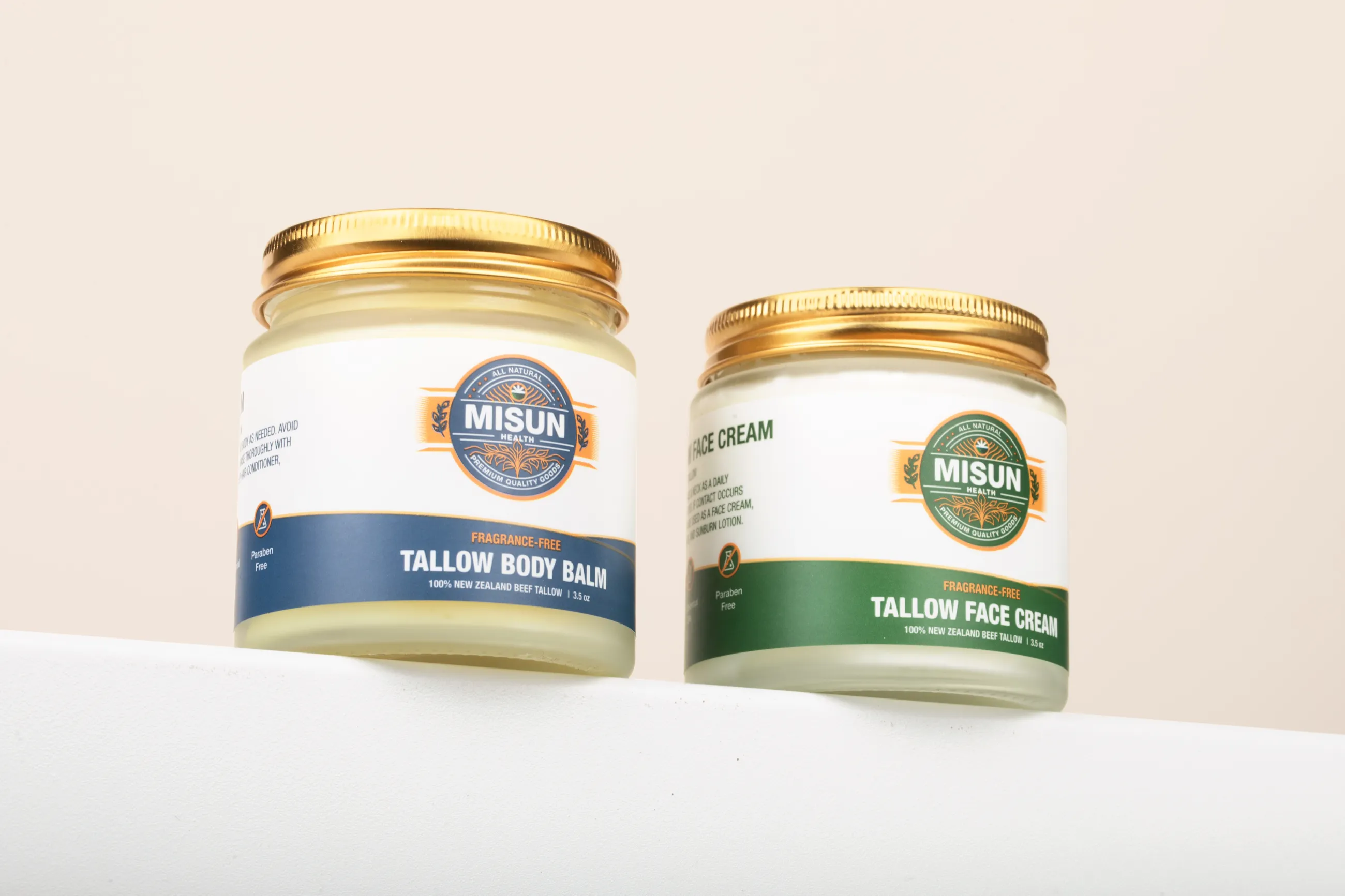 Misun Health
Common Questions
Does beef tallow have a reliable comedogenic rating?
No single beef tallow comedogenic rating can predict every face reliably. Any score is only directional, and real-world tolerance depends on your skin type, the exact formula, how much you apply, and whether you use it as a spot moisturizer or a full-face occlusive layer.
Is beef tallow non-comedogenic?
It is safer not to call beef tallow universally non-comedogenic. Some people tolerate a very thin layer, especially on dry or over-treated patches, while others clog from the same rich texture. Acne-prone skin should treat it as a cautious test rather than an automatic everyday facial moisturizer.
Can acne-prone skin use beef tallow at all?
Sometimes, but usually only with more caution than people expect. Acne-prone skin that is also dry or over-treated may tolerate a tiny amount on flaky areas, but oily or congestion-prone skin often does better avoiding beef tallow on the face and choosing a lighter moisturizer instead.
What signs mean beef tallow is too heavy for my face?
Watch for new closed comedones, small uniform bumps, extra morning oiliness, a waxy coated feel, or breakouts that start after the product is introduced and calm down after it is removed. Those signs usually matter more than whether the product felt soothing on the first night.
What should I do if beef tallow seems to cause breakouts?
Stop the test, return to the simplest routine that was working before, and give skin time to settle before trying another heavy moisturizer. If acne is persistent, painful, or worsening, get clinician guidance rather than continuing to experiment with richer products.
Build your routine
 Buy on Amazon
 Buy on Amazon
Related guides
More informational pages
Explore similar informational concerns or jump to the closest concern hub.
- Fragrance-Free Skin Care and Perioral Dermatitis: What the Label Can Tell You
- Fragrance-Free Moisturizer and Psoriasis: What the Label Can Tell You
Related concern pages
Educational content only. This page is not medical advice and is not intended to diagnose, treat, cure, or prevent disease. If symptoms persist or worsen, consult a licensed clinician.