Evidence-led label evaluation
6 min read
Fragrance-Free Moisturizer and Psoriasis: What the Label Can Tell You
A fragrance-free label can help narrow a moisturizer search. It cannot show that a product treats psoriasis, will not irritate your skin, or fits your care plan. Here is the general guidance, the label evidence, and the limit between them.
AAD guidance includes heavy creams, ointments, or oils and fragrance-free labels among general moisturizer considerations for psoriasis. This page separates that guidance from what a Misun cosmetic label can prove.
Quick summary
- A fragrance-free label can help narrow a moisturizer search. It cannot show that a product treats psoriasis, will not irritate your skin, or fits your care plan. Here is the general guidance, the label evidence, and the limit between them.
- What dermatology guidance supports: The American Academy of Dermatology says moisturizers can help with the dry, scaly skin that often comes with psoriasis. Its nonprescription guidance suggests choosing a heavy cream, ointment, or oil, looking for a fragrance-free product, and applying moisturizer after washing. The National Psoriasis Foundation also separates moisturizers from over-the-counter products with active psoriasis-treatment ingredients. Those recommendations describe moisturizer categories. They are not evidence for beef tallow or any Misun product.
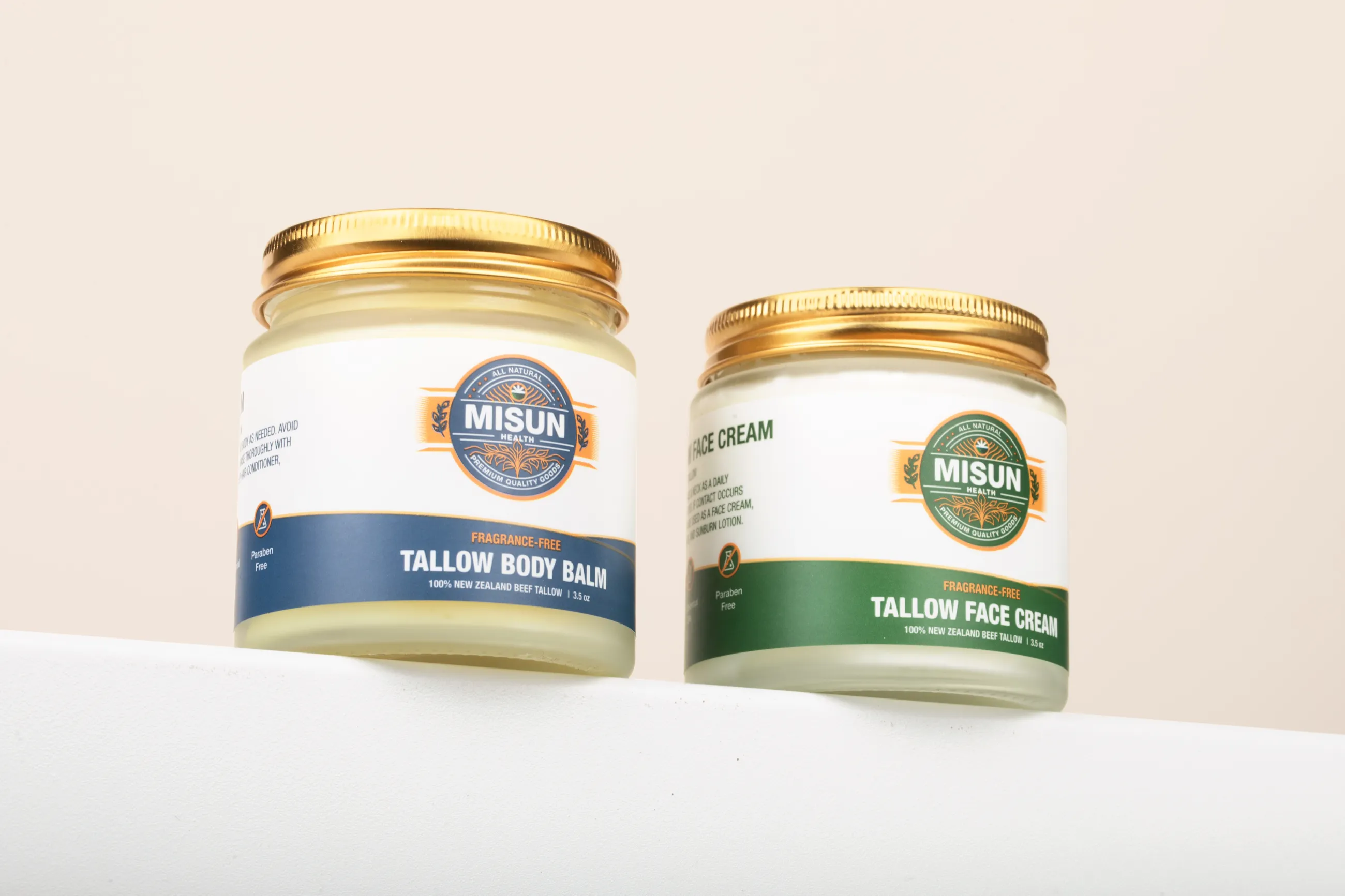
- What fragrance-free does and does not mean: Fragrance-free is one shopping filter, not a psoriasis-safety certification. It does not establish that a formula is free of every potential irritant, that it will suit an individual, or that it has been tested for psoriasis. The current Misun Whipped Tallow Cream package shown on this site says fragrance-free and unscented. That is a package fact, not a treatment or suitability claim.
Why people choose this approach
- The American Academy of Dermatology says moisturizers can help with the dry, scaly skin that often comes with psoriasis. Its nonprescription guidance suggests choosing a heavy cream, ointment, or oil, looking for a fragrance-free product, and applying moisturizer after washing. The National Psoriasis Foundation also separates moisturizers from over-the-counter products with active psoriasis-treatment ingredients. Those recommendations describe moisturizer categories. They are not evidence for beef tallow or any Misun product.
- Fragrance-free is one shopping filter, not a psoriasis-safety certification. It does not establish that a formula is free of every potential irritant, that it will suit an individual, or that it has been tested for psoriasis. The current Misun Whipped Tallow Cream package shown on this site says fragrance-free and unscented. That is a package fact, not a treatment or suitability claim.
Keep in mind
- This page summarizes general public guidance and product-label facts. It does not recommend a psoriasis treatment.
- A fragrance-free label does not establish individual tolerance or psoriasis-specific testing.
- Use your dermatologist's instructions for treatment and medication timing.
What dermatology guidance supports
The American Academy of Dermatology says moisturizers can help with the dry, scaly skin that often comes with psoriasis. Its nonprescription guidance suggests choosing a heavy cream, ointment, or oil, looking for a fragrance-free product, and applying moisturizer after washing. The National Psoriasis Foundation also separates moisturizers from over-the-counter products with active psoriasis-treatment ingredients. Those recommendations describe moisturizer categories. They are not evidence for beef tallow or any Misun product.
What fragrance-free does and does not mean
Fragrance-free is one shopping filter, not a psoriasis-safety certification. It does not establish that a formula is free of every potential irritant, that it will suit an individual, or that it has been tested for psoriasis. The current Misun Whipped Tallow Cream package shown on this site says fragrance-free and unscented. That is a package fact, not a treatment or suitability claim.
Where treatment claims begin
The FDA explains that a product marketed to treat or prevent disease, or to affect the structure or function of the skin, is making a drug claim rather than a cosmetic claim. Misun Whipped Tallow Cream is presented here only as a cosmetic moisturizer. This page does not recommend using it on plaques, changing medication timing, or replacing advice from a dermatologist.
Questions worth checking before purchase
Review the current ingredient statement and package label, decide whether the texture is practical for you, and ask a dermatologist whether a new moisturizer fits your existing plan. If you want to compare Misun, verify the current package on Amazon. The product route below is limited to package facts, texture, and current retailer details.
Sources and scope
These sources support the general guidance and claims boundary above. They do not test, endorse, or establish suitability for a Misun product.
- American Academy of Dermatology
General nonprescription psoriasis guidance for moisturizer type and fragrance-free labels.
- National Psoriasis Foundation
Overview separating moisturizers from active over-the-counter treatment ingredients and directing treatment choices to a health care provider.
- U.S. Food and Drug Administration
Cosmetic labeling boundary for disease-treatment and structure or function claims.
 Misun Health
Common Questions
Does fragrance-free mean a moisturizer treats psoriasis?
No. Fragrance-free describes one aspect of a product label. It is not an active treatment claim, a safety certification, or proof that the product is suitable for an individual.
Has this page established that Misun is tested for psoriasis?
No. This page presents no psoriasis-specific testing or clinical evidence for Misun. It reports package facts for a cosmetic moisturizer and keeps them separate from general psoriasis guidance.
Why is a Misun product shown on this page?
Some shoppers want to verify a fragrance-free label before comparing a cosmetic moisturizer. The product section shows only package, texture, and retailer details. It is not a psoriasis recommendation.
Who can help decide whether a moisturizer fits my care plan?
A dermatologist or another licensed clinician who knows your diagnosis and current treatments can give individualized guidance. Product marketing and a fragrance-free label cannot do that job.
Check the package facts
Misun is not presented here as a psoriasis treatment. If you want to evaluate Whipped Tallow Cream as a cosmetic moisturizer, compare the package facts and current Amazon listing without treating fragrance-free labeling as a suitability guarantee.
 Package facts
Packaging shown on this site lists 100% New Zealand beef tallow and says fragrance-free and unscented. Confirm the current package, price, and availability on Amazon.
Buy on AmazonEducational content only. This page is not medical advice and is not intended to diagnose, treat, cure, or prevent disease. If symptoms persist or worsen, consult a licensed clinician.